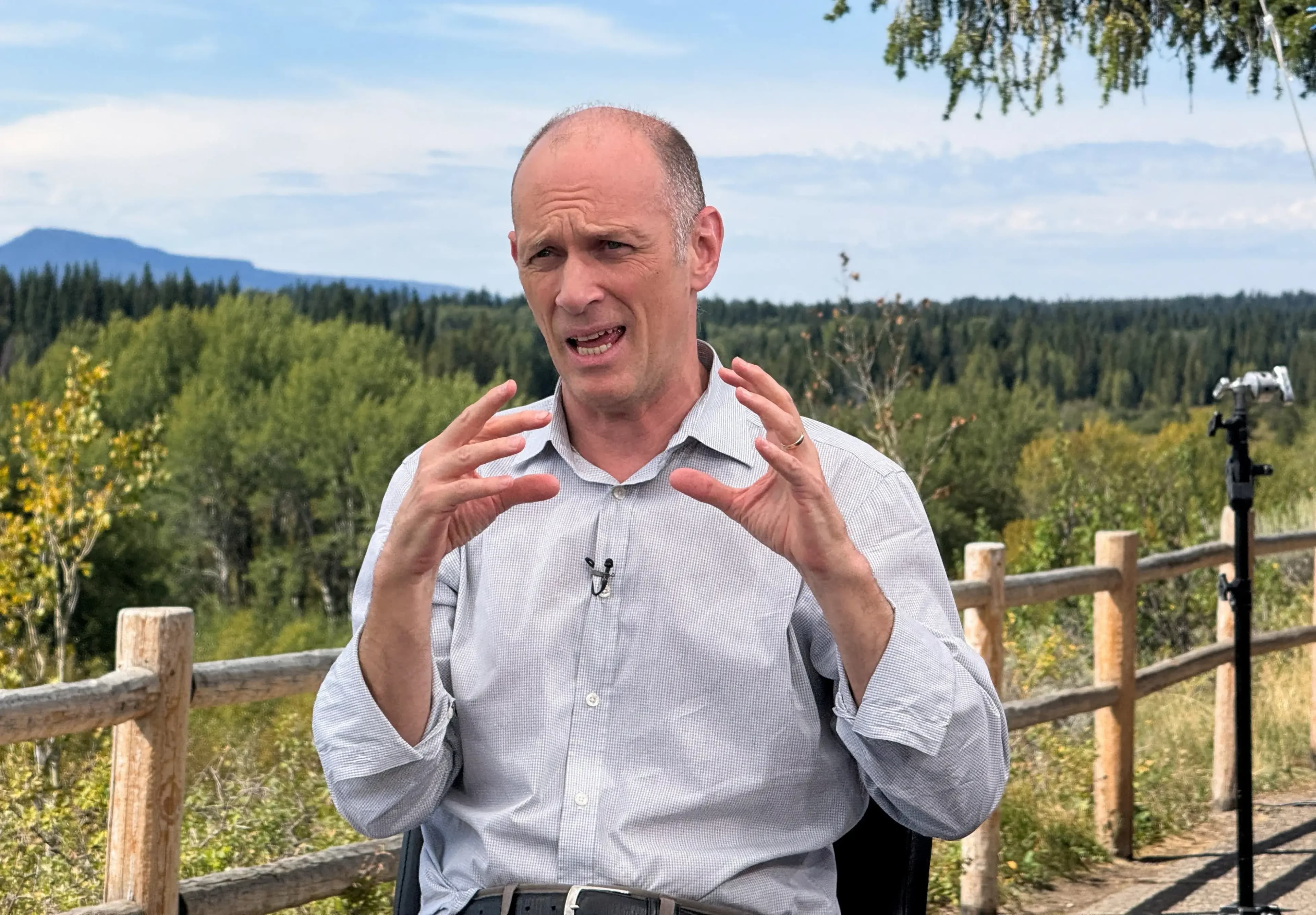
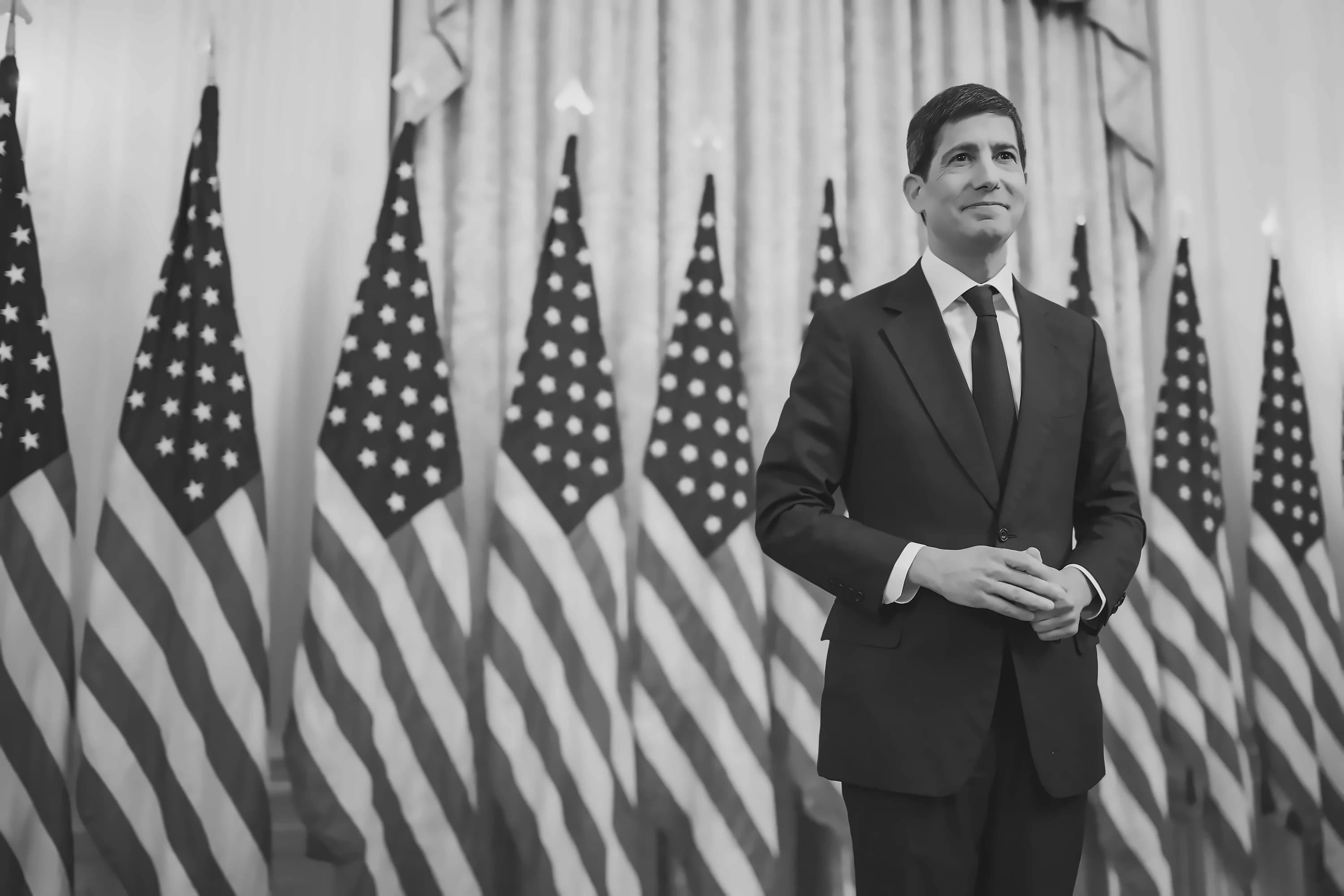
Federal Reserve Chair Kevin Warsh announced Wednesday that the central bank will move away from forecasting its future action under his leadership, marking a historic departure from decades of Fed communications. As reported by The Hill, Warsh said the Fed has "dropped forward guidance" and noted that "some along the committee, I think, dropped it, I suspect from our discussion the last couple of days, because they said at this moment in time it doesn't feel as though providing forward guidance is right." The FOMC voted unanimously to maintain the federal funds rate at a range of 3.5% to 3.75% for the fourth straight meeting, with Warsh being the sole member not to provide a projection in the committee's quarterly Summary of Economic Projections. Bill Adams, chief U.S. economist for Fifth Third Commercial Bank, noted that "This Dot Plot carries less weight than previous ones, since Warsh stated in the post-decision press conference that he did not submit forecasts for it." Warsh specifically criticized the Fed's 2021 and 2022 projections, stating they "compounded" the policy errors the central bank made as inflation spiked.
Warsh confirmed his comprehensive communications overhaul with five task forces to review the Fed's communications, its balance sheet, its reliance on data sources, productivity and jobs, and its inflation frameworks. As reported by The Hill, Warsh noted Wednesday he plans to conduct a review by year's end about "communications broadly," including on the number of press conferences he holds and the Fed's economic projections, meetings, transcripts and minutes. He also said he will appoint a task force to review the Fed's communication policies as part of his broader review. Warsh emphasized his open-minded approach, stating "I don't want to prejudge the outcomes there, but I'm pretty open-minded about what they could be." The Summary of Economic Projections came in clearly hawkish, with nine members of the committee saying they expected at least one rate hike this year, with six members supporting two or more hikes. Warsh confirmed his dot-plot abstention and the statement was approved by a unanimous 12–0 vote, with the statement notably terse and shorter than previous versions.
Inflation has reared its head again, with the all-items consumer price index seeing a 4.2 percent increase compared with a year earlier in May, up from 3.8 percent in April, according to the Bureau of Labor Statistics. The energy index rose 3.9 percent in May, with energy prices accounting for over 60 percent of the overall increase, as gasoline and fuel oil both were up in price more than 40 percent compared with a year ago. The international energy shock caused by the war with Iran is making itself felt as a driver of U.S. inflation, with the U.S.-Iran agreement to reopen the Strait of Hormuz pushing oil prices below $80 per barrel, the lowest price since the start of the war. Cleveland Fed President Beth Hammack noted in a June speech that "For today, it's reasonable to keep rates steady given the uncertainties around the economic outlook. But if recent trends continue, it may soon be appropriate to act." The Committee described activity as expanding at a solid pace despite elevated uncertainty tied in part to the conflict in the Middle East, with productivity growth and capital investment characterized as strong. Warsh repeatedly stressed that Fed officials committed to delivering price stability, stating "We've missed (on inflation) for five years and we're gonna fix that."
Market sentiment remains fragile ahead of the US open as investors await the conclusion of Warsh's first FOMC meeting. The S&P 500 fell 1.4% after the release of the Fed officials' rate expectations, reflecting the market's disappointment with the hawkish tilt toward higher rates. The 10-year US Treasury yield held around 4.43%. UBS CIO House View maintains that with markets continuing to overestimate the extent of Fed tightening, they see an attractive risk-return profile for short-to-medium-maturity quality bonds. Beyond domestic economic indicators, emerging details of the US-Iran peace deal sent oil prices to their lowest level since early March, providing some stability to global markets. However, the strategic stakes in the Middle East make a quick exit difficult, suggesting that geopolitical tensions continue to influence market dynamics and policy considerations. John Canavan from Oxford Economics expects that Warsh could announce next week that he's dropping some of the post-meeting press conferences as part of a less-is-more communication strategy. Bonaventure CEO Dwight Dunton noted that "With a new chair just coming online, any move, up or down, risks being read as political. Holding steady lets Warsh reestablish the Fed's independence, which matters more right now than any single rate decision."
Central bank communication can have an enormous impact on the behaviour of businesses and households – almost as much as rate changes themselves, as noted by Reuters. The Bank of England's nine-member Monetary Policy Committee includes four external members whose role is to challenge the internal view, while the European Central Bank's Governing Council comprises an Executive Board with six seats and 21 national central bank governors. The Fed's 'dot plot' visual representation of policymakers' interest rate projections has been criticized by some Fed members, including Warsh's predecessor Jerome Powell, and could be among Warsh's early moves to eliminate. A recent Brookings Institution survey found that nearly all academic and private-sector Fed experts regarded the Fed's post-meeting press conference as 'useful or extremely useful'. Warsh has made clear his distaste for forward guidance, stating "As a general proposition, forward guidance isn't the business we should be in" and "I can't give any forward guidance about what we're going to do next." He argued that "When all the financial markets are doing is reflecting back what we've said, then we're taking the most important source of information and we're being blind to it."