Federal Reserve Chairman Kevin Warsh delivered a masterful economics lesson in his first press conference since taking office, establishing himself as the clearest-minded and best-spoken Fed chair since Paul Volcker. As reported by Investing.com India, Warsh dismissed the focus on interest rate decisions as a sideshow, stating 'I'm not going to pre-judge any future decisions we make. You might have heard me say in Jackson Hole, I committed to a discipline, a set of principles…to look outside the window and see what I can observe.' He emphasized that 'I'm not a data point dependent guy, so I won't react one way or another to data that shows up on our doorstep. Trends matter… we need to look outside the window and interrogate reality.' When pressed by the New York Times about future rate changes, Warsh parried with 'I'm not a Wall Street newsletter. Part of the independence of the Fed is we stay in our lane.' The press conference marked a significant departure from his predecessor's approach, with Warsh dismissing the need to wait breathlessly for data points and focusing instead on trends and the resilience of the U.S. economy. Jeff Gundlach of Doubleline criticized the press conference as 'devoid of content', but Warsh's emphasis on looking outside the window and interrogate reality provided a refreshing perspective on Fed decision-making.
Federal Reserve Governor Michael Barr has signaled that additional rate hikes may be necessary to manage inflation, marking a more hawkish stance than Fed Chairman Kevin Warsh. As reported by Reuters, Barr announced that 'In my base case, further policy adjustments are likely needed to ensure inflation comes down to target in a timely fashion,' while noting that 'Risks to achieving our inflation target have increased, while risks to the labour market have receded.' His remarks suggest he sees the case for at least two further increases, though he did not specify a timeline. Philadelphia Fed President Anna Paulson has now joined the hawkish chorus, stating on Thursday that 'Looking ahead, if conditions evolve as I expect, some modest further tightening may be warranted' to bring inflation back to the desired level. Paulson, who is also a voting member of the rate-setting Federal Open Market Committee, characterized underlying inflation as running in a range of about 2.5 to 3% and noted that 'the best I can say about underlying inflation this year is that it hasn't gotten worse.' This contrasts sharply with Fed Chairman Warsh, who has declined to offer any forward guidance on future rate decisions, instead focusing on 'looking outside the window and interrogate reality' as his guiding principle.
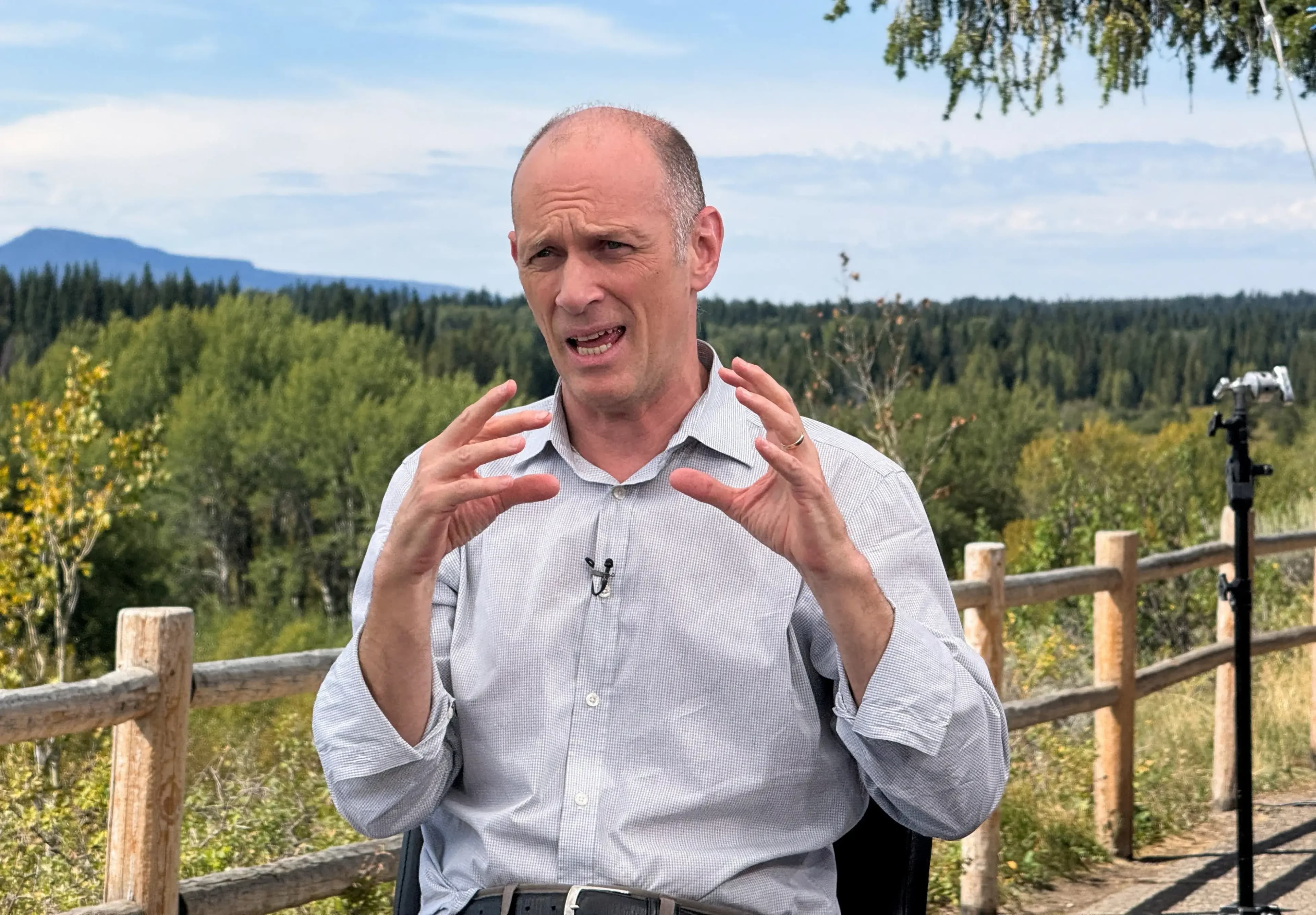
The Iran conflict remains a key driver of persistent inflation, with oil prices oscillating around $100 as investors await updates on Iran talks. As reported by Investing.com India, absent the Iran conflict, U.S. inflation would likely be lower and probably trending down for some measures of pricing pressure. The problem lies in the odds still appear low for a quick end to the crisis, though there's renewed hope that hostilities may be entering a less-volatile phase. President Trump hinted at the possibility on Wednesday, stating 'I believe we'll make a deal right after the election, because [Iran] doesn't make sense for them not to.' Meanwhile, Iran is reportedly considering a new push for a diplomatic off-ramp and offering to reopen the Strait of Hormuz in exchange for an end to U.S. military pressure. However, such a change is still not imminent, with many analysts agreeing that de-escalation is expected to cool energy prices to some degree in the near term. Philadelphia Fed President Paulson noted that robust investment in the technology sector was also contributing to inflationary pressure, adding to the multiple factors exerting pressure on price levels.
The Federal Reserve delivered a unanimous quarter-point rate hike at its September 15-16 meeting, marking the first rate increase since 2023 as policymakers work to combat inflation that hasn't hit the Fed's 2% target in more than five years. According to Fox News, Fed policymakers voted unanimously to raise interest rates by a quarter percentage point at their latest meeting, with Fed Chairman Kevin Warsh emphasizing the strength of domestic spending, business investment, and other demand-side indicators. The move represents a significant shift in monetary policy as the central bank moves away from its extended pause period. Fed officials have grown increasingly concerned that inflation isn't just contained to the categories impacted by the conflicts in the Middle East or tariffs, with evidence emerging of inflation in the service sector as well. The latest rate decision brings the Fed's benchmark policy rate to 3.75%-4.00%, with policymakers' latest projections pointing to the possibility of another rate increase before the end of 2026. Sixteen of 18 officials signalled that at least one more hike would likely be needed before year-end, according to Reuters.
Boston Federal Reserve President Susan Collins has backed the Fed's recent rate hike, citing growing risks that inflation could remain above the Federal Reserve's 2% target. As reported by The Economic Times, Collins said the improving labour market gives monetary policymakers greater scope to focus on restoring price stability, and indicated that a somewhat more restrictive monetary policy stance would be needed to ensure inflation returns to the Fed's target on a sustained basis. Collins noted that 'The inflation challenge has become more complicated because some of the latest price pressures are being driven by supply disruptions rather than excessive demand,' with the conflict involving the US and Israel with Iran adding to supply risks through potential impact on energy and other costs. Philadelphia Fed President Anna Paulson has now joined Collins in supporting additional tightening, stating that 'Returning inflation to 2% is a top priority, and I will support the policy path that gets us there while carefully weighing risks to the labour market along the way.' While Collins is not a voting member of the Federal Open Market Committee this year, her support reinforces the Fed's commitment to addressing persistent inflation pressures, with Paulson's voting status adding significant weight to her hawkish stance.
Despite the inflation challenges, Philadelphia Fed President Paulson characterized the US economy as relatively strong, noting that 'I see a resilient economy that is showing some signs of increased momentum.' As reported by Reuters, she said 'Despite shocks from tariffs and the conflict in the Middle East, recent consumption growth has been strong, the AI buildout is driving investment, and the labour market is stable.' The Fed is seeking to control inflation as several factors continue to exert pressure, including President Donald Trump's import tariffs and surging energy prices stemming from the US-Israeli war with Iran. Policymakers' projections released after the meeting indicated one additional rate increase before the end of the year, though futures markets are pricing in significantly more hikes than the Fed's current projections suggest. The combination of strong economic growth, solid labour market conditions, and persistent inflation above the Fed's 2% target creates a complex policy environment where policymakers must balance growth support with price stability objectives. **Chairman Warsh's emphasis on 'looking outside the window and interrogate reality' reinforces this approach, with his focus on 'the resilience of the U.S. economy' and 'the potential for even greater performance' providing a clearer framework for future decision-making.