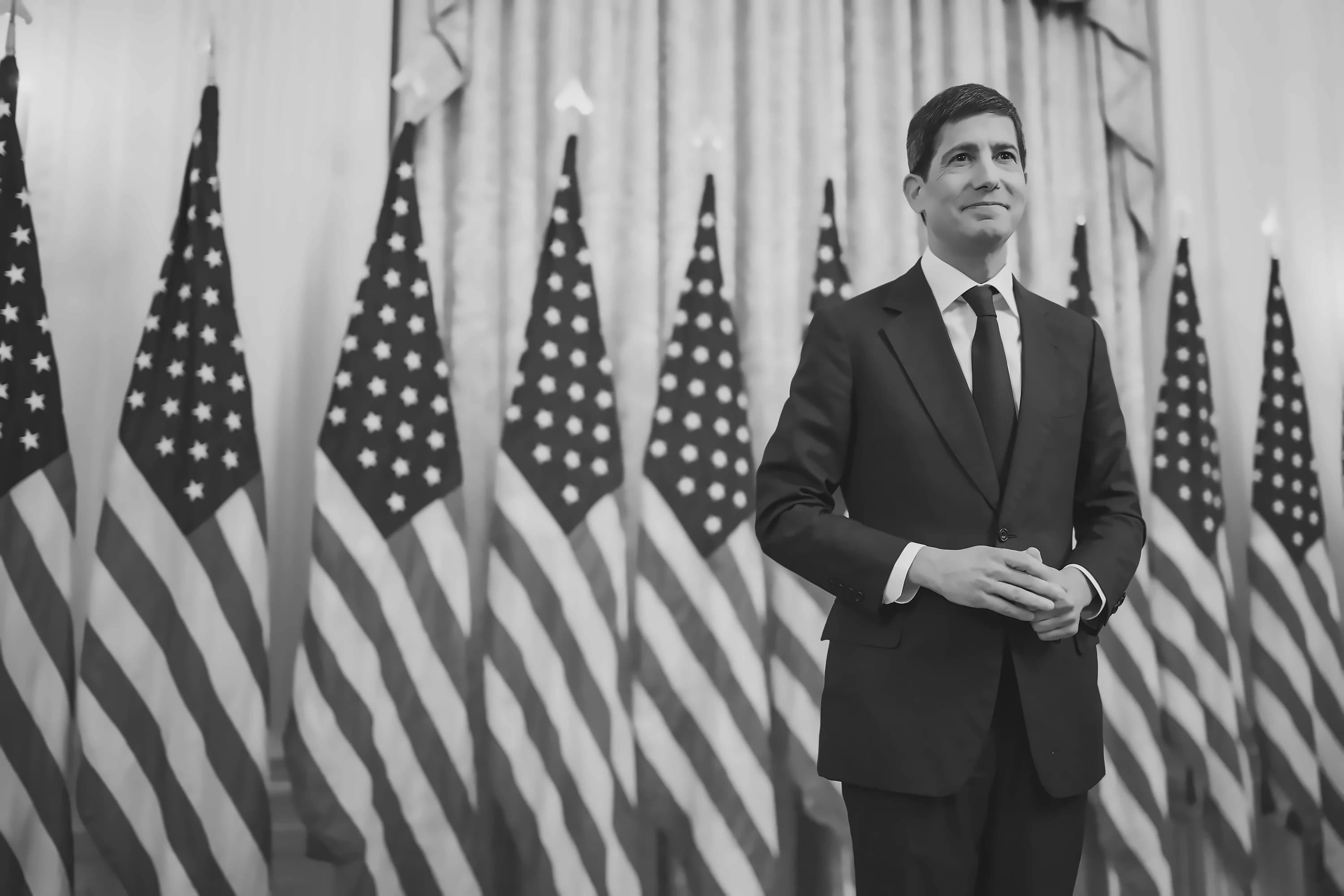
Former New York Fed chief Bill Dudley has issued a stark warning that the Federal Reserve risks losing its credibility as an inflation fighter after more than five years of missing its 2% target. Speaking on Bloomberg's Surveillance program, Dudley pointed to five years of inflation running above the 2% target as the critical issue. He warns that inflation expectations could become 'unanchored' if the Fed continues behaving as if policy is restrictive when, in his view, it is 'not restrictive at all'. The warning comes as Kevin Warsh prepares to lead his first policy meeting amid mounting pressure from rising prices and political scrutiny. According to Dudley, if the Fed's independence wasn't under question, then it would be more likely that inflation expectations would stay well anchored. Dudley's latest remarks come as new Fed Chair Kevin Warsh prepares to lead his first Federal Open Market Committee meeting next month, taking over following the largest monthly increase in the consumer price index since 2023.
Market expectations for Fed policy have shifted significantly, with interest-rate swaps showing it's unlikely to increase rates until late October at the earliest, though a quarter-point hike is seen as virtually certain by early next year. According to Citadel Securities, the bond market is 'awakening to the reality of a hot economy with risks of a classic demand-induced inflation process'. The firm's analysis reveals that Citadel's model suggests the Fed's current rate is near the neutral level that neither stimulates growth nor constricts it, which is 'inconsistent' with market pricing indicating the economy will expand at a solid pace. Dudley's core criticism centers on the Fed's assessment of the *neutral interest rate (r)**, which he argues is 'a lot higher than the Fed recognizes'. As reported by Bloomberg, this means real policy is not as tight as officials like to claim and that the central bank has 'not been doing enough to fight inflation'. He questioned whether the current settings are restrictive at all, noting that policy rates have stayed above 4% since late 2022 while the labor market remains firm.
The Fed's inflation challenge has intensified significantly, with headline personal consumption expenditures inflation reaching 3.8% year over year in April 2026, representing the biggest surge of inflation since 2023. According to Citadel Securities, the U.S.-Iran war driven energy shock is beginning to feed into broader price-setting behaviour, while consumer inflation expectations are moving in the wrong direction. The U.S. Federal Reserve should shift closer toward hiking interest rates as rising consumer prices become the dominant threat to the United States economy, according to Citadel Securities. The rise in inflation is being complicated by U.S. financial conditions easing due to the stock market's rally on the back of what Shah called a 'once-in-a-generation AI transformation'. The flood of investment spending on artificial intelligence is adding fuel to the pace of growth, creating additional inflationary pressures. Research from RSM analysis reveals the extent of the credibility challenge, showing that one-year ahead expectations measured by the New York Fed had risen to around 3.2%, versus a five-year, five-year forward breakeven near 2.34%.
The labor market is showing signs of re-accelerating rather than cooling, creating additional pressure for monetary policy tightening. According to Citadel Securities, weekly ADP data suggest that private-sector hiring is running at a pace that, if sustained, is consistent with 170,000 to 180,000 monthly job gains. Fed officials have acknowledged that breakeven payroll growth — the pace needed to keep unemployment steady — may now be close to zero because of the crackdown of immigration. Therefore, the current pace of job creation risks reigniting wage pressures, with Citadel noting that 'in that scenario, rate hikes would become difficult for any Fed Chair to avoid'. The next personal consumption expenditures release, due in late June, will be the first read on Warsh's tenure, with a move toward 2% potentially buying time or another miss putting Dudley's warning at the center of the policy debate.

The Fed faces criticism from multiple perspectives, with Dudley and others arguing the central bank is underestimating neutral rates and letting inflation fester. According to Bloomberg, critics warn that cutting too quickly or using alternative inflation measures to claim victory would only convince markets the Fed is looking for excuses, undermining its credibility rather than restoring it. The deeper issue is that the Fed has managed to irritate both sides of the debate, with some arguing the entire concept of the Fed as an 'inflation fighter' is a mythology rooted in Phillips Curve thinking. Dudley said the Fed's credibility challenge is made worse by Warsh's appointment and Trump's demand for lower rates. The Fed officials have already turned more hawkish, with a majority of policymakers warning that the Fed may need to consider raising rates if inflation remains persistently elevated, according to minutes from the central bank's April meeting. Using 'trimmed mean' or 'supercore' metrics to declare the 2% goal achieved 'would risk undermining the central bank's credibility,' especially after years of missing the headline target.