The International Monetary Fund (IMF), World Bank, World Trade Organization, and International Energy Agency (IEA) have issued a joint warning that the West Asia war is straining global energy supplies and hitting vulnerable economies hardest through higher fuel and fertilizer prices. According to The Hindu BusinessLine, the agencies stated that if shipping flows do not return to normal, continued rapid depletion of global oil inventories ahead of peak summer oil demand in the Northern Hemisphere would present increasing risks for fuel security, market conditions, and broader economic resilience. The US-Israel war on Iran has disrupted trade, rattled financial markets and raised concerns over global energy supplies, particularly through the Strait of Hormuz, a key route for oil and gas shipments. The heads of these global institutions met on Thursday to discuss their coordinated response to the economic impact of the conflict.
According to a report by the London-based International Institute of Strategic Studies, China's maritime vulnerability begins at the Strait of Hormuz rather than the Strait of Malacca, creating a new arena of strategic competition in the Indian Ocean. The report, titled 'Asia Pacific Regional Security Assessment', argues that China's dependence on energy supplies moving through the Indian Ocean has made the region increasingly important to Beijing's security calculations, while also exposing vulnerabilities that rival powers could seek to exploit during a conflict. The study examines strategic competition around major maritime choke points linking West Asia and Asia, with particular focus on the Strait of Hormuz and the Straits of Malacca and Singapore (SOMS), which carries a substantial share of global energy shipments. The report was released ahead of the three-day Shangri-La Dialogue security summit that opened in Singapore on Friday, highlighting how the Indian Ocean Region is once again emerging as a major geopolitical theatre due to China's growing dependence on energy imports moving through the region.
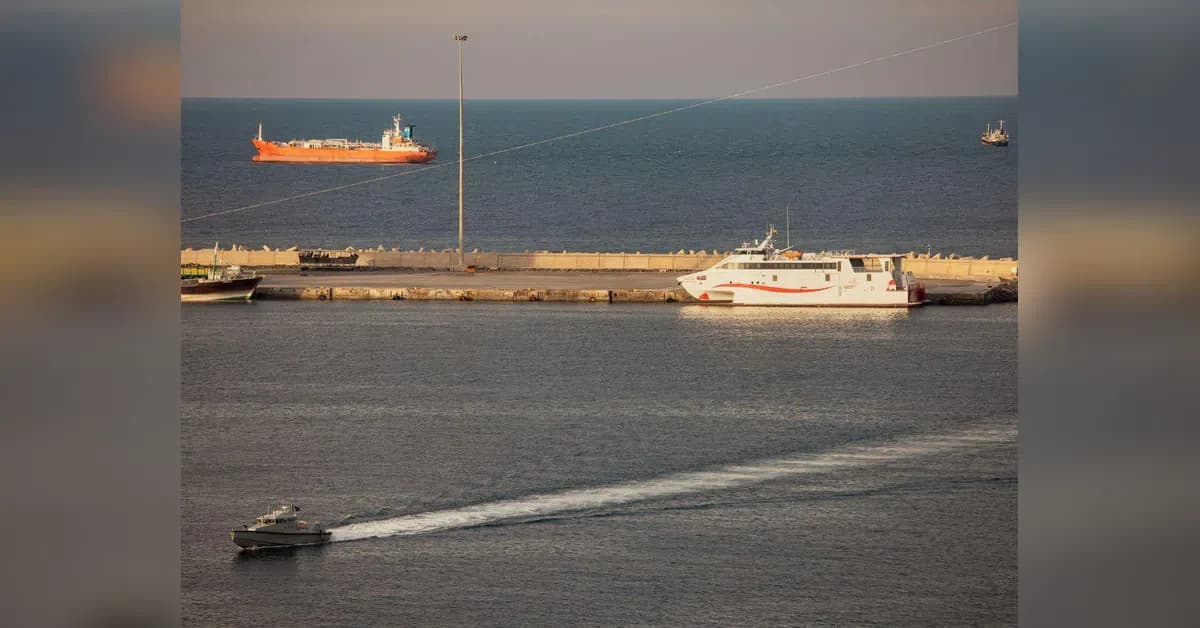
The closure of the Strait of Hormuz has exposed a critical vulnerability in the $123 trillion global economy, demonstrating how a stretch of water just 18 nautical miles wide can hold the world hostage. Before the current crisis, roughly 25 percent of the world's seaborne crude oil trade and 20 percent of global liquefied natural gas (LNG) transited the passage daily, with well over 100 vessels moving through the strait carrying millions of barrels of oil, vast volumes of LNG, and significant quantities of petrochemicals and fertilizers. The crisis escalated rapidly after U.S. and Israeli strikes on Iran beginning February 28, 2026, with Iran's Islamic Revolutionary Guard Corps (IRGC) issuing warnings, boarding and attacking merchant ships, and laying mines throughout the strait. Major ocean carriers suspended all transits within days, while the IRGC confirmed formal closure on March 2, 2026. The situation deteriorated further when the U.S. Navy imposed its own blockade of Iranian ports beginning April 13, 2026, creating what analysts termed a 'dual blockade'. As per The Hindu BusinessLine, the US President Donald Trump has said he would decide Friday over a potential deal with Iran to extend their ceasefire that would need to include opening the waterway and dismantling Tehran's capacity to make a nuclear weapon.
The crisis is now threatening global food security as higher energy costs have driven fertilizer prices sharply upward, raising concerns for agricultural economies entering key planting seasons and potentially affecting future crop production. According to AFP, IMF Managing Director Kristalina Georgieva said the organization has revised down its global growth forecasts due to supply disruptions and escalating regional tensions. The agencies warn that global fuel supplies could face severe strain during the peak summer season unless normal shipping operations through the Strait of Hormuz are restored. Rising energy prices are already straining vulnerable economies, with Georgieva estimating that affected countries may require between $20 billion and $50 billion in financial assistance to manage the economic fallout. Bangladesh has reportedly sought emergency support amid mounting pressures from the ongoing crisis. As per The Hindu BusinessLine, the global institutions noted that the world economy remained resilient, but the conflict was disproportionately affecting poorer countries through higher fuel and fertilizer prices, increased uncertainty, and risks to jobs.
The closure has forced global shipping into historic rerouting efforts, with carriers left with only the Cape of Good Hope route around southern Africa as an alternative for Asia-Europe transit. This route adds 10 to 14 days to typical Asia-Europe transit times and significantly increases fuel consumption and operating costs per voyage. The capacity constraints are particularly severe for crude oil, as all feasible bypass alternatives combined can handle at most approximately 10 million barrels per day, while normal Hormuz throughput before closure was estimated at 20 million barrels per day. Even with maximum capacity utilization across all bypass routes, a gap of at least 10 million barrels per day remains with no short-term solution. The UAE's Abu Dhabi Crude Oil Pipeline (ADCOP) from Habshan to Fujairah can move roughly less than one-tenth of normal strait crude oil throughput, while Saudi Arabia's East-West Pipeline has full capacity of 7 million barrels per day after restoration from early April attacks.
In a joint initiative launched this April, the leaders of the International Monetary Fund (IMF), the World Bank, and the International Energy Agency (IEA) announced the formation of a special task force to coordinate their global response to the ongoing energy crisis. The multilateral group is specifically tasked with designing and deploying targeted relief measures for vulnerable, lower-income economies hardest hit by the resulting economic shocks. According to a recent EY report, India needs to prepare for unanticipated economic shocks and vulnerabilities as it faces growing dependence on the Strait of Hormuz for energy supplies. India imports 88 per cent of its crude oil needs and roughly half of its natural gas requirement, with these mostly coming via the Strait of Hormuz. The report recommends that India may need to work on further diversification and acceleration of alternative trade routes, including the India-Middle East-Europe Economic Corridor (IMEC) and the Indo-Pacific corridor covering the Malacca Strait. Prime Minister Narendra Modi has called for austerity measures, including a reduction in gold imports, a cutback in foreign travel, and a reduction in domestic fuel consumption.