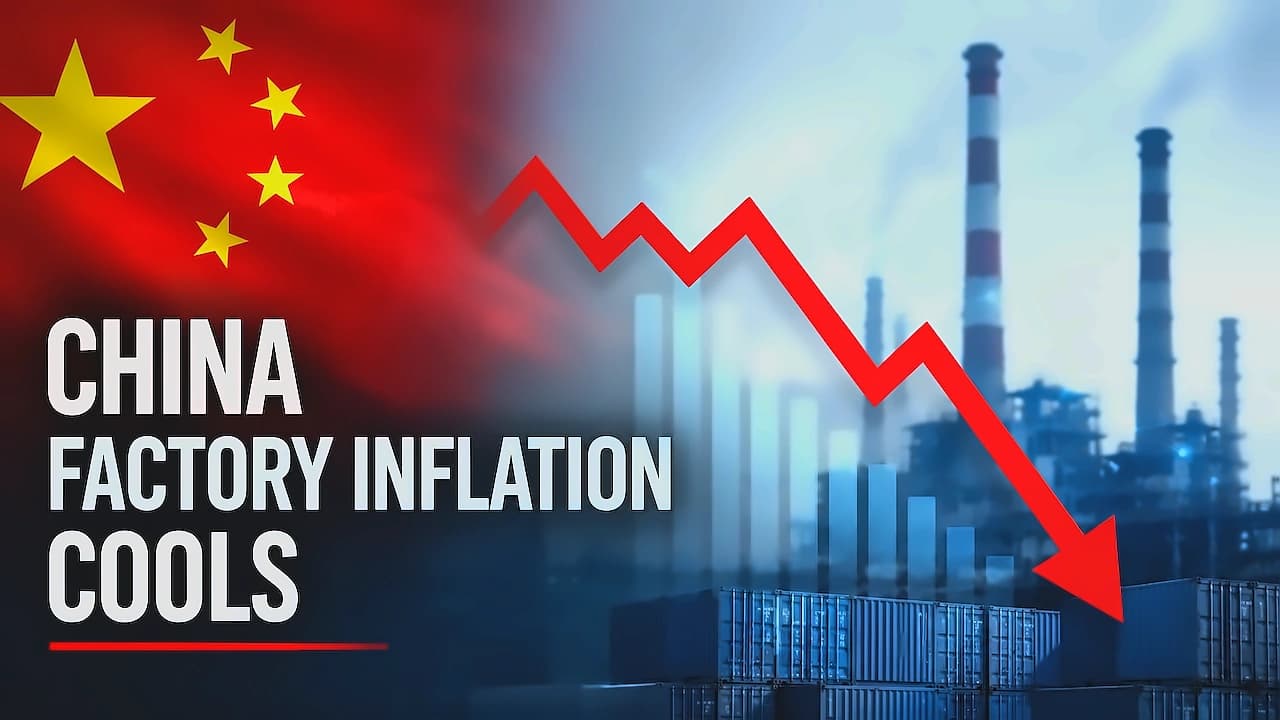
China's factory-gate inflation accelerated to its fastest pace in four years during June, with producer prices rising 4.1% year-on-year, marking the fourth consecutive monthly increase and matching Bloomberg forecasts. According to Reuters, this reading was the strongest since July 2022 and followed a 3.9% increase recorded in May. The acceleration was driven partly by a favourable comparison with last year's lower base and by elevated energy prices following geopolitical tensions in the Middle East. However, on a month-on-month basis, producer prices fell 0.3% in June after global crude oil prices retreated following the ceasefire agreement between the United States and Iran. As per the National Bureau of Statistics, higher prices in coal mining, electrical machinery, electronics and ferrous metals contributed significantly to the increase, while price declines persisted in automobile manufacturing and alcoholic beverages.
China's consumer prices showed a 1% year-on-year increase in June 2026, missing the 1.1% forecast from Bloomberg economists and slowing from 1.2% in May. The Consumer Price Index rose 1.0% year-on-year, coming in below economists' expectations of a 1.1% increase, with the moderation largely attributed to slower price increases for industrial consumer goods including gasoline and gold jewellery. On a monthly basis, consumer prices declined 0.3%, a sharper fall than the 0.2% decline expected by economists and the 0.1% decrease recorded in May. Core inflation, which excludes volatile food and energy prices, eased to 1%, its slowest pace since January, while food prices declined 1.6% from a year earlier. According to Reuters, the uneven nature of China's economic recovery is highlighted by this data, where export-oriented industries benefit from global demand while the domestic economy remains under pressure.

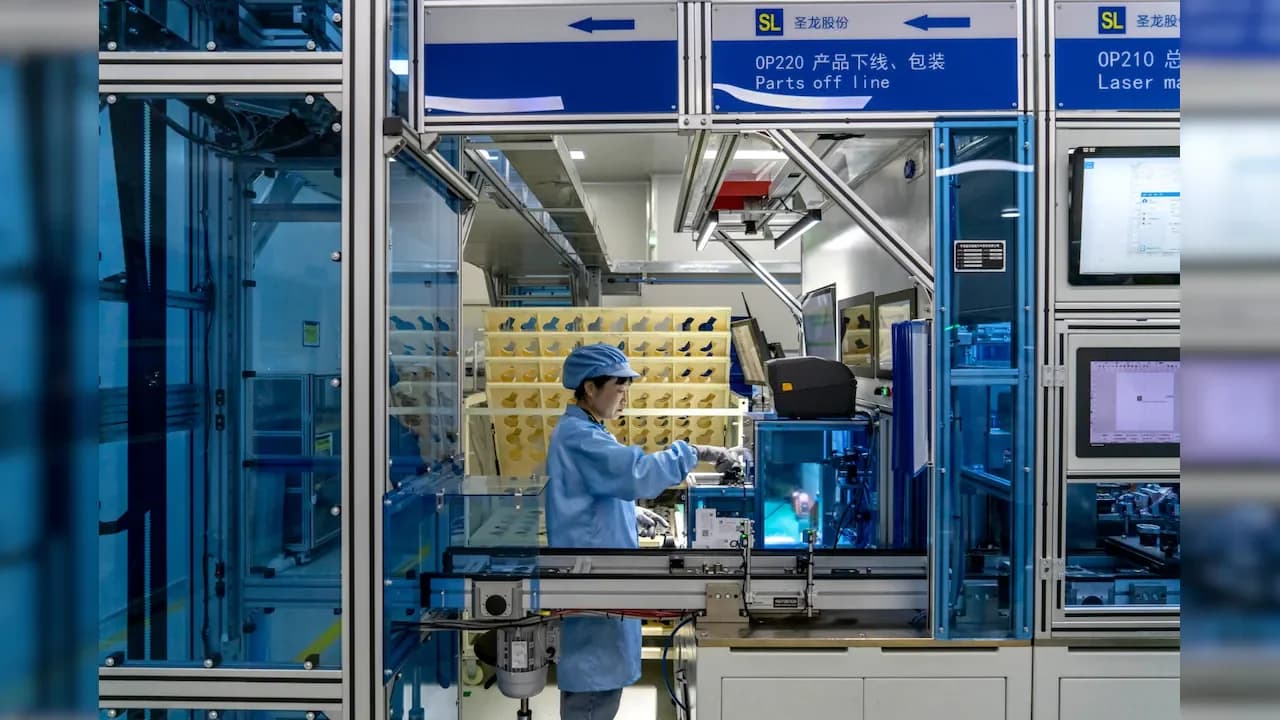
China's manufacturing activity expanded faster than expected in June, with experts citing external demand including for AI-related technology as driving the momentum. Many investors increasingly view China's two-speed growth — marked by robust exports versus weak consumption and housing market — as a defining long-term feature of the Chinese economy. High-tech industries are driving producer prices, with emerging sectors including virtual reality equipment, wearable devices and carbon-based nanomaterials recording monthly price gains. However, household consumption remains subdued, investment activity is yet to recover meaningfully and the prolonged property sector downturn continues to weigh on economic momentum. The weakness in domestic demand was further reflected in China's automobile market, where vehicle sales declined for a ninth consecutive month in June, prompting manufacturers to rely increasingly on overseas markets for growth.
Financial markets showed little immediate reaction to the inflation data, with Chinese equities trading largely unchanged following the release and the yuan strengthening modestly against the U.S. dollar, as per Reuters. China's market regulator has intensified efforts to curb aggressive price competition across several industries through its campaign against so-called "involution-style" competition, targeting persistent price wars in electric vehicles, solar panels, lithium batteries, steel, cement and food delivery services. Economists believe that while inflation has moved away from deflationary territory, price pressures remain modest enough to allow the People's Bank of China to maintain a patient monetary policy stance. The country's strong export performance has also reduced the urgency for large-scale economic stimulus, though analysts argue that stronger policy support will eventually be needed to revive domestic demand.
The dual trend of slowing consumer inflation and accelerating factory prices suggests that China's economic recovery remains uneven, with export-oriented manufacturing benefiting from global demand while domestic consumption faces significant headwinds. Despite improving producer prices, manufacturers serving the domestic market continue to struggle to pass higher production costs on to consumers, squeezing profit margins. China likely exited economy-wide deflation last quarter after a three-year stretch, a turnaround driven largely by booming investment in artificial intelligence and the oil shock from the Middle East conflict. The International Monetary Fund on Wednesday forecast China's economy to outperform global growth this year, raising their growth forecast for China to 4.6%, up from their previous projection of 4.4%. However, analysts warn that unless consumer spending and the property market show sustained improvement, Chinese equities are likely to remain driven by sector-specific opportunities rather than a broad-based market rally.