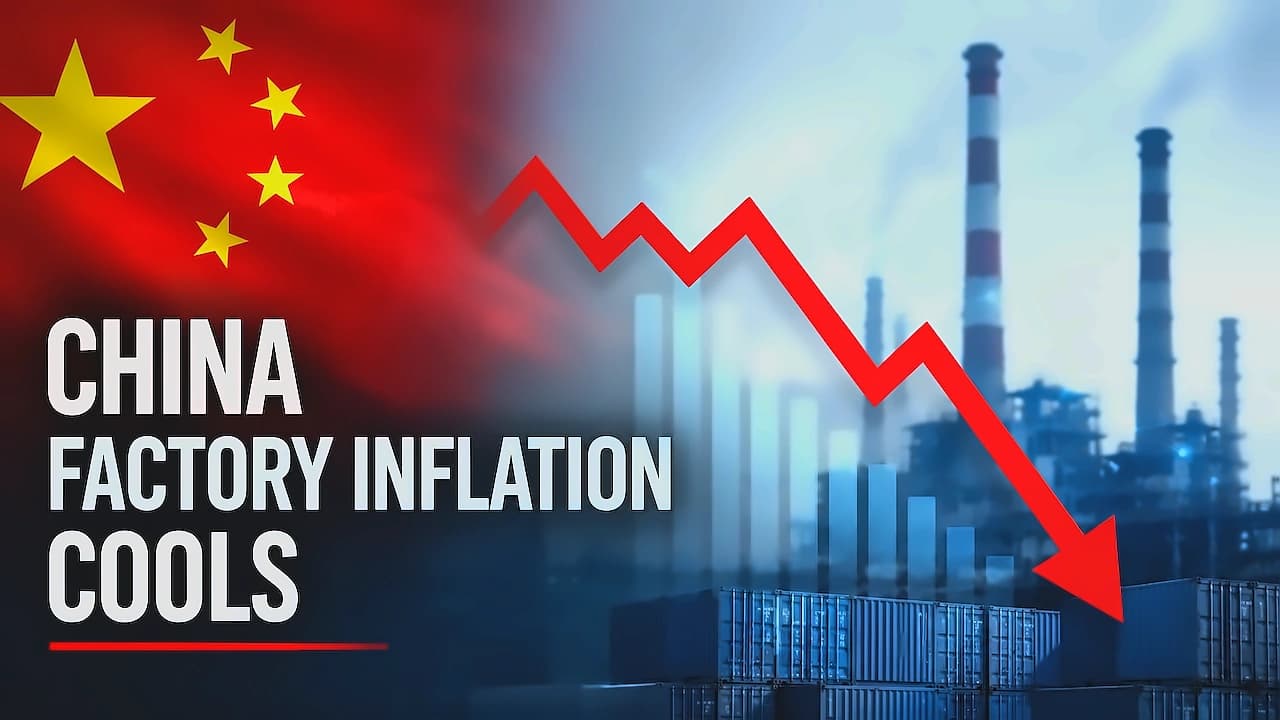
China's producer price inflation eased more than expected in July to its weakest level in three months, while consumer inflation also cooled, according to official data released on August 9 by the National Bureau of Statistics. The producer price index rose 3.5% year-on-year in July, easing from 4.1% in June and coming in below economists' expectations for a 3.8% increase in a Reuters poll. The core consumer price index rose 0.9% year-on-year, with food prices falling 1.5%, while the CPI edged down 0.1% month-on-month compared with an expected 0.2% gain. As per Reuters, the cooling was attributed to lower oil prices, combined with weakening demand, with the Politburo in July signalling stronger fiscal spending as the policy response. The moderation came as global energy prices retreated from earlier peaks despite the ongoing Iran conflict, with lower commodity costs reducing price pressure for some manufacturers, though several companies remain exposed to elevated input expenses and sluggish domestic demand.
Consumer price inflation slowed significantly to 0.5% in July from 1% in June, while core CPI eased to 0.9% from 1%, according to the latest data. The July reading of 0.5% represents a notable deceleration from the previous month's 1% and highlights the persistent weakness in domestic demand. The latest figures could revive concerns over China's prolonged struggle with deflation, as persistent weak demand has weighed on corporate profitability, investment and hiring, particularly among manufacturers serving the domestic market. Despite some upstream and high-tech sectors maintaining strong profit growth, more domestic market-facing manufacturers have struggled against sluggish demand as overall economic growth lost steam. Rising input costs combined with limited pricing power could place further pressure on manufacturers' profit margins and business confidence, with the economic momentum softening in Q2 as noted by economists.
China's leaders are confronting a two-speed economy of strong factory output and exports but weak domestic demand, prompting pledges to bolster growth through accelerated fiscal spending. As reported by Reuters, the Politburo in July signalled stronger fiscal spending as the policy response, with the transmission of fiscal spending expected to take about one quarter to be felt. Factory activity contracted in July in official surveys and slowed to a four-month low in private-sector surveys, with both data sets showing weakening new orders. Chinese leaders have pledged to accelerate fiscal spending on infrastructure projects to boost economic growth through year-end, though economists note the faster fiscal spending in the second half of the year is likely to be felt with a lag of about one quarter. According to ANZ's senior China strategist Zhaopeng Xing, inflation will follow an M-shaped trajectory this year. As noted by Pinpoint Asset Management's chief economist Zhiwei Zhang, the figures were consistent with other economic indicators, including a larger-than-expected decline in China's purchasing managers' index.
The decline in producer inflation also reflects weak domestic demand, as China's economy continues to show a divergence between strong exports and manufacturing output and softer local consumption, limiting the ability of factories to fully pass higher production costs on to customers. With oil prices easing from earlier highs but remaining volatile, the key question for China's economy is whether inflation can regain momentum without a stronger recovery in household demand. ANZ forecasts full-year PPI of 2.5% and CPI of 1.0%, with economists noting that with household demand for goods still subdued by a property market slump and low job security, deflationary pressures likely remained. The weak inflation data reflects broader economic challenges including weakening domestic demand and the need for targeted policy interventions, though government efforts to curb fierce price wars in major industrial sectors have previously achieved only limited effects. The latest inflation readings may reinforce expectations that Beijing will maintain policy support through the remainder of the year as it seeks to strengthen domestic demand.