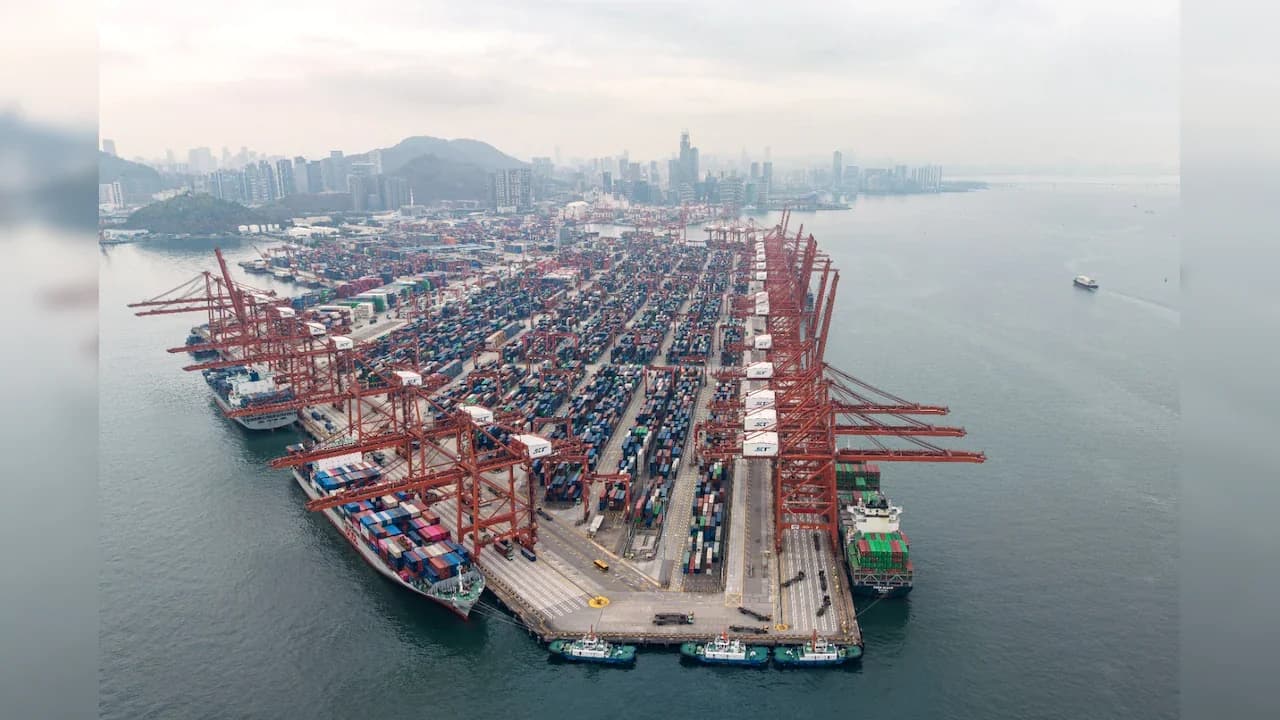
China's factory activity returned to expansion in June, with the RatingDog manufacturing purchasing managers' index slipping to 51.7 from 51.8 in May, according to the latest private survey data. While short of the median estimate of 50.1 from economists surveyed by Reuters, this reading brought the average for the last three months to 51.9, the highest since the fourth quarter of 2020, indicating sustained manufacturing momentum. The recovery was driven by strong high-tech manufacturing exports linked to the AI boom, with exports to meet international demand for chips and other AI-related products, as well as front-loading to get ahead of new US Section 301 tariffs due late July being the primary drivers. As reported by Eurasia Group's China director Dan Wang, "Exports to meet international demand for chips and other AI-related products, as well as front-loading to get ahead of new US Section 301 tariffs due late July and improved domestic demand due to lower upstream costs underpinned the improvement." The sub-index for new export orders returned to expansion in June, rising to 50.1 from 48.6, while the production and overall new orders gauges edged up to 51.4 and 51.2 from 51.2 and 49.9, respectively. The China Federation of Logistics and Purchasing (CFLP) also released this data, making it an even more leading indicator for the manufacturing sector.
The broader economic picture showed positive momentum across sectors, with the non-manufacturing measure of activity in construction and services rising to 50.2 from 50.1 in the previous month, as reported by the statistics office. Any reading above 50 signals growth in the sector, suggesting that China's economic recovery extends beyond manufacturing into services and construction activities. The composite PMI came in at 50.6 compared with 50.5 a month earlier, providing additional support to the overall economic outlook. The number of domestic infrastructure projects ticked up over the last month, according to Eurasia Group's China director Dan Wang, with both measures closely watched by traders as China is Australia's largest trading partner.
The manufacturing improvement comes as a spurt in sales overseas this year is providing a cushion for China by shoring up industrial production, with strong high-tech manufacturing exports linked to the AI boom being the primary driver. This export-driven growth strategy has been particularly effective, with China's export prices jumping at their fastest rate in over three years in May, marking a significant turnaround after a long streak of declines. A global investment supercycle in artificial intelligence is driving up prices and demand for hardware made by China's manufacturing sector. There is enormous international demand for semiconductors powering data centres and advanced electronics, playing to China's manufacturing strengths, while exports of automated data processing equipment jumped 60% over the same period, according to the latest trade data. The June PMI release "should be viewed as a moderately positive surprise for markets," according to Hao Zhou, chief economist at Guotai Junan International Holdings, as reported by CNBC TV18.
The manufacturing strength extends across Asia, with Taiwan continuing to lead the region with a PMI reading of 55.2, despite easing marginally from May, while South Korea softened to 52.1 from 54.8 and Japan edged up slightly to 54.8 from 54.5. However, much of Southeast Asia was also in expansion territory in June, save for Indonesia whose PMI slipped to a one-year low of 46.9 as inflation pushed up costs for manufacturers and dampened consumer demand. As per RatingDog founder Yao Yu, "The manufacturing sector maintained a steady expansion in June, supported by sustained new order growth, easing cost pressures and improved labour market conditions." However, retail sales and investment both fell in May at rates unseen since the pandemic, suggesting the economy remains fragile despite manufacturing strength. New orders increased for 13 straight months, matching a record set in 2021 that was the best since 2018, while input-cost inflation slowed to a five-month low, easing pressure on factory margins. The private RatingDog survey has generally indicated stronger manufacturing conditions than China's official PMI over the past year, reflecting the resilience of exports and being considered more representative of smaller and export-oriented manufacturers.
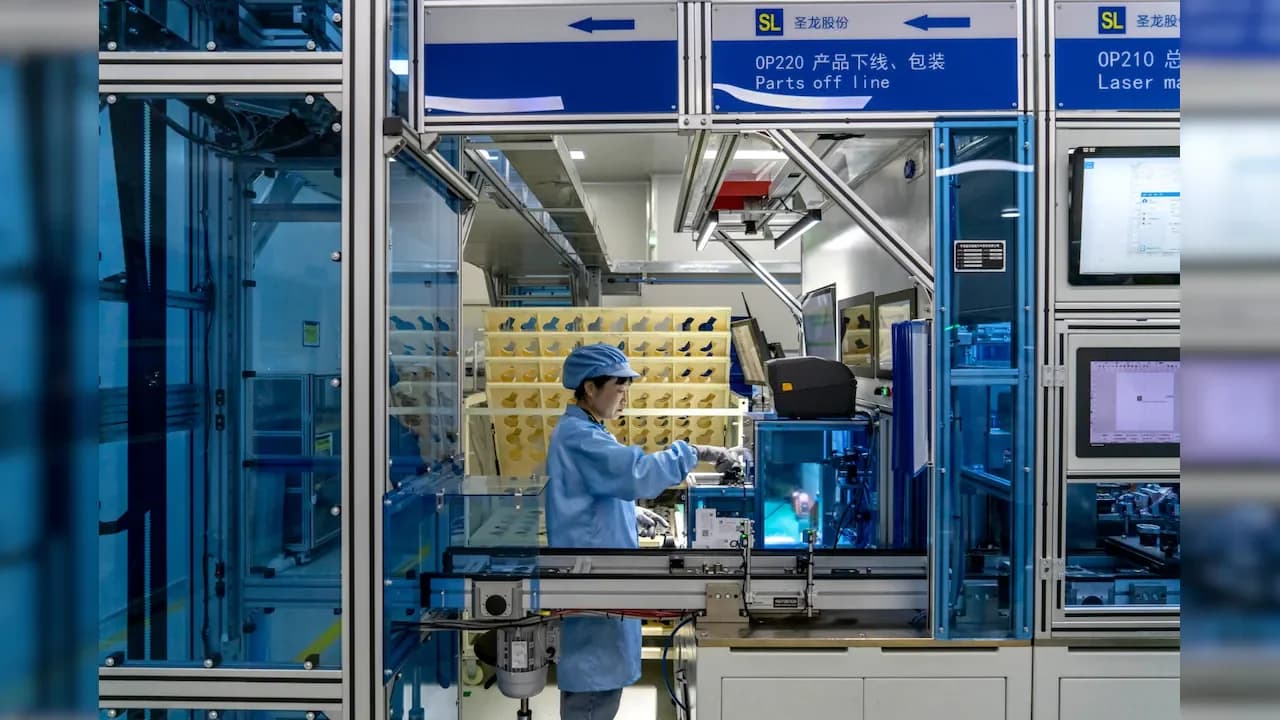
Despite manufacturing improvements, trade risks continue to weigh on China's economic outlook as major trading partners consider measures to address trade imbalances. The United States has maintained elevated tariffs on Chinese goods, despite an improvement in bilateral ties following a meeting in May between US President Donald Trump and Chinese President Xi Jinping, with the tariffs continuing to weigh on Chinese exports to the US market. Trade tensions with the European Union also remain unresolved, with both sides agreeing to work towards progress on trade disputes by October following talks in Brussels between EU Trade Commissioner Maroš Šefčovič and Chinese Commerce Minister Wang Wentao. As noted by Capital Economics' Julian Evans-Pritchard, "The recent improvement in manufacturing has been heavily dependent on exports and AI-related tech," highlighting China's vulnerability to external trade policies. Henry Hao, senior economist at Commerzbank AG, pointed to "a two-speed manufacturing activity" where "strategic tech sectors are booming, but traditional exporters are feeling the pinch from cooling global demand amid the conflict in the Middle East."