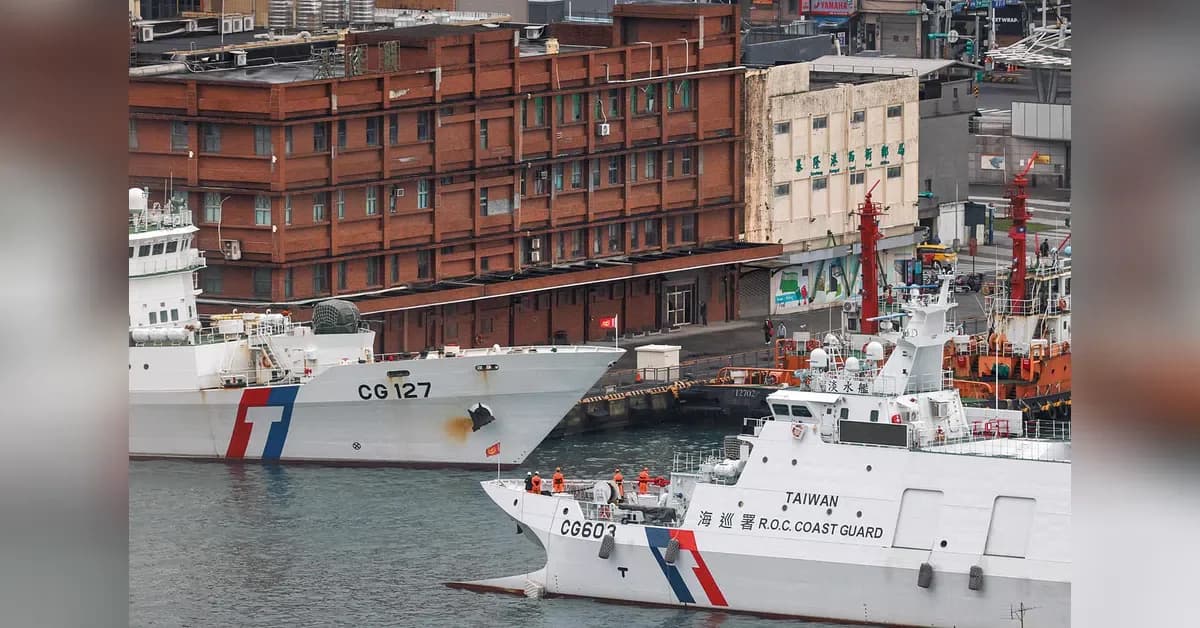
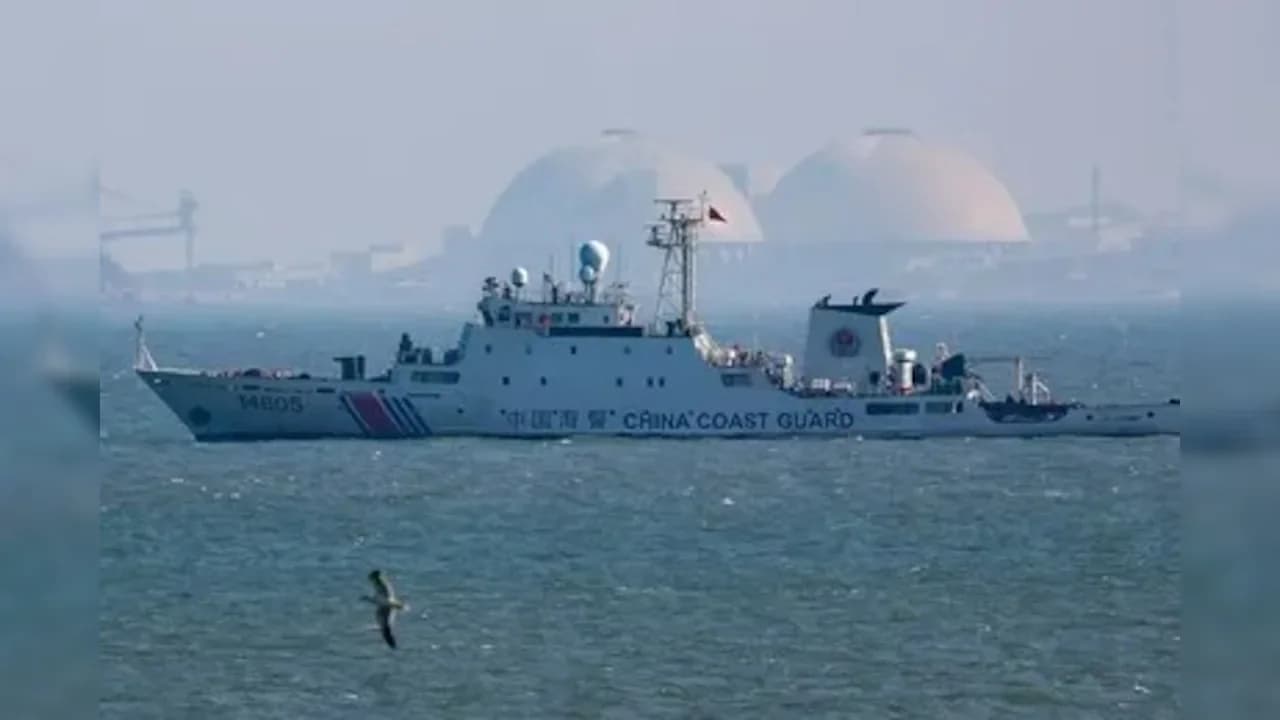
China has deployed two Coast Guard cutters per month east of Taiwan since June, marking the first time such patrols have been reported in the area in data going back to January 2025. According to Bloomberg calculations using ship-tracking data, these patrols covered a vast area of 27,100 square nautical miles - more than twice the size of Taiwan. The ships maintained a position 30 nautical miles from the island's eastern coast, remaining outside Taiwan-claimed waters. China's Coast Guard has described such deployments as 'routine law-enforcement' patrols and has pledged to strengthen patrols to safeguard Beijing's maritime rights. The Taiwan Coast Guard Administration described the deployments as attempts to 'leverage 'law enforcement patrols' to establish a new normal for its maritime presence.'
The eastern waters handle 527 transits in June, exceeding the 420 transits through the generally busier Taiwan Strait according to MarineTraffic data. Vessels ferrying oil, gas, iron ore and agricultural products made these transits through the eastern waters. As reported by Bloomberg, controlling the east would become essential to enforcing an effective blockade of Taiwan during a Chinese invasion of the island. The area forms a maritime link with the Philippines and wider Pacific, with sea lanes leading to key ports and military facilities where the US and regional allies could deliver supplies. As Jing Ge from Florida International University noted, 'Beijing wants to demonstrate this back door is no longer uncontested.'
China sent larger law enforcement ships, the 10,000-ton Haixun 09 and the 6,600-ton Haixun 06, to circle Taiwan during their five-day voyage in June. According to Chinese state media, these vessels questioned foreign commercial ships passing along Taiwan's Pacific coast for the first time and inspected 198 passing vessels during the mission. The operation included China's largest deep-sea survey ship and a rescue vessel, demonstrating Beijing's commitment to establishing comprehensive maritime control. China kept up the pressure by sending two more Coast Guard cutters to relieve the Daishan and Baita after a month in the area, described by a U.S. congressional commission as Beijing's way to establish a continuous presence.
Defense analysts Holmes Liao and former US Director of National Intelligence Dennis Blair have urged Taiwan to reshape its naval fleet around smaller ships capable of independent missions to counter China's maritime pressure. In a Foreign Affairs article, they recommended building stealthy corvettes weighing between 700 and 1,000 tons armed with missiles and drones, noting that such vessels would be harder to detect while carrying enough firepower to strike Chinese ships in the Taiwan Strait. The authors criticized Taiwan's planned light frigates, calling them 'impediments to the radical transformation of the Taiwanese navy that the Chinese threat requires.' They emphasized that Taiwan's shipbuilding industry can rapidly produce these vessels, with all 12 Tuo Chiang-class corvettes expected to be commissioned by the end of the year. The restructured fleet would complement Taiwan's plans to build eight Narwhal submarines, with the first submarine currently undergoing sea trials.
The US has called China's actions 'deeply destabilizing' while the Taiwan Coast Guard Administration described the deployments as attempts to 'leverage 'law enforcement patrols' to establish a new normal for its maritime presence.' As reported by Bloomberg, the US-China Economic and Security Review Commission noted that using Coast Guard rather than PLA Navy avoids military confrontations and allows Beijing to portray activities as law enforcement while establishing the persistent presence necessary for a future blockade. Taiwan responded by holding military exercises in mid-July on Orchid and Green Islands for the first time in three decades, while China staged passing exercises with Indonesia in the area - the first time Beijing has announced training with another country in the eastern waters.