India will add 100 vessels to its merchant ship fleet over the next five years, Union Minister of Ports, Shipping and Waterways Sarbananda Sonowal announced during the inaugural Sagar Samvad conference of the National Shipping Board. The government's interventions are specifically aimed at cutting $75 billion in freight bills and increasing Indian tonnage. The announcement was made during the full-day event themed "Charting the Roadmap Towards Maritime India Vision 2030 and Maritime Amrit Kaal Vision 2047," which brought together senior officials, shipowners, financiers and maritime trainees. Currently, India has a merchant fleet of 1,592 vessels with a total gross tonnage of 14.02 million GT, as confirmed by the latest Indian Shipping Statistics 2025 report, representing a 3.04% increase from the previous year. Addressing the conference, Sonowal emphasized that the National Shipping Board (NSB), established in 1958 and older than the ministry it advises, is tasked with ensuring that India's shipping policy is formulated only after listening to the voices of those who sail, own, and fund the industry.
The fleet expansion comes at a critical time when nearly half of India's registered vessels are more than 20 years old, creating a significant operational challenge. According to the Indian Shipping Statistics 2025 report, the fleet composition reveals concerning ageing patterns: 744 vessels above 20 years old account for 5.44 million GT, making it the largest age group by both vessel count and tonnage. Additionally, 327 vessels aged 16-20 years account for 4.57 million GT, bringing the total of older vessels to 1,071 vessels representing 67.27% of the fleet with 10.01 million GT capacity. The overseas fleet faces an even more severe challenge, with 207 vessels (41%) above 20 years old accounting for 4.52 million GT of the 12.32 million GT deployed for overseas trade. The Directorate General of Shipping (DGS) has imposed additional scrutiny, requiring prior technical clearance for vessels aged 25 years and above, with specific age-related requirements for older tankers. This ageing profile is particularly significant as India's fleet has expanded steadily, adding only 346 vessels over 10 years - about 35 vessels annually - while tonnage increased from 10.51 million GT to 14.02 million GT over the same period.
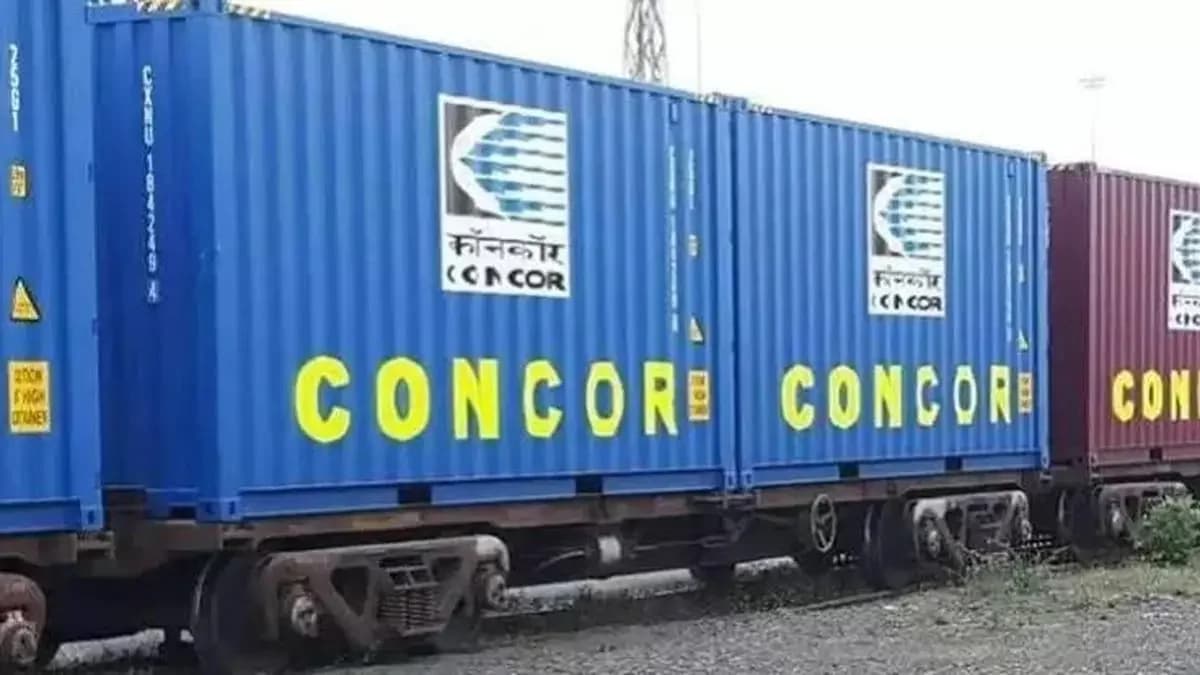
Shipping Corporation of India (SCI) operates the largest existing fleet with 58 vessels and 5.261 million deadweight tonnes as of March 31, 2026, making it the most direct beneficiary of the 100-vessel expansion plan. During FY26, SCI acquired two Very Large Gas Carriers, Sahyadri and Shivalik, and has entered into multiple expansion arrangements. In September 2025, SCI signed a memorandum of understanding with major oil public sector companies for joint acquisition, ownership, operation and management of vessels for international and coastal transportation of petroleum, petroleum products, petrochemicals and other hydrocarbon cargoes. In February 2026, SCI entered into another arrangement with Container Corporation of India, Jawaharlal Nehru Port Authority, V.O. Chidambaranar Port Authority, Chennai Port Authority and Sagarmala Finance Corporation for acquiring, owning, leasing and operating container vessels, containers and related assets for export-import and coastal trade. SCI's liner operations had a nominal capacity of around 20,000 twenty-foot equivalent units as of March 31, 2026, including two owned container vessels, two chartered vessels and loading rights on 17 partner vessels through consortium arrangements.

The government has been actively attempting to woo foreign shipowners to reflag their vessels under the Indian flag, as reported by Business Standard. Reflagging a vessel means changing the country where a ship is registered to ensure it sails under a new national flag, which controls the tonnage of the vessel and generates revenue from it. Major shipowners including Danish giant AP Moller-Maersk, French container mover CMA CGM, and Japanese carrier Mitsui O.S.K. Lines have already reflagged their vessels to the Indian flag in the past. Union Minister of State for Ports, Shipping and Waterways Shantanu Thakur noted during the Augmentation of Indian Tonnage panel that India pays close to $75 billion every year in freight to foreign shipping lines to move cargo as critical as crude oil, gas, coal and urea. He explained that this is not a performance problem for Indian shipowners but a competitiveness and demand-partnership problem, emphasizing that for India to become a Viksit Bharat by 2047, it cannot depend on the goodwill of others to secure its own trade routes. Industry representatives noted that operating under an Indian flag remains 16% to 20% costlier than operating under a foreign one, with the gap attributed to India's tax on ship imports and maintenance services, tax deducted at seafarers' wages, tax on freight and higher domestic capital costs. The cost disadvantage is particularly challenging under India's Right of First Refusal (RoFR) framework, under which Indian shipping companies are expected to match foreign freight rates to secure cargo, making it difficult for domestic shipowners to expand their fleets despite the strategic importance of having greater control over cargo movement.
The government has achieved significant success with its Container Manufacturing Assistance Scheme worth ₹10,000 crore, with global shipping major Maersk now ordering containers built on Indian soil, as acknowledged by PTI reports. This development demonstrates the growing capability of Indian shipbuilding industries and their ability to compete with international manufacturers. Union Minister Sonowal acknowledged the success of this scheme during the Sagar Samvad event, highlighting that Maersk is now purchasing containers manufactured in India. The success of this scheme represents a major milestone in India's maritime manufacturing capabilities and could serve as a model for future industrial development initiatives. The government's push comes as India seeks to expand its maritime capacity under Maritime India Vision 2030 and Maritime Amrit Kaal Vision 2047.
Denmark is emerging as a key partner in India's maritime transformation, with several Danish companies eyeing opportunities in vessel equipment, propulsion systems, ship recycling, and green fuels after India announced a ₹70,000 crore maritime support package and ambitious sector targets. According to Business Standard, Denmark's Ambassador to India Rasmus Abildgaard Kristensen confirmed that Danish companies are particularly interested in ship recycling, port decarbonisation, onshore power, green fuels and maritime technology. Major Danish players include AP Moller-Maersk, which handles a fifth of India's containerised trade and is eyeing a larger role in the Indian blue economy, with the company's terminal arm APM Terminals operating India's first private port in Pipavav, Gujarat, under a $2 billion expansion plan. The government's ₹25,000 crore shipbuilding financial assistance scheme will require ships to have a sizeable portion manufactured domestically, potentially creating opportunities for Danish technology providers. India and Denmark are also exploring collaboration on maritime decarbonisation, including a possible green shipping corridor, with the policy framework prioritising local value creation while actively inviting foreign participation in technology, high-value components and green maritime solutions.
The National Shipping Board's roadmap centers on five key areas: fiscal reforms, assured cargo support, access to competitive financing, regulatory streamlining, and improved ease of doing business. These measures, if adopted, could help India add 100 ships to its fleet within five years, moving toward the Maritime Amrit Kaal Vision 2047 target of ranking among the world's top five ship owning nations. Under the sector's Right of First Refusal mechanism, Indian owners are still expected to match foreign freight rates to win cargo, creating additional cost pressures for domestic operators. Union Minister Sonowal described the NSB's five-point roadmap as "the architecture of a nation choosing, at last, to own its own trade," emphasizing that under the visionary leadership of Prime Minister Narendra Modi, India is quadrupling its port capacity to 10,000 million tonnes a year by 2047. The government is also seeking to build a broader domestic maritime ecosystem, with access to long-term, low-cost capital likely to be critical given the high upfront cost of ships and the financing advantage enjoyed by international operators. The NSB's proposed reforms are aimed at enabling Indian shipowners to compete on more comparable terms, though the 100-ship target may not translate into 100 net additions as the fleet faces significant ageing challenges with older vessels requiring replacement.