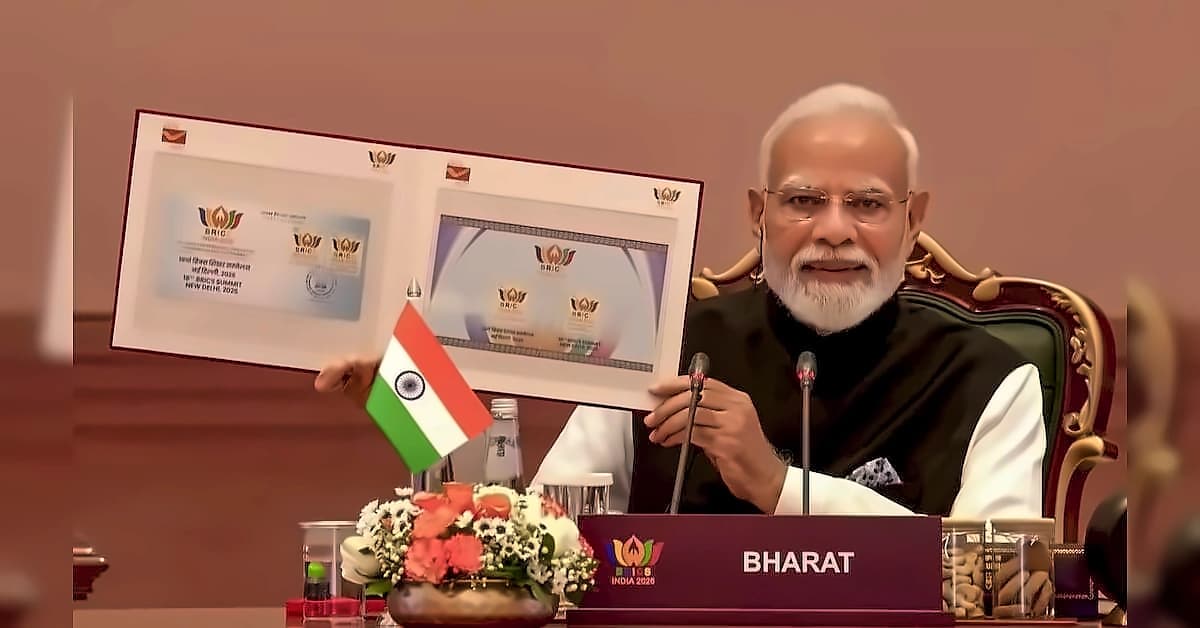
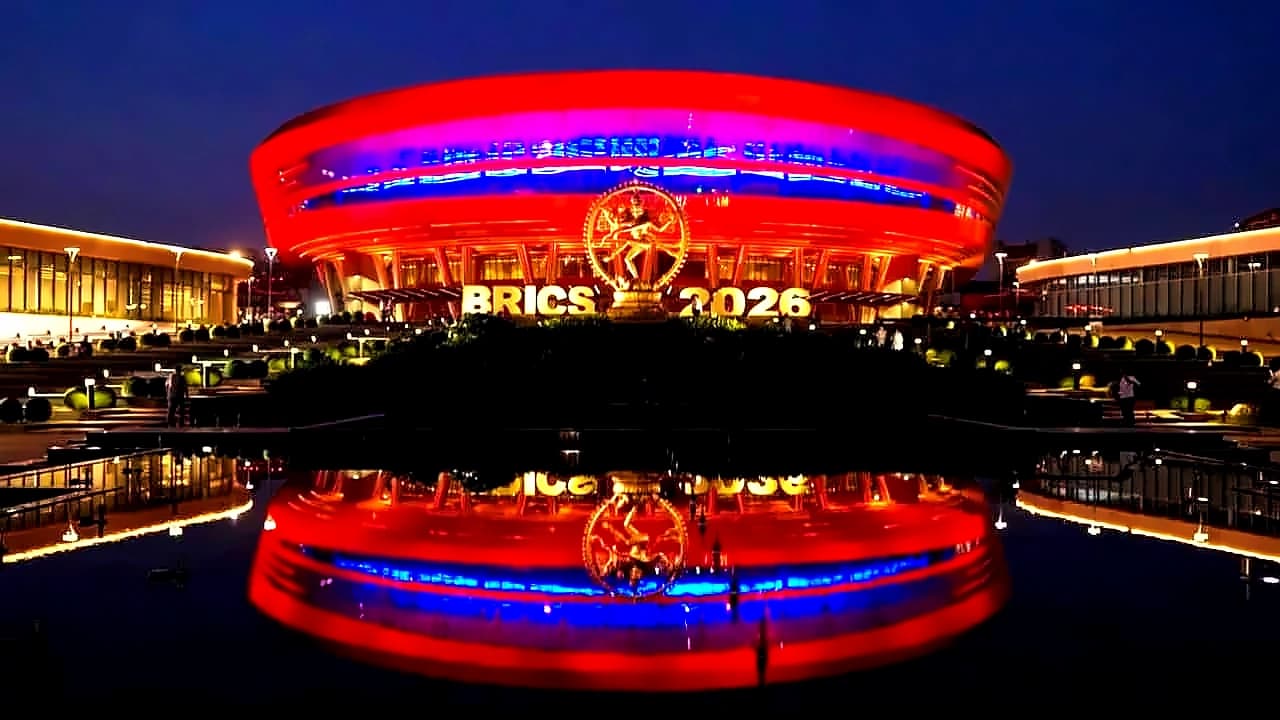
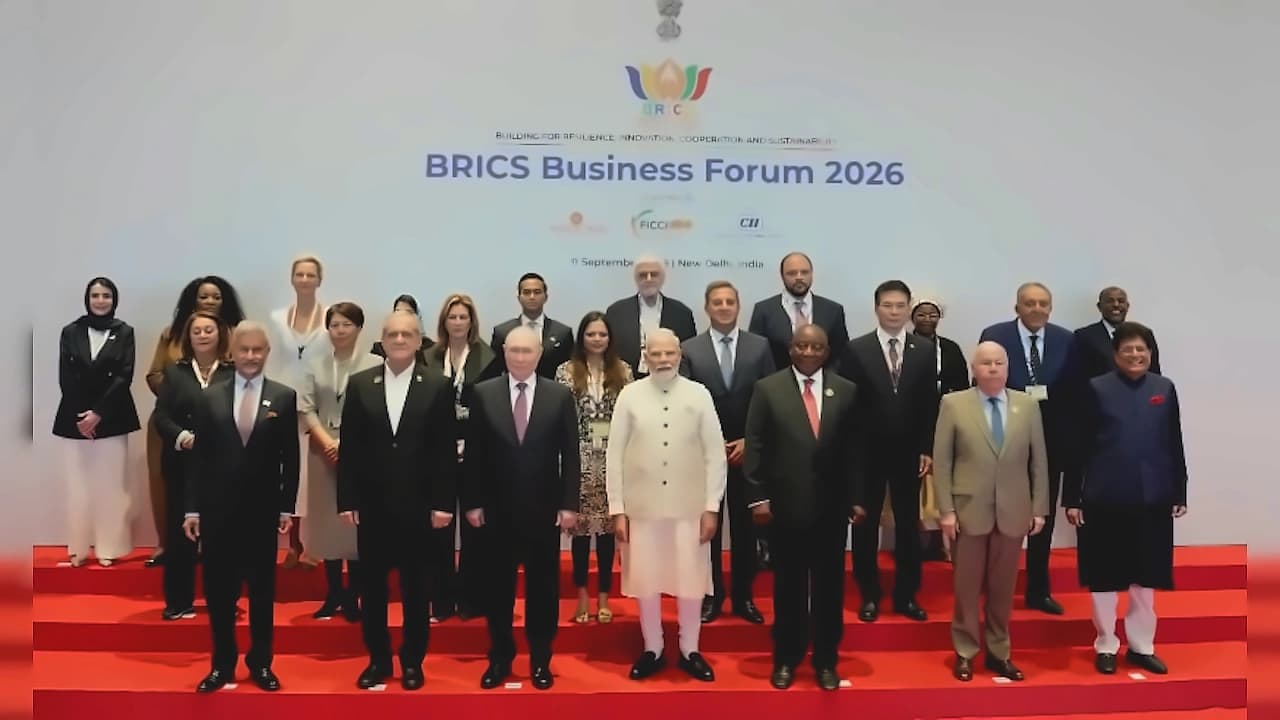
BRICS leaders convened for the second day of the 18th BRICS Summit in New Delhi on September 13, 2026, focusing on the core pillars of resilience, innovation, cooperation and sustainability. The session, titled 'Resilience, Innovation, Cooperation and Sustainability: Shaping the Future for Inclusive Global Growth', was held at the Summit Hall inside Bharat Mandapam, providing an opportunity for leaders to deliberate on areas of common interest and discuss ways to strengthen cooperation among member countries. According to Business Standard, the discussions are expected to further shape the grouping's priorities and assess its evolving role in global governance, economic cooperation and sustainable development. The summit continues under India's 2026 chairship theme of 'Building for Resilience, Innovation, Cooperation and Sustainability'.
BRICS leaders achieved a significant diplomatic breakthrough by adopting a joint statement calling for restraint in the Middle East war at the 18th BRICS Summit held in New Delhi on September 12, 2026. The declaration represents a major diplomatic achievement as Iran and the United Arab Emirates signed up to the joint statement, marking the highest-level meeting between the two countries since the start of the six-month-old conflict. According to Reuters, Iranian President Masoud Pezeshkian met Abu Dhabi Crown Prince Sheikh Khaled bin Mohamed bin Zayed Al Nahyan on the summit's first day, discussing regional and international issues, de-escalation, stability, and efforts to advance regional peace. The joint declaration expresses deep concern over the continued escalation of tensions in Middle East/West Asia and calls for exercising maximum restraint, as well as avoiding actions that could further aggravate the situation. The declaration also calls for the protection of civilians, urges respect for the sovereignty and territorial integrity of states, and stresses the need to protect global trade, supply chains, energy flows and maritime security. According to latest reports, Iran could unveil an agreement on a temporary shipping lane through the Strait of Hormuz on Monday, marking a potential breakthrough in regional tensions.
BRICS leaders unanimously adopted the New Delhi Declaration 2026 at the 18th BRICS Summit held in the Indian capital on September 12, 2026, outlining the group's key priorities in sustainable growth, innovation, finance, healthcare, energy and people-to-people exchanges. The declaration emerged from respective ministerial meetings held in July and August, with outcomes from the BRICS Transport Ministers' Meeting in Nagpur specifically welcomed in the final document. According to the latest declaration, the frameworks include a BRICS Forum on Sustainable Aviation Fuels (SAF), a Framework of Cooperation for Exchange of Knowledge on Transport Decarbonisation, a BRICS Urban Mobility Hub, and a logistics supply-chain cooperation framework. The declaration also welcomed a BRICS Railway Research Network proposal for enhanced cooperation. The countries in the multilateral forum reaffirmed their commitment to strengthening cooperation in transport policy, investment, technology and capacity building to develop sustainable and resilient infrastructure.
The BRICS Logistics Supply Chain Cooperation Framework represents a cornerstone of the group's practical cooperation initiatives, with the Prime Minister emphasizing that the framework will help make our supply chains more reliable and resilient. As per Business Standard, BRICS nations collectively represent approximately 40 per cent of global GDP and nearly 26 per cent of global goods trade, making supply chain cooperation strategically important. The framework will strengthen cross-sector transport logistics resilience and sustainability among Brics members, with the guiding principle including promotion of environmentally sustainable, climate resilient logistics and supply chain practices. One of the core aims driving the framework is to enhance domestic manufacturing capacities and reduce long-term dependence on fully built imports within all Brics countries. The transport working group noted that BRICS countries collectively possess strong and complementary capabilities including cargo and shipping services, technologies and processes, availability of raw materials, manufacturing ecosystems, technical expertise, automation technologies, spare parts supply networks, ports, and logistics corridors.
The BRICS Urban Mobility Hub was finalised in August by the joint working group of ministers for knowledge exchange and cooperation in accessible, affordable, inclusive and smart urban transport solutions. The declaration states that the BRICS Urban Mobility Hub is intended to facilitate knowledge exchange and cooperation on these sustainable urban transport solutions. The hub will provide support for collaborative research, innovation, and pilot initiatives in areas such as multimodal integration, clean and electric mobility, intelligent transport systems, smart urban transport solutions, advanced air mobility, transit-oriented development and smart mobility solutions supported by road safety. The hub also espouses promotion of technical cooperation in the planning, financing, construction, operation, monitoring and evaluation and maintenance of urban transport systems. The Prime Minister also highlighted the BRICS Digital Centre of Excellence for Smart Grids and Energy Storage, stating that 'For Smart Grids and Energy Storage, we have established the Brics Digital Centre of Excellence. This will help make our clean energy systems more reliable, efficient, and accessible'. This comprehensive approach to urban mobility and energy technology demonstrates the bloc's commitment to addressing climate change impacts on infrastructure development.
The declaration encourages closer interaction among BRICS medical product regulatory authorities and supports extending existing mechanisms to regulators from all member countries. This initiative is intended to improve the availability and accessibility of quality, safe and effective medical products across the BRICS member nations. The collaboration reflects the bloc's commitment to enhancing healthcare infrastructure and medical product standards within the grouping, with the declaration specifically focusing on expanding healthcare ties as a major priority area.
The declaration places particular emphasis on a practical, inclusive and people-centred approach, reflecting the priorities of India's 2026 BRICS chairship and the group's focus on delivering tangible results. According to the document, more than 400 meetings and engagements involving ministers, parliamentarians, officials, experts, businesses and representatives of civil society were held across 30 Indian cities within the BRICS framework during the year. These activities contributed to collective resilience, innovation-driven economic growth and long-term sustainability. The expanded alliance now comprises 11 full members: Brazil, Russia, India, China, South Africa, Egypt, Ethiopia, Indonesia, Iran, Saudi Arabia, and the United Arab Emirates, along with 10 partner countries: Belarus, Bolivia, Cuba, Kazakhstan, Malaysia, Nigeria, Thailand, Uganda, Uzbekistan, and Vietnam. Collectively, this alliance represents approximately 49.5 per cent of the global population, 40 per cent of world GDP, and 26 per cent of international trade, positioning BRICS as a vital platform for diplomatic and political alignment among major emerging markets and developing countries.