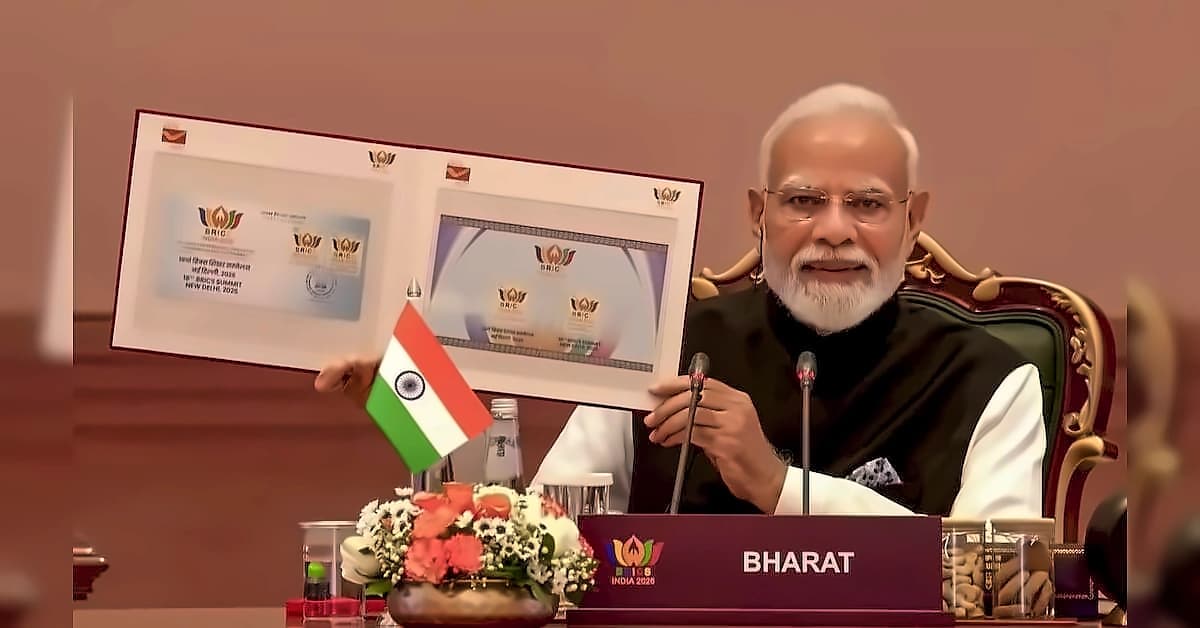
The BRICS grouping achieved a significant diplomatic breakthrough on Saturday by adopting the Delhi Declaration by consensus at the 18th BRICS Summit in New Delhi. According to reports from Business Standard, Prime Minister Narendra Modi announced the adoption of the declaration at the end of the opening day's deliberations at the two-day India-hosted summit. The negotiations on the text of the declaration went down to the wire as both Iran and the UAE had hardened their positions initially, with the agreement following intensive negotiations that continued until 4:00 AM on Saturday. As reported by Reuters, Kremlin spokesman Dmitry Peskov expressed hope that leaders could find wording acceptable to both countries, acknowledging that the differences between Iran and the UAE had a 'negative impact' and were obstructing the drafting of a joint declaration. India worked to bridge differences among Iran, Saudi Arabia and UAE, with the breakthrough assuming particular significance given that these countries are all part of the same forum despite deep differences and competing positions on regional and geopolitical issues.
The New Delhi Declaration establishes comprehensive frameworks for artificial intelligence governance and technology cooperation among BRICS countries. The declaration commits to implement the Brics Leaders' Statement on the Global Governance of Artificial Intelligence and recognizes that AI presents immense opportunity to stimulate economic growth and sustainable development for all. Leaders congratulated India on the successful holding of the AI Impact Summit in February 2026, alongside China's Shanghai-based World AI Conference, highlighting India's central role in shaping the bloc's technology agenda. Industry leaders emphasized that AI is no longer a standalone technology theme; it is becoming a horizontal capability across sectors, with enormous potential for AI to improve enterprise productivity and transform sectors such as financial services, health care and education. As per Business Standard, India is particularly well-positioned, with deep technology talent, digital public infrastructure and a large domestic market where solutions can be tested at population scale.
The New Delhi Declaration introduces comprehensive new frameworks for startup cooperation and innovation among BRICS countries. The declaration welcomed the establishment of the BRICS Incubator Network, which will connect incubators and national nodal agencies across BRICS countries to facilitate cross-border market access and foster innovation-driven entrepreneurship. Under its presidency, India is hosting the summit on the theme 'Building for Resilience, Innovation, Cooperation and Sustainability', with innovation emerging as a key pillar of the grouping's agenda. The declaration said the proposed Startup Innovation Fund would seek to address financing gaps faced by startups at different stages of development by encouraging the mobilisation of finance from public and private sources on a voluntary basis. The grouping also welcomed the Brics Youth Startup Platform, a virtual platform aimed at facilitating dialogue and supporting youth startups across BRICS countries, with the platform intended to enable engagement and networking among young scientists and innovators while facilitating voluntary exchanges. Union Commerce Minister Piyush Goyal welcomed the unanimous adoption, highlighting that the declaration sets out deeper cooperation across emerging technologies, digital infrastructure, startups, MSMEs and science and research.
Prime Minister Modi emphasized urgent reform of the United Nations Security Council (UNSC) during his opening remarks at the summit's closed session on 'inclusive global governance and strengthening'. According to Business Standard, Modi stated that 'the reform of the United Nations Security Council can no longer wait' and called for changes in the voting power, leadership positions and policy priorities of global financial institutions to reflect current economic realities. He stressed that countries that drive global economic growth should also be given proper roles in shaping global economic governance. Modi proposed a three-pronged approach comprising representation, responsiveness and rule-making, stating that the Global South is in the 'front row' of facing global challenges, 'back row' of decision-making. The PM called for changing the current structure of global governance from a 'pyramid of privilege' to 'platform of partnership' where each country has a voice, stake and decisions are human-centric. In his concluding remarks, Modi declared that 'From voice to impact, from privilege to partnership is the resolve' of the 18th BRICS Summit. The declaration backs a greater role for the Global South in global decision-making and calls for reforms to make international institutions more representative, with the grouping expected to deliberate on protecting developing economies from the global impact of the wars in Ukraine and West Asia.
The New Delhi Declaration establishes a comprehensive security framework addressing multiple global challenges. The declaration condemned terrorism in all forms and called for zero tolerance, rejecting double standards and demanding accountability, specifically condemning the April 2025 terrorist attack in Jammu and Kashmir that killed 26 people. It also called for faster adoption of the UN Comprehensive Convention on International Terrorism and demanded greater cooperation against terror financing, human and arms trafficking, drug-related money laundering, cybercrime and illicit virtual-asset flows. The bloc expressed deep concern over the escalation of tensions in the Middle East and called for maximum restraint. The declaration emphasizes the need for nuclear safeguards, safety and security to be upheld during armed conflicts, with the declaration stressing the importance of maintaining nuclear safety and security standards amid conflicts and other situations that could pose risks to nuclear facilities and materials. The declaration is expected to support multilateralism, UN reform, resilient supply chains, digital public infrastructure, climate finance, counter-terrorism cooperation and greater trade in local currencies.
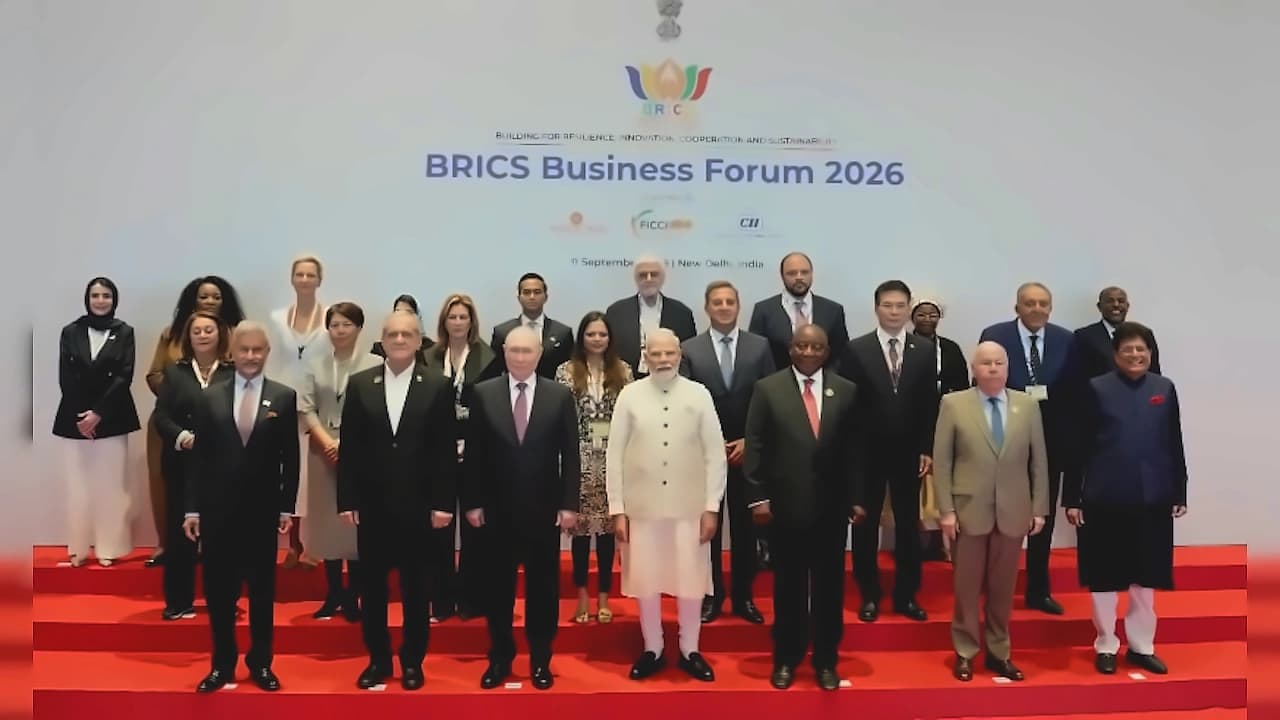
The declaration reinforces BRICS commitment to economic cooperation and multilateral trade frameworks. The bloc condemned unilateral economic and secondary sanctions, saying they are contrary to international law and harmful to development, food security, health and human rights. BRICS also criticised unilateral tariffs and non-tariff barriers, while calling for restoration of a fully functioning two-tier WTO dispute-settlement mechanism. The declaration reaffirmed support for WTO reform and a fair, open, transparent and rules-based multilateral trading system with the WTO at its core, with the bloc backing Ethiopia and Iran's bids to join the WTO and welcoming China's expansion of zero-tariff treatment to 53 African countries. The bloc opposed unilateral tariff and non-tariff measures, warning that they distort trade and disrupt global supply chains, stressing the importance of an open, fair and rules-based multilateral trading system. The grouping also called for urgent reforms of the International Monetary Fund and World Bank to better reflect the weight and interests of emerging and developing economies. The leaders encouraged members to continue discussions aimed at finding practical solutions for cross-border payments among BRICS countries as part of broader efforts to strengthen financial cooperation.
Prime Minister Modi proposed significant institutional reforms for BRICS during the summit, including a 'Brics continuity and implementation mechanism' under which a 'troika' would ensure follow-up of all initiatives and outcomes. According to Business Standard, Modi urged member countries to propose the agenda for the next 20 years beginning with reworking its 'working system', stating that while the BRICS presidency changes every year, it should not hamper institutional momentum. The PM proposed a 'secure digital repository' with a 'nodal point' to record the time limit and implementation status of each decision taken by member countries. In his inaugural address, Modi called for strengthening BRICS and decided upon the 'direction' that 'global reform' should take. The summit ended with a prolonged handshake between Prime Minister Modi and Chinese President Xi Jinping, with China taking over the BRICS chair for next year. The declaration also pushed for stronger cross-border payment systems to facilitate smoother and more efficient international transactions. India also drove financial-infrastructure proposals tied to tech and risk capital, with the declaration noting members expressed interest in taking forward discussions on India's proposal to host a Brics Risk Lab at the GIFT City International Financial Services Centre (IFSC) in Gujarat.