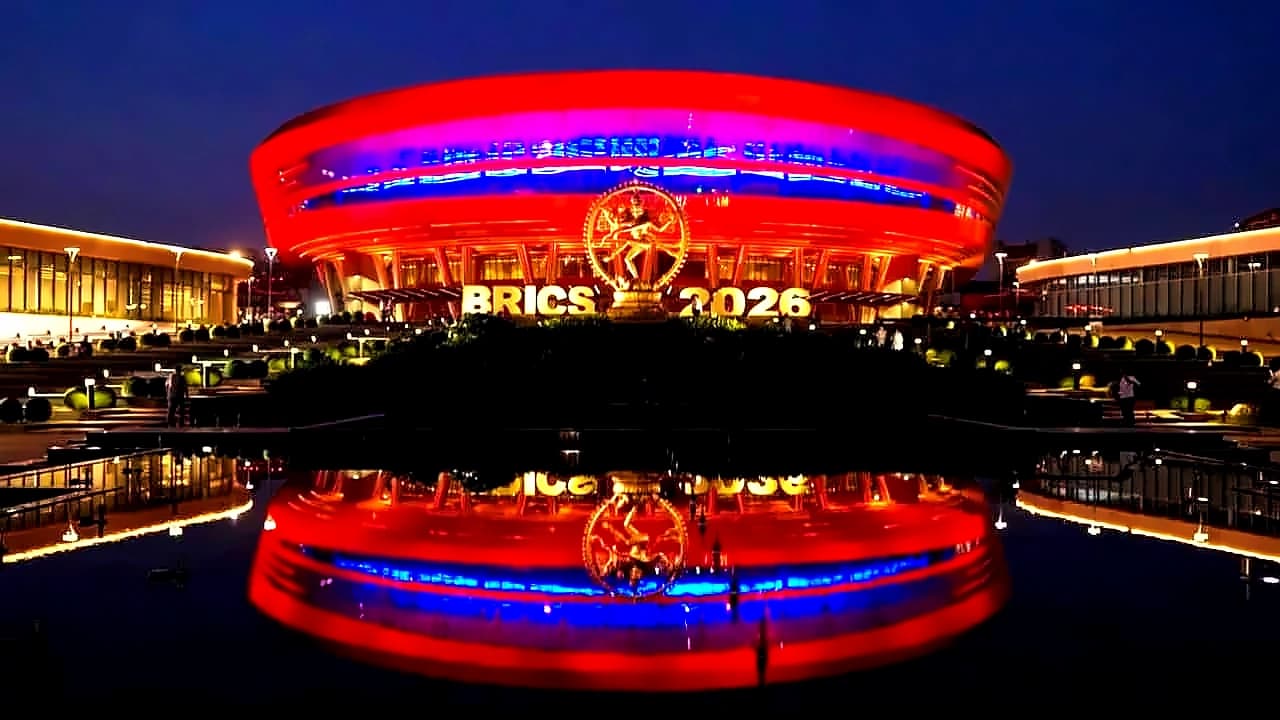
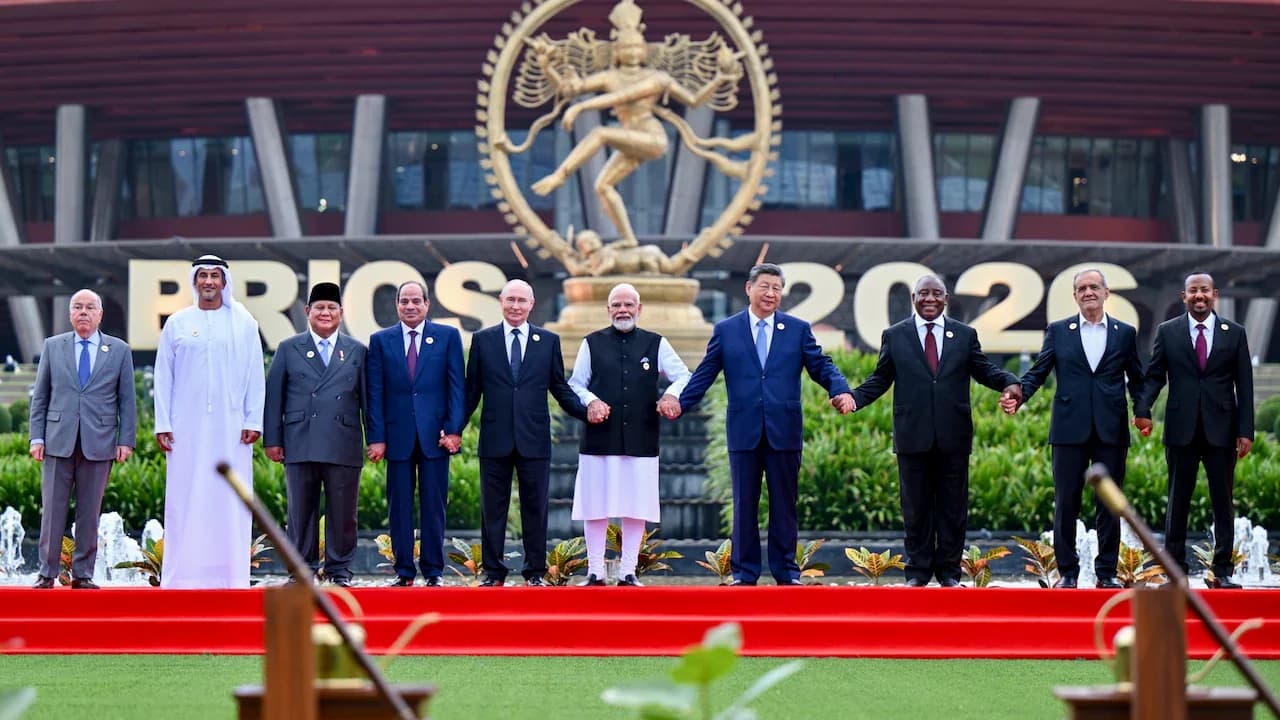
The Brics New Delhi Declaration, adopted unanimously on Saturday at the leaders' gathering, addressed ongoing conflicts in West Asia through diplomatic language while emphasizing the critical link between security and economic development. According to reports from Al Jazeera, the declaration stressed the close link between security and development, noting that current developments in the Middle East and their negative repercussions on the global economy, trade and energy flows, and supply chains affirm this connection. The statement called for maximum restraint and avoiding actions that could further aggravate the situation, while warning against deliberate attacks on civilian infrastructure and nuclear facilities in particular. The declaration also reiterated the commitment of member nations to a peaceful resolution of international disputes 'through dialogue, consultation, and diplomacy'. As per The Times of India, the declaration advocated for a 'multilateral approach' that respects national viewpoints, reflecting the bloc's commitment to collective diplomatic engagement. The declaration comes at a time when US and Iran have resumed tit-for-tat strikes against each other, after a pause in fighting for much of August, with the war directly involving three BRICS members: Iran, the UAE and Saudi Arabia.
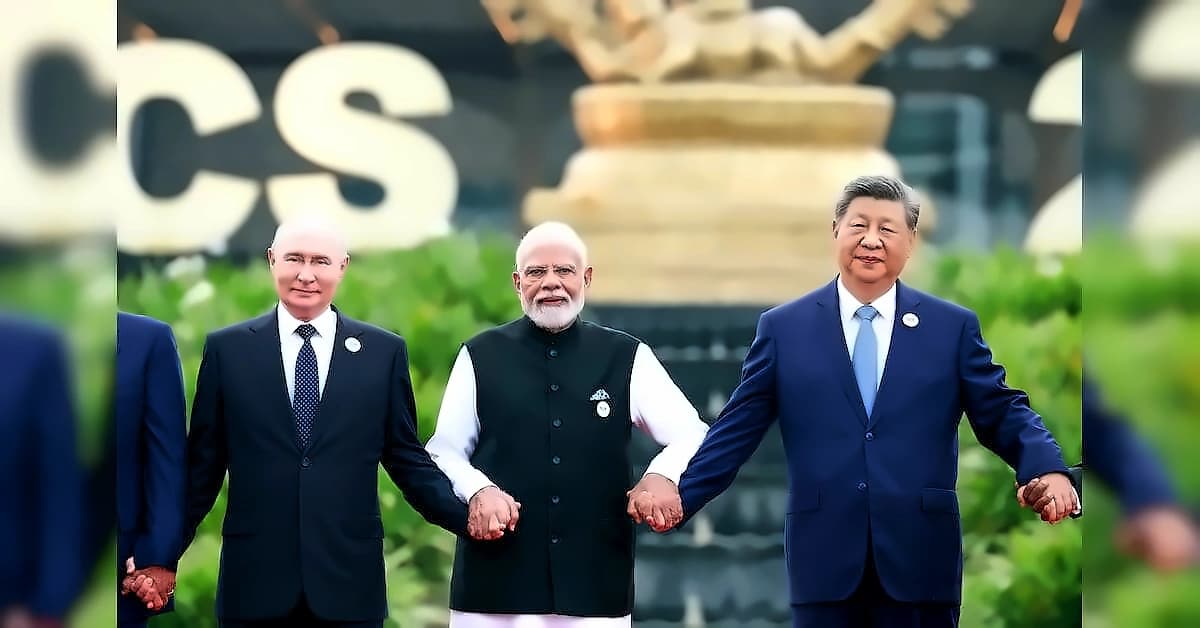
The declaration significantly strengthened the bloc's position on Palestine by expressing 'firm opposition' to the forced displacement of Palestinians by Israel and condemning any changes to the geography or demography of occupied territory. As reported by Al Jazeera, the statement called for an end to Israeli violence in Gaza, support for the UNRWA and full United Nations membership for Palestine. This represents a more definitive stance than previous declarations, with the bloc reiterating its commitment to the two-state solution and Palestinian self-determination. The declaration also specifically mentioned other hotspots including Sudan and Syria, and declared support for the State of Palestine's full membership in the UN. The compromise now found in Delhi appears to be a joint declaration condemning unilateral wars, without naming any country, which is rather low-key but perhaps better than nothing, especially for BRICS chair India, which can claim this as a diplomatic victory.
The declaration expressed alarm at the trend of increased military spending globally to the detriment of development financing for developing countries. According to Business Standard, world military expenditure rose by 2.9 per cent in real terms to reach $2,887 billion in 2025, marking the 11th consecutive year of growth. Global military spending has increased by 41 per cent over the past decade (2016–25), with three primary Brics members – China, Russia, and India – among the world's top five defence spenders alongside the United States and Germany. Together, these five countries accounted for 58 per cent of the world's military spending in 2025.
The leaders took aim at unilateral sanctions not authorized by the UN Security Council, with the declaration calling for 'the elimination of such unlawful measures, which undermine international law and the principles and purposes of the UN Charter'. While the statement did not name specific countries, Russia, one of the founding BRICS members, has faced Western sanctions following its full-scale invasion of Ukraine in 2022. The bloc's finance ministers and central bank governors have objected to tariffs and non-tariff measures they say distort trade and are inconsistent with WTO rules. The declaration's emphasis on maintaining smooth flow of global trade, supply chains and energy reflects the bloc's response to these trade pressures and the need to protect global economic stability. The bloc expressed concerns about the rise of 'unilateral tariff and non-tariff measures' that distort trade, against the backdrop of US sanctions against Tehran amid its war with the country, and against Russia over its conflict with Ukraine.
The declaration expressed 'deep concern' over the war in the Middle East and came at a time when US and Iran have resumed tit-for-tat strikes against each other, after a pause in fighting for much of August. The meeting, which included Iranian President Masoud Pezeshkian, voiced concern over 'deliberate attacks' on civilian infrastructure and peaceful nuclear facilities under UN atomic energy safeguards, saying nuclear safety and security must be protected during armed conflicts. The statement was 'carefully drafted so as not to take sides between Iran, Saudi Arabia and the UAE while leaving everyone with something to go home with', as noted by The Times of India. The war in the Persian Gulf has threatened to create new fissures among the BRICS members, with divisions particularly acute between Iran and the UAE, with Tehran seeking clear condemnation of the US and Israel while the UAE, a US ally, sought to condemn Iran for its drone and missile strikes against the Gulf kingdom. At a media briefing, Sudhakar Dalela, secretary of economic relations, emphasized that 'We are very happy that we have a agreed approach on West Asia and the center piece of that approach is that we all believe dialog and diplomacy should be the guiding parameter to addressing any conflict'.
BRICS was created in 2009 as a forum for major emerging economies seeking greater influence in institutions dominated by Western powers, and the latest declaration represents a significant diplomatic achievement for the bloc. As reported by The Times of India, Indian Prime Minister Narendra Modi told Xi Jinping, Russian President Vladimir Putin, Iranian President Masoud Pezeshkian and other leaders that BRICS nations 'represent 50 percent of the world's population, 40 percent of global GDP and more than 25 percent of global trade'. Modi emphasized that 'We have to transform this pyramid of privilege into a platform of partnership' and called for a system 'where every country has a voice, every member has a stake and humanity's development is at the centre of every effort'. The leaders' ability to overcome earlier divisions, with foreign ministers of the BRICS grouping failing to agree on a joint statement when they met in New Delhi in May, demonstrates the bloc's growing diplomatic maturity and its commitment to addressing global challenges through collective action. Chinese President Xi Jinping urged the BRICS bloc to be a peacemaker in the Middle East conflict, stating that 'the war does not serve the common interests of the international community' and that China will work with other BRICS members in that role. Modi emphasized cooperation despite 'different realities', telling attendees that 'The Global South's trust in Brics has steadily increased because its voice is heard in the grouping, its development experience is respected, and solutions are prepared in consultation with it'.