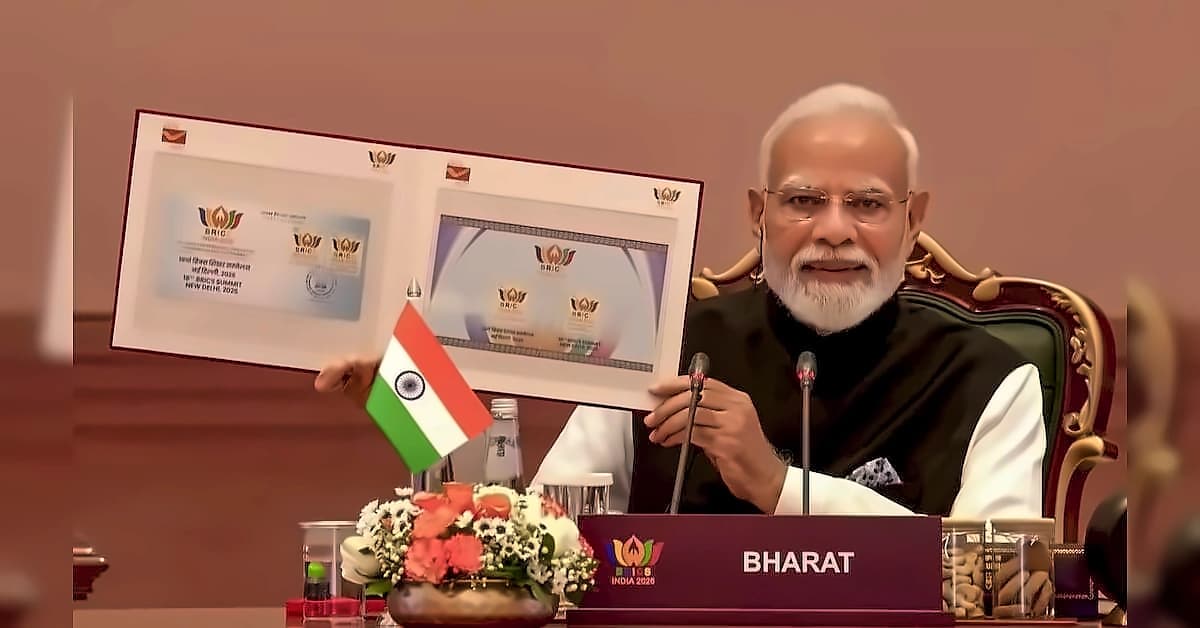
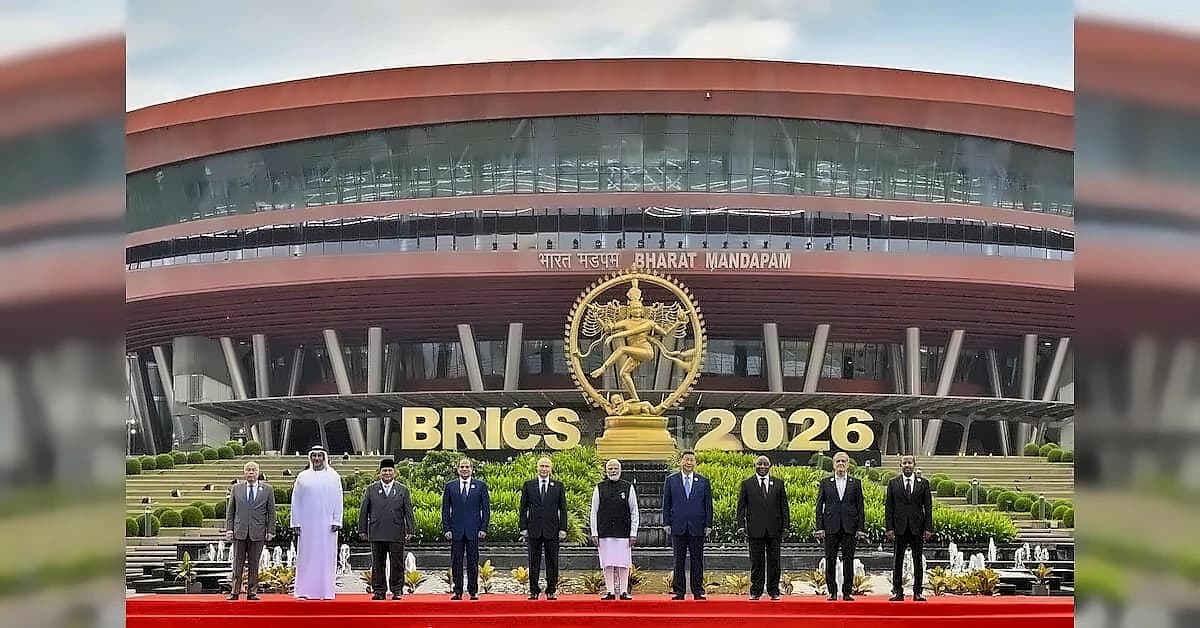
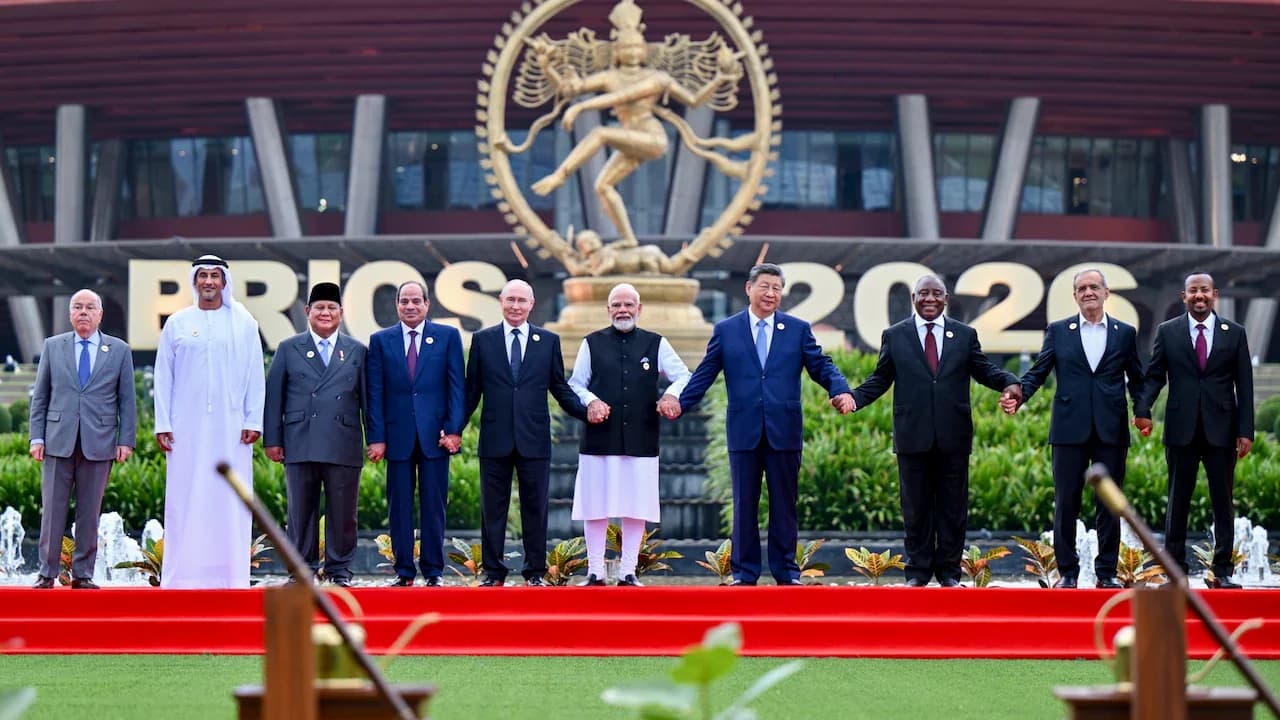
The BRICS countries have reiterated support for a greater role for developing nations at the United Nations, with China and Russia backing the aspirations of India and Brazil to play a bigger role in the global body, including the UN Security Council. According to reports from NDTV Profit, the endorsement came in the New Delhi Declaration 2026, which called for comprehensive reform of the UN, including its Security Council, to make the body more democratic, representative, effective and efficient. Prime Minister Narendra Modi hailed the joint declaration, stating that discussions at the summit made it evident that the changing world could not be steered by outdated institutions and that the Global South must have equal participation in decision-making at the world stage. The declaration, adopted on the landmark occasion of the 20th anniversary of BRICS, reaffirmed the grouping's commitment to reforming and improving global governance and strengthening multilateralism and multipolarity. The 18th BRICS Summit held in New Delhi concluded with the adoption of the New Delhi Declaration on Saturday, September 12, with the summit continuing through September 13 under India's 2026 BRICS chairship theme of "Building for Resilience, Innovation, Cooperation and Sustainability."
The declaration said the reform should increase the representation of developing countries in the Council and enable emerging and developing nations from Africa, Asia and Latin America, including BRICS members, to play a greater role in international affairs. As reported by NDTV Profit, it also stressed that UN Security Council reform should amplify the voice of the Global South. The statement recalled the 2022 Beijing and 2023 Johannesburg-II Leaders' Declarations while reaffirming the bloc's push for a more representative global governance structure. BRICS reiterated its support for comprehensive UN reform, calling for greater and more meaningful participation and representation of emerging market and developing countries (EMDCs), as well as Least Developed Countries (LDCs), particularly from Africa, Asia and Latin America and the Caribbean, in global decision-making processes and structures. The declaration also recognised the legitimate aspirations of African countries as reflected in the Ezulwini Consensus and Sirte Declaration. Prime Minister Modi emphasized that the current structure of global governance resembles a pyramid: power and decision-making are concentrated at the top, while the lower tiers consist of nations that are affected by these decisions but unable to shape them. He called for transforming this 'pyramid of privilege' into a 'platform of partnership' where every nation has a voice, every member has a stake, and the development of humanity lies at the heart of every effort.
The declaration highlighted the growing importance of the Global South as a driver of positive change amid geopolitical tensions, economic downturns, technological changes, protectionist measures, migration challenges and climate change. BRICS countries will continue playing a pivotal role in voicing the concerns and priorities of the Global South, as well as promoting a more just, sustainable, inclusive, representative and stable international order based on international law. The declaration called for equitable geographical representation in the UN Secretariat and other international organisations, particularly by addressing the persistent under-representation of developing countries at senior and decision-making levels. It also stressed that the selection and appointment of UN executive heads and senior officials should be guided by transparency and inclusiveness and adhere to the principle that there should be 'no monopoly on senior posts in the UN system by nationals of any State or group of States'. On the selection of the next UN Secretary-General, BRICS noted that 'no woman has ever been elected for the role of Secretary General', while only one national from Latin America and the Caribbean and two nationals each from Africa and Asia have occupied the position. Chinese President Xi Jinping noted that the BRICS cooperation mechanism has become the world's most influential platform for cooperation among emerging markets and developing countries, calling on the grouping to play its 'due role' in bringing peace in West Asia.
The declaration voiced serious concern over the rise of unilateral tariff and non-tariff measures, saying such measures distort trade, threaten global supply chains and create uncertainty for international economic activity. The grouping reaffirmed its support for reform of the World Trade Organisation and called for a stronger, open, equitable, transparent, fair, inclusive, predictable and rules-based multilateral trading system, with the WTO at its core. BRICS strongly advocated the immediate restoration of an accessible, effective and fully functioning two-tier binding WTO dispute settlement mechanism and called for the appointment of new Appellate Body members without further delay. The declaration also condemned unilateral economic and secondary sanctions that it said were contrary to international law, arguing that such measures have adverse implications for development, health and food security. BRICS leaders also raised concerns over unilateral tariff and non-tariff measures, arguing that such actions can disrupt international trade. The declaration's position comes against the backdrop of wider trade tensions and sanctions affecting countries including Iran and Russia. BRICS further called for reform of the Bretton Woods Institutions to make them more agile, effective, credible, inclusive, fit for purpose, unbiased, accountable and representative, with their governance structures reflecting the transformation of the global economy since their establishment. The declaration specifically supported IMF quota and governance reform, including increasing the quota and voting shares of emerging and developing economies and called for the implementation of previously agreed upon quota increases without any further delay.
The declaration strongly condemned the terrorist attack in Jammu and Kashmir on April 22, 2025, in which 26 people were killed and several others injured. The grouping reaffirmed its commitment to combating terrorism in all its forms and manifestations, including the cross-border movement of terrorists, terrorism financing and safe havens. It also called for zero tolerance for terrorism and rejected double standards in counterterrorism efforts. The declaration further called for the expeditious finalisation and adoption of the Comprehensive Convention on International Terrorism under the UN framework and urged concerted action against all UN-designated terrorists and terrorist entities. BRICS condemned the April 22, 2025 terrorist attack in Jammu and Kashmir in the strongest terms, reaffirming its commitment to combating terrorism in all its forms and manifestations.
The declaration calls for deeper economic cooperation among BRICS members and supports efforts to make cross-border payments more efficient. The BRICS Payment Task Force is examining the connectivity between payment and messaging systems, while members are also discussing trade settlements and investments using local currencies. The declaration focuses on practical mechanisms for facilitating trade and investment while allowing individual countries to determine their own approach. The declaration also has major implications for energy security, with BRICS leaders expressing concerns over the escalating conflict in West Asia and calling for maximum restraint, dialogue and diplomacy. Chinese President Xi Jinping noted that the situation in West Asia remains complex and fluid, stating that this war has inflicted serious losses on the people of all countries in the region and is against the common interests of the international community. The issue has direct economic consequences as prolonged instability in the region can affect energy supplies, shipping routes, insurance costs, and global inflation.