The 140-article BRICS New Delhi Declaration was unanimously adopted by all 10 member countries on 13 September 2026, marking a decisive turning point in global multilateral economic governance. The expanded BRICS bloc now controls over 40% of global critical mineral reserves essential for aerospace, battery storage, and advanced defense systems, with the accession of major resource powers including Saudi Arabia, UAE, Iran, Ethiopia, and Egypt alongside Brazil, Russia, India, China, and South Africa. The declaration establishes bilateral non-dollar trade rails, digital payment links, and critical mineral cartels, representing the modern evolution of the 1955 Bandung Conference into hard economic reality with institutional trade infrastructure.

The BRICS New Delhi Declaration establishes concrete frameworks for local-currency trade settlement and cross-border digital payments, moving beyond the previous acknowledgment of the Brics Payment Task Force's work. The declaration codified three actionable mechanisms: bilateral currency rails, digital payment links, and expanding Special Rupee Vostro Accounts (SRVA) under the BRICS New Delhi Declaration. Linking official digital currencies of member-countries could have allowed payments initiated in one country to be settled more directly in another country's currency, reducing reliance on correspondent banks and third-country payment channels. This represents significant progress from the earlier omission of concrete steps on payment-system interoperability and local-currency trade.
The declaration establishes sovereign critical mineral pacts and overland transit corridors to ensure supply security, with India's strategic entities playing key roles. IREL (India) Limited and Midhani will lead joint value-addition and permanent magnet manufacturing hubs outside Western export restrictions, while Khanij Bidesh India Ltd (KABIL) will ensure mutual investment safeguards preventing unilateral export embargoes on high-grade battery materials. India Ports Global Ltd (IPGL) and CONCOR will coordinate multimodal customs harmonization and non-dollar transit fee settlements via Chabahar Port through the INSTC and Northern Sea Route corridors. The combined BRICS share in rare earth elements exceeds 72% global output, with battery nickel and cobalt reserves at approximately 55% of global reserves.
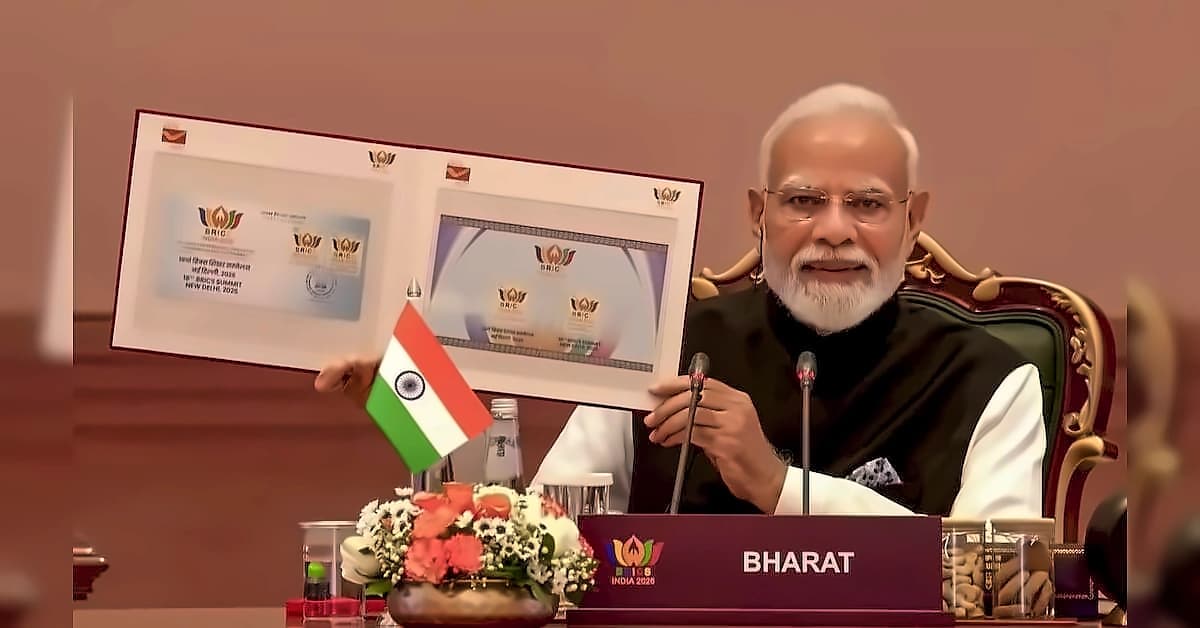
Prime Minister Narendra Modi outlined India's four pillars of BRICS presidency: resilience, innovation, cooperation and sustainability during the summit. The declaration establishes an Integrated Early Warning System for infectious diseases and guidelines for disaster management, with Modi highlighting the BRICS Logistic Supply Chain Cooperation Framework, Startup Innovation Fund, Incubator Network and Digital Agriculture Network. BRICS Connect is promoting skills, employability, women's workforce participation, social security and capacity building, while an MSME cooperation portal and Urban Mobility Hub have been launched. Modi emphasized that BRICS solutions should benefit not only member countries but also the wider Global South, positioning the bloc as a platform for global welfare rather than exclusive economic club. On sustainability, Modi cited initiatives on smart grids, energy storage, agroecology and regenerative agriculture.
The outcomes codified in the BRICS New Delhi Declaration represent the modern evolution of the 1955 Bandung Conference, transforming non-alignment into hard economic reality with sovereign wealth funds, critical mineral agreements, and alternative digital payment rails. India's diplomatic leadership proved decisive in guiding the expanded 10-member bloc toward practical non-dollar financial clearing and critical mineral corridors, anchoring strategic autonomy while resisting anti-Western polarization. Western financial analysts dismissed BRICS monetary discussions as symbolic rhetoric, but the weaponization of SWIFT messaging rails, secondary US Treasury sanctions, and unilateral reserve freezes created an urgent necessity for non-G7 economies to construct redundant financial networks. By anchoring strategic autonomy in institutional trade infrastructure, India is shaping a genuine multipolar order that resists superpower financial pressure while maintaining economic sovereignty.