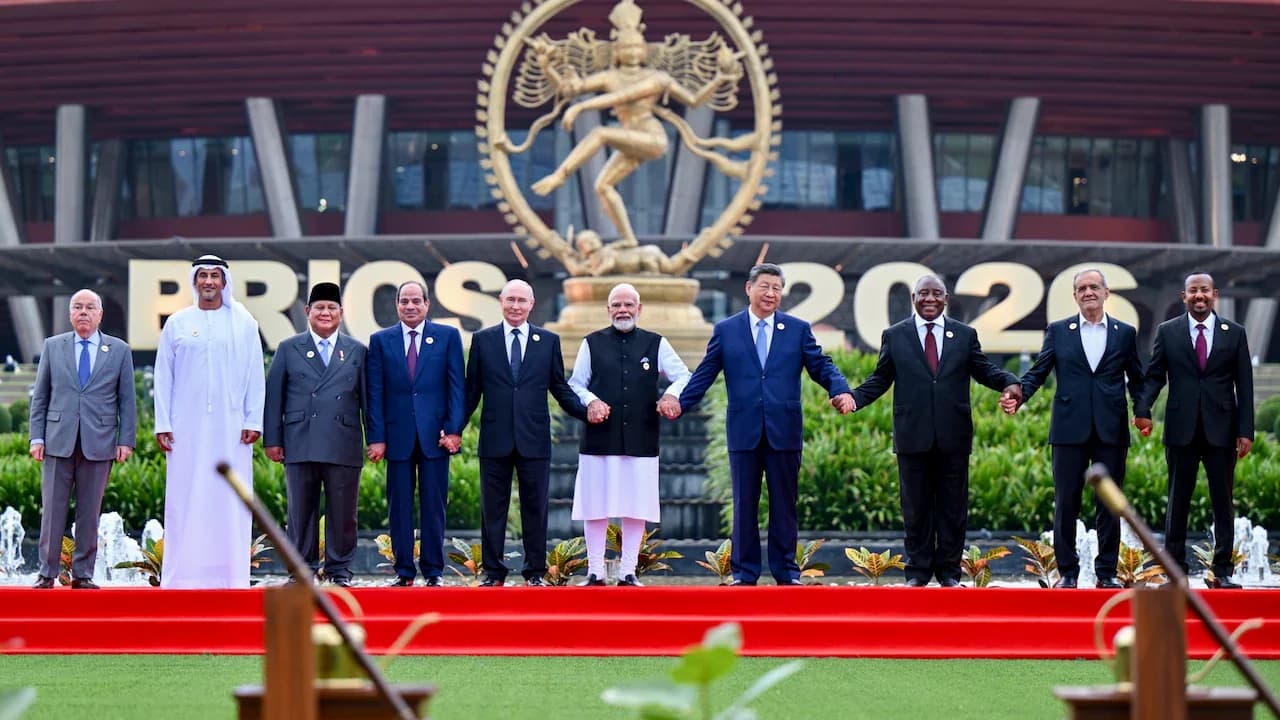
The BRICS group of emerging economies issued a strong condemnation of unilateral sanctions not authorized by the U.N. Security Council during their meeting in New Delhi on Saturday. According to Associated Press, the joint statement expressed concern over rising tensions in the Middle East and voiced concern over 'deliberate attacks' on civilian infrastructure and peaceful nuclear facilities under the U.N. atomic energy agency's safeguards. The leaders called for 'the elimination of such unlawful measures, which undermine international law and the principles and purposes of the U.N. Charter', though they did not name specific countries. The statement was seen as indirect criticism of U.S. and Israeli strikes on Iranian nuclear facilities and represents a significant escalation in the bloc's stance against Western-imposed economic measures. Iranian President Masoud Pezeshkian specifically criticized unilateral sanctions that are directly impacting global food security and people's welfare, highlighting the urgent need for alternative economic frameworks. At the BRICS summit, Pezeshkian advocated for expanding trade in national currencies and strengthening the New Development Bank to enhance the economic resilience of BRICS members, emphasizing that excessive dependence on limited financial and trade systems has made emerging economies vulnerable to political shocks.
The New Delhi Declaration adopted at the 18th Brics Summit has criticised tariffs, sanctions and carbon trade measures linked to Western countries without naming them directly. According to Global Trade Research Initiative (GTRI) Founder Ajay Srivastava, this diplomatic approach reflects a strategy to address issues without triggering direct confrontation with the West. The declaration covers a wide range of trade-related issues, including tariffs, sanctions, World Trade Organisation (WTO) reform, agriculture, supply chains and greater cooperation among Brics members. The declaration calls for the restoration of the WTO's two-tier dispute-settlement system, primarily referencing the United States whose refusal to approve new members of the WTO's Appellate Body has left the appeals mechanism unable to function fully since December 2019. The bloc has also criticised 'protectionism' carried out in the name of environmental objectives, appearing to target the European Union's Carbon Border Adjustment Mechanism (CBAM) which places carbon-related costs on certain imports into the EU. As reported by GTRI, the strategy seeks to reduce vulnerability to tariffs, sanctions, payment restrictions and carbon-related trade barriers without seeking immediate break with the Western-led economic system.
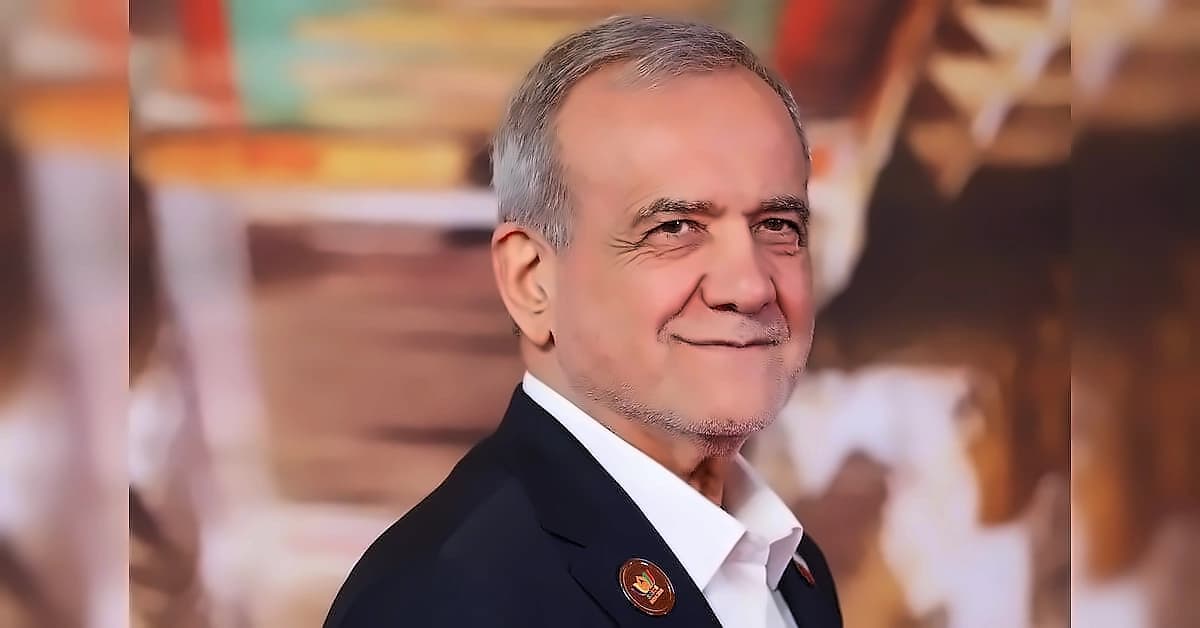
Iranian President Masoud Pezeshkian emphasized that economic resilience could not be sustained without security, referring to what he described as military aggression by the United States and Israel against Iran. As reported by Associated Press, Pezeshkian called for 'expanding the use of national currencies in trade among the members' as 'one of the most important steps' to reduce reliance on Western financial systems. This strategy aligns with Iran's broader push to shield members from economic pressure amid ongoing sanctions and U.S. blockade. The Iranian president noted that the Iranian people had paid a heavy price, with civilians killed and infrastructure built over decades damaged. Pezeshkian also flagged concerns over the environmental consequences of war, saying damage to energy and industrial infrastructure can affect natural resources beyond economic losses. At the BRICS summit, Pezeshkian advocated for expanding trade in national currencies and strengthening the New Development Bank to enhance the economic resilience of BRICS members, emphasizing that excessive dependence on limited financial and trade systems has made emerging economies vulnerable to political shocks. Speaking at the concluding session of the two-day BRICS Summit in New Delhi on Sunday, Pezeshkian said BRICS had grown beyond a platform for emerging economies and could now contribute to creating a more inclusive international order, arguing that no single centre of power should have the authority to determine the future of other nations.
The declaration's approach to West Asia reflects careful diplomatic balancing without explicitly naming individual countries. According to GTRI Founder Ajay Srivastava, Paragraph 28 expresses concern over the escalation of tensions in the region and calls for 'maximum restraint', while also urging parties to avoid actions that could worsen the situation. The declaration stresses sovereignty and territorial integrity and calls for dialogue and diplomacy to achieve lasting peace, security and stability, with specific calls for maintaining the smooth flow of global trade, supply chains and energy. As reported by GTRI, the language cautions the US and Israel against military action against Iran while also signalling to Iran that it should avoid retaliatory action against neighbouring Gulf countries. The call to maintain trade flow is directed at all sides, with Iran advised not to disrupt shipping through the Strait of Hormuz while the US and its allies should avoid military action that could obstruct the important energy route. According to GTRI, the consensus on the West Asia language represents a diplomatic success for India, given the different positions and interests within the expanded Brics grouping, with securing consensus on this carefully balanced message described as a major diplomatic win for India.
The leaders identified knowledge and innovation as key elements of the BRICS agenda, with Pezeshkian stressing that 'artificial intelligence and emerging technologies should serve as tools for empowering nations rather than instruments of domination'. According to Associated Press, Modi reaffirmed that 'it is time for us to translate our unity and consensus in BRICS into concrete outcomes' and called for 'transforming the capacities of the Global South into shared capabilities' and turning BRICS into a platform for translating principles into practical action. Pezeshkian emphasized that the international community has a responsibility to protect civilians and prevent the 'normalisation of attacks on civilian targets' and warned that development that increases inequality or transfers today's costs to future generations cannot be sustainable. The Iranian president also highlighted Iran's geopolitical position and energy and transit capacities, saying these could contribute to the development of trade and energy corridors among BRICS members. Pezeshkian thanked India, its people and Prime Minister Modi for hosting the summit, saying its theme -- 'Resilience, Cooperation and Sustainability' -- reflected the fundamental global needs at a time when the destinies of nations are increasingly interconnected. He said BRICS should now convert these principles into practical cooperation and work towards an economic and political framework that offers greater resilience, fairness and security to developing nations.