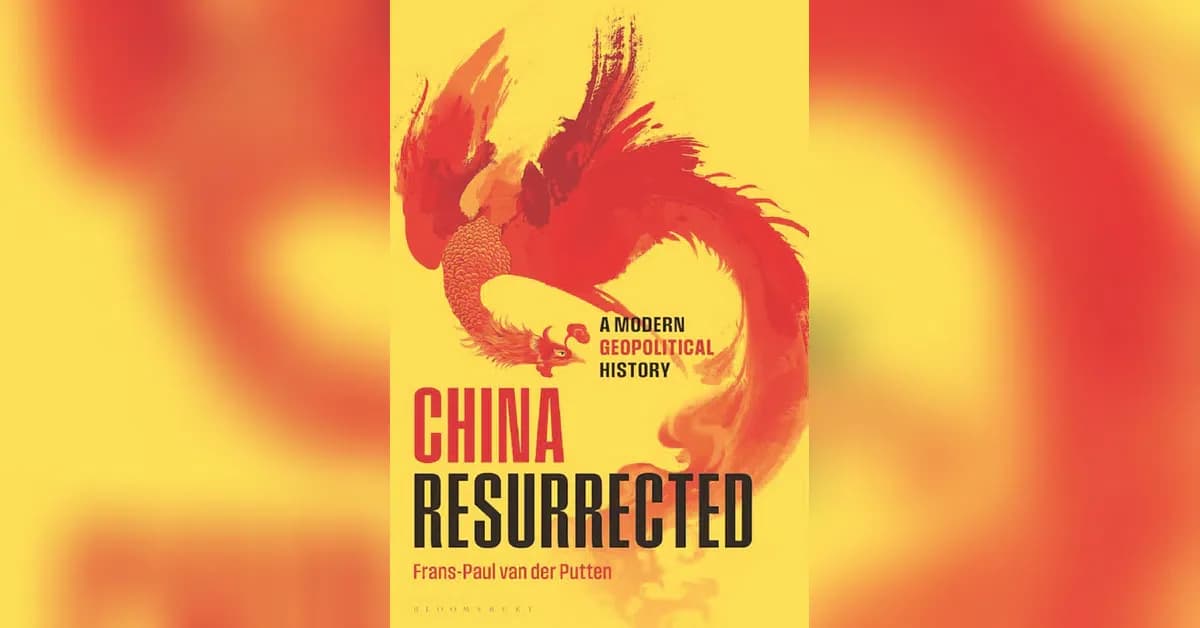
According to Business Standard, Frans-Paul van der Putten's book China Resurrected: A Modern Geopolitical History argues that China's current geopolitical position stems from historical continuity rather than recent developments. The author contends that Xi Jinping's call for 'rejuvenation of the Chinese nation' is part of a process that began in the nineteenth and twentieth centuries, departing from Deng Xiaoping's strategy of 'hide your strength, and bide your time'.
As reported by Business Standard, the book emphasizes that economic clout drives China's position in the world today, similar to the attraction of Chinese markets that led to the Opium Wars. According to the author, 'for more and more large companies, going to China was not a strategic option, but a strategic necessity'. This economic strength is closely tied to the rise of domestic nationalism, which has become a major tool in Chinese foreign policy. The book highlights how the weaponisation of economic interdependence and regular boycotts of foreign products by the Chinese people have become important aspects of foreign policy, with these trends starting during 1915-1919 and initially focused against Japan.
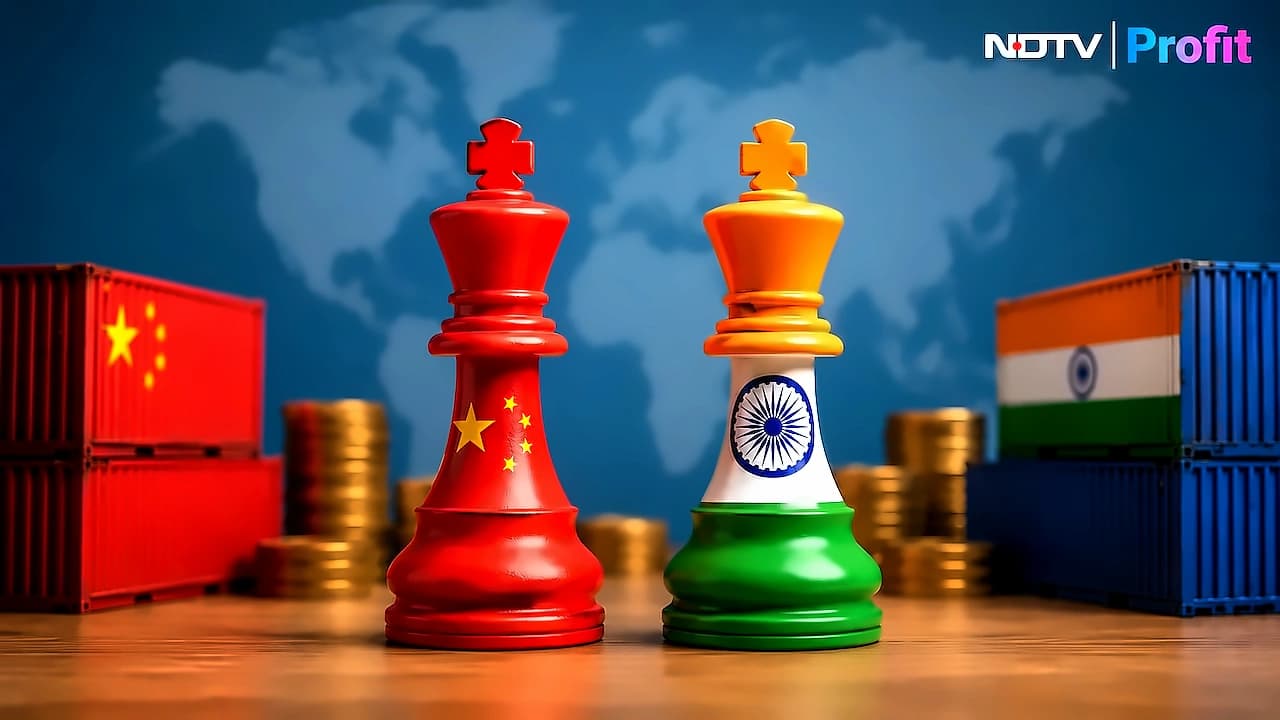
Despite ongoing border disputes and military tensions, India and China have scaled bilateral trade to $151 billion, though India's trade deficit reached a historic high of $112 billion, driven by deep import reliance on Chinese machinery, technology, and APIs. Recent high-level interactions signal a potential thaw, with both nations shifting focus from border disputes to economic security dialogue. As reported by Asian Crucible, China believes that the current regional order is US-made in support of American interests, and as it has become richer, it has become more nationalist and ambitious around issues such as the South China Sea, Taiwan and its border with India. The relationship stands at a crossroads where shared developmental challenges and a changing global order necessitate pragmatic economic cooperation.
Despite trade asymmetries and military friction, both nations share convergences on de-dollarization, climate justice, and counter-terrorism. India boycotts the BRI because its flagship project, the $60 billion China-Pakistan Economic Corridor (CPEC) runs through Pakistan-occupied Kashmir (PoK), directly violating India's sovereignty. India views China's strategy of developing dual-use, debt-leveraged ports and military facilities around the Indian Ocean Region (IOR), including Gwadar (Pakistan) and Hambantota (Sri Lanka), as a strategic encirclement. However, both nations are the top two shareholders in the Shanghai Cooperation Organisation (SCO) and actively participate in its initiatives, with shared heritage continuing to support track-two diplomacy.