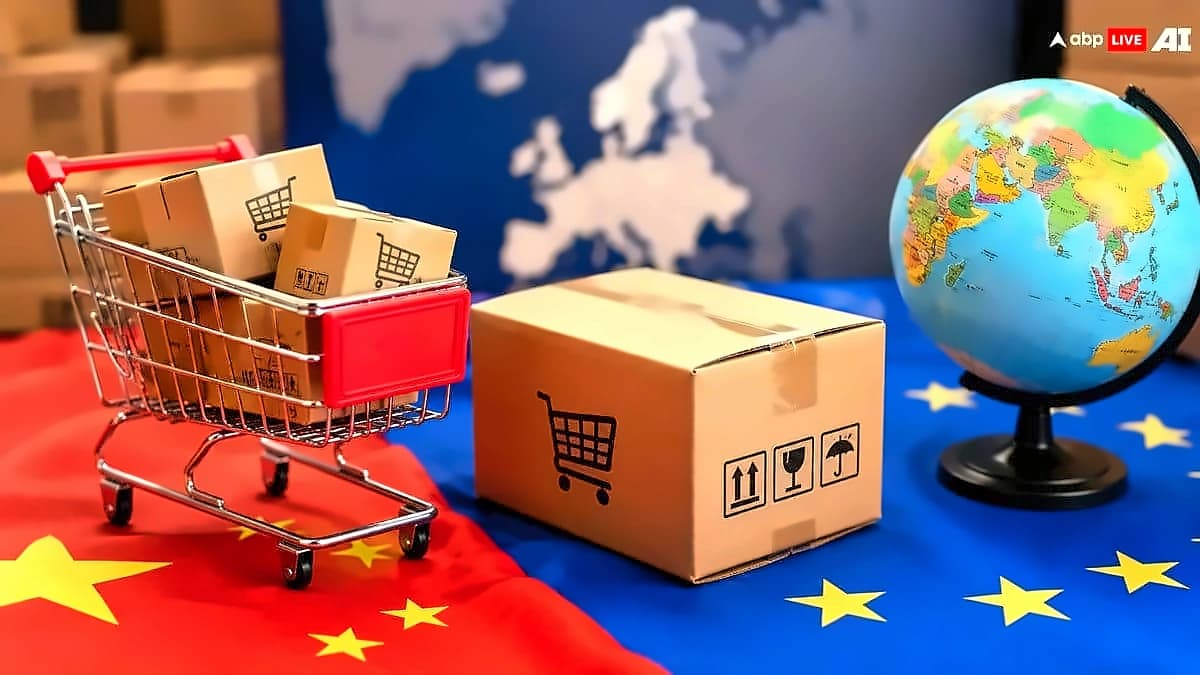
European policymakers are expressing growing concern about what they term a 'China shock 2.0', with bilateral trade deficits reaching €1 billion per day. According to reports from Business Standard, the European Commission stated on May 29 that the current economic relationship with China is 'unsustainable'. This sentiment is expected to be a key topic at the EU leaders' summit on June 18-19, where China will be a central focus. The crisis has been exacerbated by Chinese industrial capacity growth, with exports surging 16.4% between January and May compared to the previous year.
Despite current tensions, the economic partnership has shown remarkable growth since diplomatic relations were established in 1975. As reported by Business Standard, bilateral trade has expanded dramatically from $2.4 billion when relations began to $784.8 billion by 2024. Two-way investment stock has now exceeded $270 billion. In 2025, China and the EU were each other's second-largest trading partners, with total trade reaching $828 billion, up 5.4% year-on-year. However, China maintains a significant trade surplus with the EU, with the country's deficit in service trade with the EU reaching $48.3 billion in 2025.

China has responded with escalating diplomatic pressure, cancelling two high-level meetings with the EU in Beijing last month. According to Business Standard, Chinese officials are maintaining a united stance, with Deputy Prime Minister Zhang Guoqing calling for 'prioritising development, improving global governance and promoting inclusive growth' at the World Convergence for Growth Summit. Chinese state-run media Xinhua has warned that recent European policies cast shadows over bilateral cooperation, while the Chinese foreign ministry spokesperson Mao Ning stated that China is 'closely monitoring the EU's actions and will take necessary measures to safeguard its legitimate rights and interests'. Chinese scholars are defending government policies, with Ding Chun from Fudan University telling Guancha.cn that Europe's competitiveness is weakening and protectionist sentiments are rising.
The European Commission has proposed the European Industrial Accelerator Act (IAA), which Chinese officials argue will subject Chinese investors to discrimination. As reported by Business Standard, the Act aims to achieve a 20% manufacturing contribution to EU GDP by 2035 and introduces 'Made in EU' preferences. Recent research from the German Marshall Fund indicates that China's trade surplus with the EU is still growing at around 30% annually, showing current EU measures are insufficient. The Council on Foreign Relations attributes the problem to China's political economy, noting that the country has built capacity for 25 million cars annually against a home market barely half that size, creating export surplus pressures.
The crisis reflects broader European concerns about dependency on single partners, following lessons learned from the Ukraine war and tensions with the US under President Trump. According to Business Standard, Belgian Prime Minister Bart De Wever has criticized the divided European approach, stating that policymakers are 'so afraid that we don't even dare to name China by name'. Chinese officials are emphasizing that 'Brussels is blaming China for its own failures', with scholars defending China's restrained attitude while urging the EU to assess the situation carefully. The situation appears to be slipping out of control, with both sides announcing gradual measures and countermeasures, creating a 'boiling frog scenario' where Europe risks ignoring trends until it's too late.