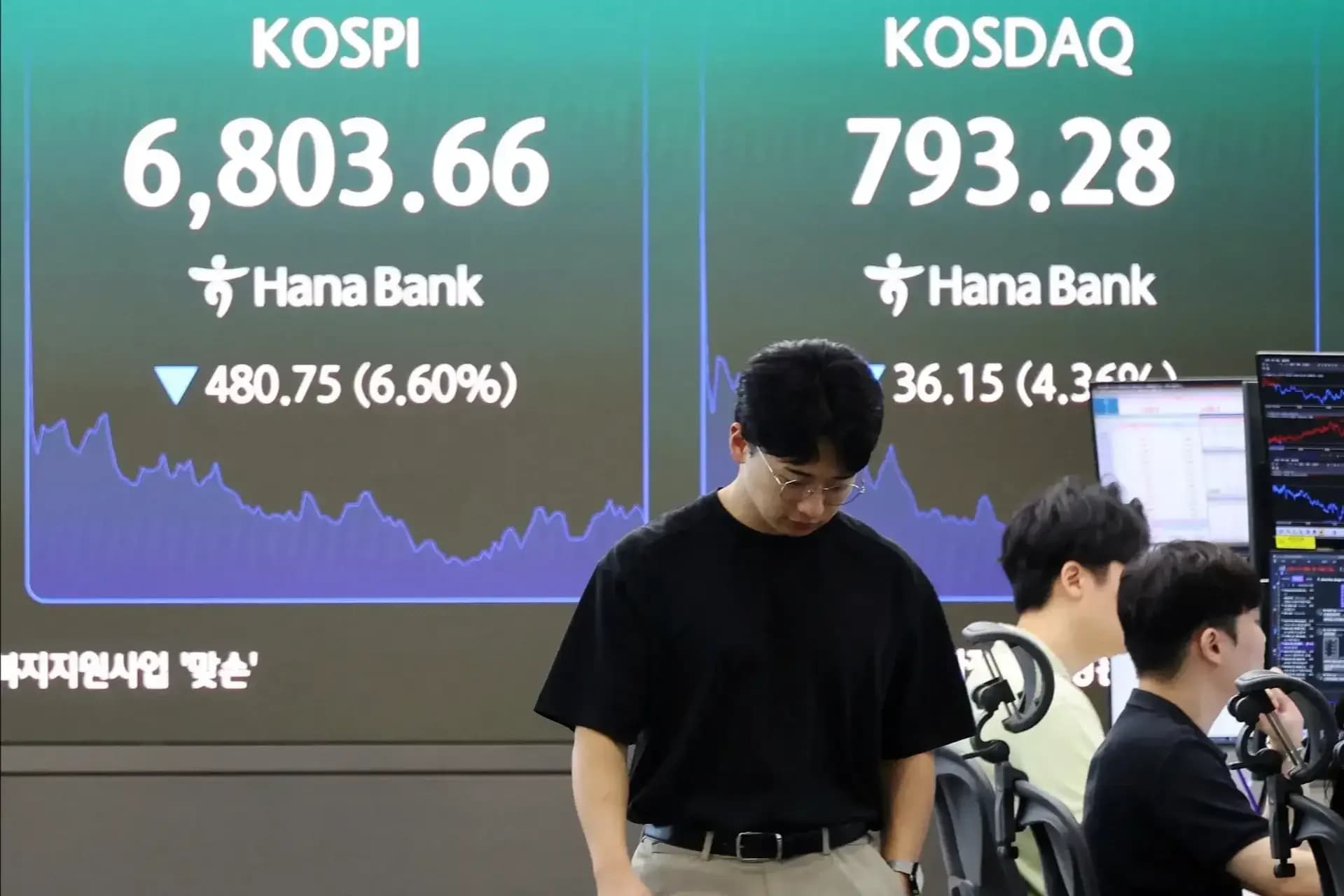
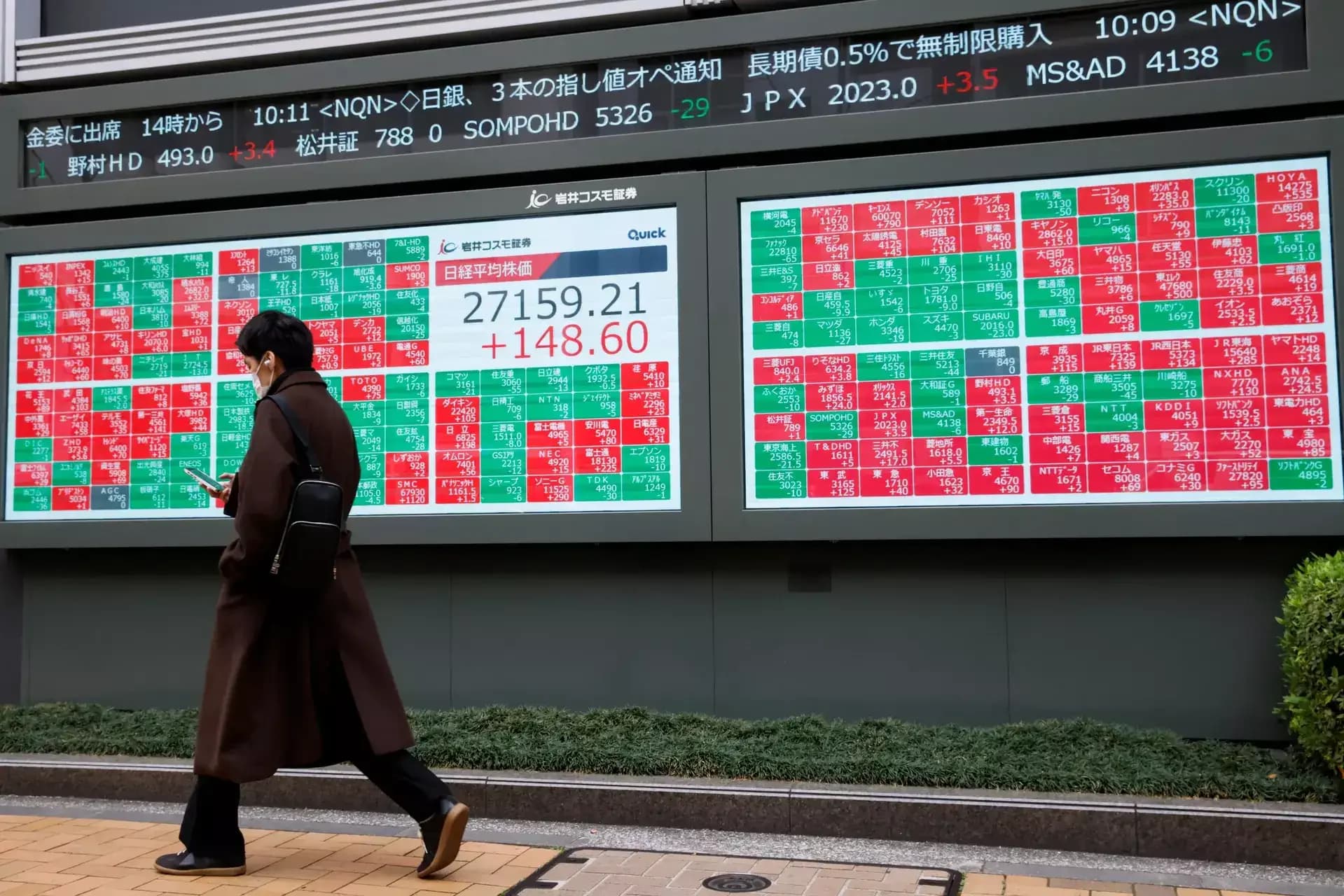
Japan's Nikkei share average retreated from its more than six-week high, declining 0.4% as investors locked in gains and turned cautious over the outlook for interest rates, inflation, and geopolitical risks. According to The Economic Times, the pullback came after the Nikkei had climbed to a six-week high of 68,276.92, rising 2.28% on Thursday, supported by chip-related stocks following strong earnings guidance from Micron Technology. The broader Topix remained relatively stable, edging 0.03% higher at 4,109.40 during the earlier rally, but the market's retreat reflects growing investor caution about multiple risk factors.
Despite the broader market retreat, the technology sector's strong performance from earlier in the week continued to provide support. Chip-testing equipment maker Advantest jumped 7%, electronic components maker Murata Manufacturing gained 6%, and memory-chip maker Kioxia advanced 4% in response to Micron's positive guidance. The Philadelphia Semiconductor Index rose 1.3%, providing continued support to Japanese chip-related shares, as reported by Reuters. The technology sector's resilience highlights the ongoing optimism surrounding AI spending, even as broader market sentiment turns more cautious.
Banking stocks also faced pressure, with Sumitomo Mitsui Financial Group rising 1.3% and Mizuho Financial Group gaining 2.35%, though the banking sub-index declined. According to The Economic Times, shipping stocks rose 1.33%, led by a roughly 2% gain in Mitsui OSK Lines. Investors were also buying stocks linked to the domestic economy, though market breadth remained weak, prompting selective buying. The Philadelphia Semiconductor Index rose 1.3%, providing support to Japanese chip-related shares, as reported by Reuters.
Japan's monetary policy outlook remained in focus with a summary of opinions from the Bank of Japan's September policy meeting released on Thursday showing that some policymakers believed the central bank should accelerate the pace of interest-rate increases or bring rates closer to its target level sooner, as reported by Reuters. The policy discussion reinforced expectations that the BOJ could continue tightening monetary policy, adding another layer of uncertainty for Japanese equities even as the technology sector benefited from optimism surrounding AI spending. Market-implied expectations have been for at least one quarter-point rate increase by end-2026 – as soon as at the next meeting in October – and close to three more by mid-2027.
In India, the GIFT Nifty trades at a discount, 60 points lower, hinting at a negative start for Nifty 50 as it kicks off the October series, with the predicted last price staying well below the 23,000 mark. According to CNBC TV18, the Japanese yen barely moved at 157.36 per dollar and the offshore yuan was little changed at 6.7073 per dollar. However, Indonesia's rupiah breached 18,000 per US dollar for the first time in nearly two months, hitting its lowest level since August 4 at 18,010 per dollar and staying near the closely watched 1,800 level. The currency pressure reflects broader Asian market concerns as Asian currencies stayed under pressure from rising global bond yields and US-Iran tensions. Still, uncertainty remains high as markets seem to want clearer signs of progress in US-Iran negotiations after several conflicting signals in recent days.