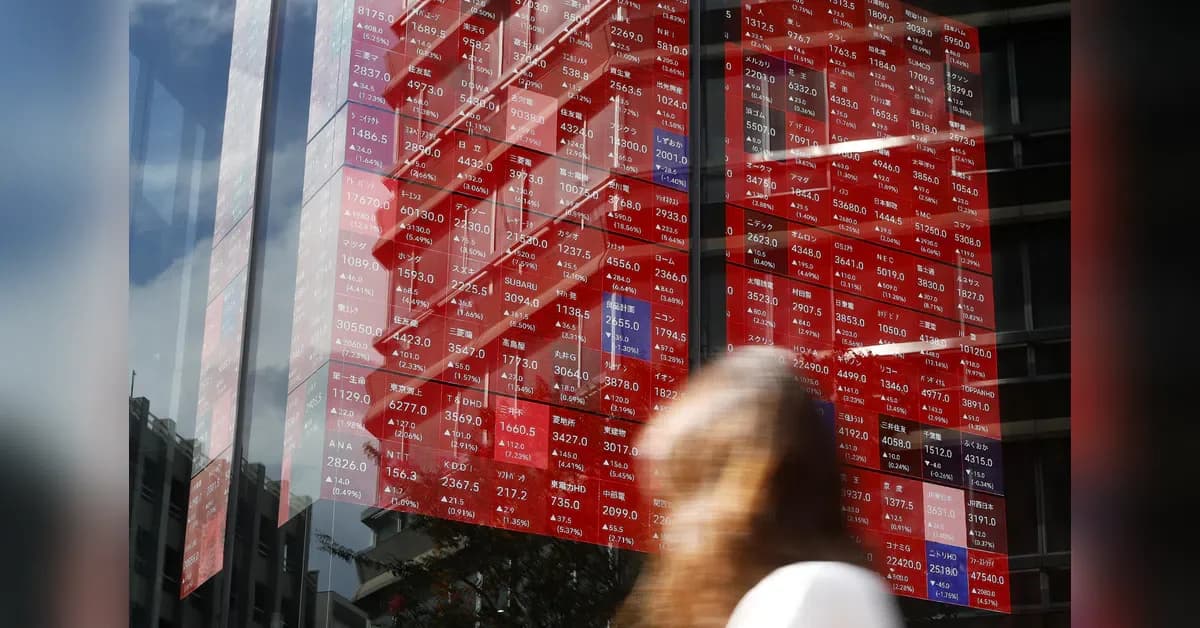
Asian markets are showing signs of cooling after three strong sessions that effectively priced out the worst of the Hormuz shock. According to Investing.com, the market has moved from "cover the stock shorts" to "show me the barrels" as investors now demand physical confirmation of the Iran deal's success. The first move was simple - oil down, inflation risk down, war premium down, equities up - but now the market must trade the second derivative, which is proving more complicated. Brent crude slipping below $83 helps the disinflation narrative, but it also suggests the oil market is shifting away from battlefield insurance and back toward physical flows, export normalization, and inventory repair. The Fed now becomes the main event with Kevin Warsh chairing his first meeting and markets expecting rates to remain in the 3.5% to 3.75% range, with the real trade being the Fed's new reaction function rather than the decision itself.
Japan's Nikkei 225 crossed the 70,000 mark for the first time on Tuesday, reaching an intraday record high of 70,020.68 before paring some gains later in the session. The milestone comes less than two months after the Nikkei first breached the 60,000 level on April 23, spotlighting the remarkable pace of the market's advance. The breakthrough was aided by a global surge in risk appetite after the U.S. and Iran reached an interim agreement aimed at restoring shipping through the Strait of Hormuz, a critical route for global energy supplies. The rally gathered momentum shortly after the Bank of Japan announced a quarter-point increase in its benchmark interest rate, raising it to 1% from 0.75%, taking Japan's policy rate to its highest level in roughly three decades. Despite the rate hike, investors largely viewed the decision as a sign of confidence in the strength of Japan's economic recovery rather than a threat to corporate earnings. However, the yen's inability to hold a stronger bid suggests the market still sees Japan through the lens of rate differentials and global risk appetite, rather than simply domestic policy normalization.
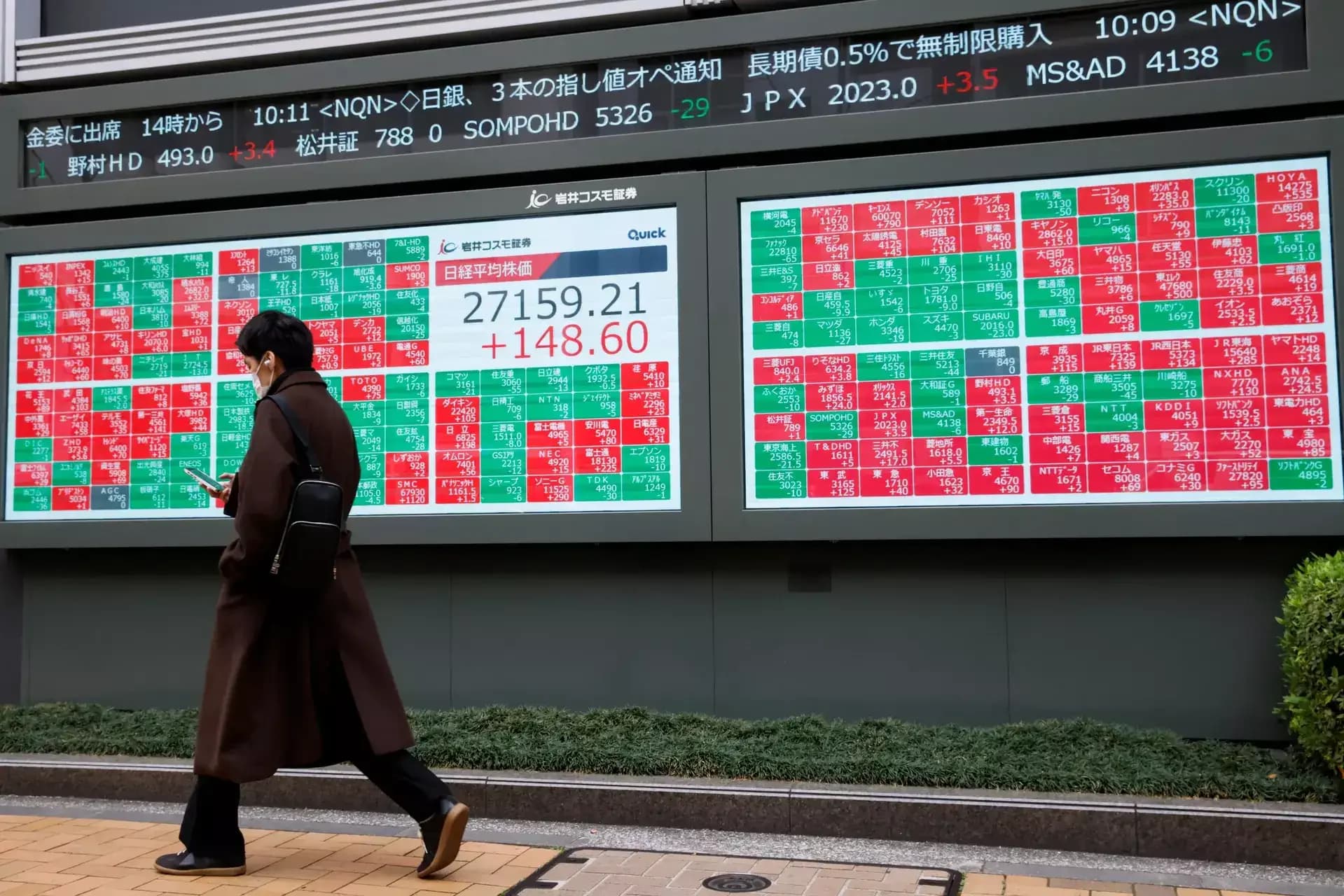
Technology and AI-related stocks remained at the forefront of the advance, mirroring gains seen on Wall Street. Advantest gained 5.1%, while Fujikura and Furukawa Electric rose 9.9% and 7.5% respectively. The broader technology sector rally was supported by chipmakers and AI-infrastructure stocks, with Sandisk (SNDK) closing up more than +14% to lead gainers in the S&P 500 and Nasdaq 100. In the latest Wall Street developments, Nvidia, Intel and Micron Technology were up between 1.2% and 4.7% in premarket trading after chipmakers bounced back from Wednesday's selloff. However, some major companies faced declines, with staffing agency Recruit Holdings and camera and audio equipment maker Sony Group falling more than 1% each. Among standout performers were memory-chip maker Micron Technology, which surged 10.8%, and Advanced Micro Devices, which gained 7%.
Bank shares rose ahead of the Bank of Japan's policy meeting next week, where the central bank is set to raise the policy rate to a 31-year high of 1%. According to Business Standard, Sumitomo Mitsui rose 3.3%, Mizuho Financial climbed 2.3%, and Fast Retailing advanced 2.6%. For the year so far, the bank index is up 30% and at the same level as in mid-February, before the Middle East war broke out. The mining sector emerged as the worst performer, falling 1.02% to become the only major sector in decline during the session. Meanwhile, airline stocks and cruise line operators moved sharply higher after WTI crude oil fell more than -2%, lowering fuel costs and boosting profitability prospects. Alaska Air Group closed up more than +11%, while United Airlines Holdings (UAL) and American Airlines Group (AAL) closed up more than +9%.
US President Donald Trump reinforced market optimism on Monday, writing on Truth Social, "The Deal with the Islamic Republic of Iran is now complete. Ships are starting to move, many loaded up with Oil, out of the Strait of Hormuz." As reported by Moneycontrol, Pakistani Prime Minister Shehbaz Sharif stated that both parties had agreed to cease military operations across all fronts, with a formal signing ceremony scheduled for Friday in Switzerland. A senior Trump administration official was quoted as saying by CNBC that the memorandum of understanding had already been electronically signed on Sunday. Bloomberg News reported that the U.S.-Iran ceasefire will be extended for 60 days and set up a framework for future negotiations regarding Tehran's nuclear programme and other key issues, though the text of the deal has not been made public. Brent crude fell nearly 5% on Monday amid expectations that energy shipments through the Strait of Hormuz could resume more normally if negotiations between Washington and Tehran continue to progress. However, analysts caution that even if maritime traffic fully resumes, it could take months before global energy supply chains return to normal operating levels. The US-Iran framework gave investors permission to take some air out of the energy risk balloon, but it has not yet delivered the one thing markets always demand after the first sigh of relief: proof.
Despite the historic milestone, sentiment could shift quickly as the Bank of Japan (BOJ) is widely expected to raise its policy rate to 1% from 0.75% on Tuesday. As reported by Reuters, higher Japanese interest rates reduce the appeal of the yen-funded carry trade by increasing borrowing costs and narrowing the yield advantage available in overseas markets. The carry trade strategy involves investors borrowing yen at low rates and investing the proceeds in higher-yielding assets abroad, including equities, bonds, and cryptocurrencies. Any signal that policymakers intend to tighten policy more aggressively than expected could pressure stocks, cryptocurrencies, and other risk-sensitive assets by accelerating the unwind of yen-funded positions. According to The Economic Times, Benchmark 10-year JGB futures lost 0.28 yen to 127.98 yen, with the yield on the 10-year cash bond rising 0.5 basis point to 2.625%. Analysts expect the rate hike to be largely anticipated, with the Reserve Bank of Australia also expected to pause its tightening cycle when it meets later. The Australian dollar edged lower against the greenback as the RBA was expected to keep its key interest rate unchanged for the first time this year.