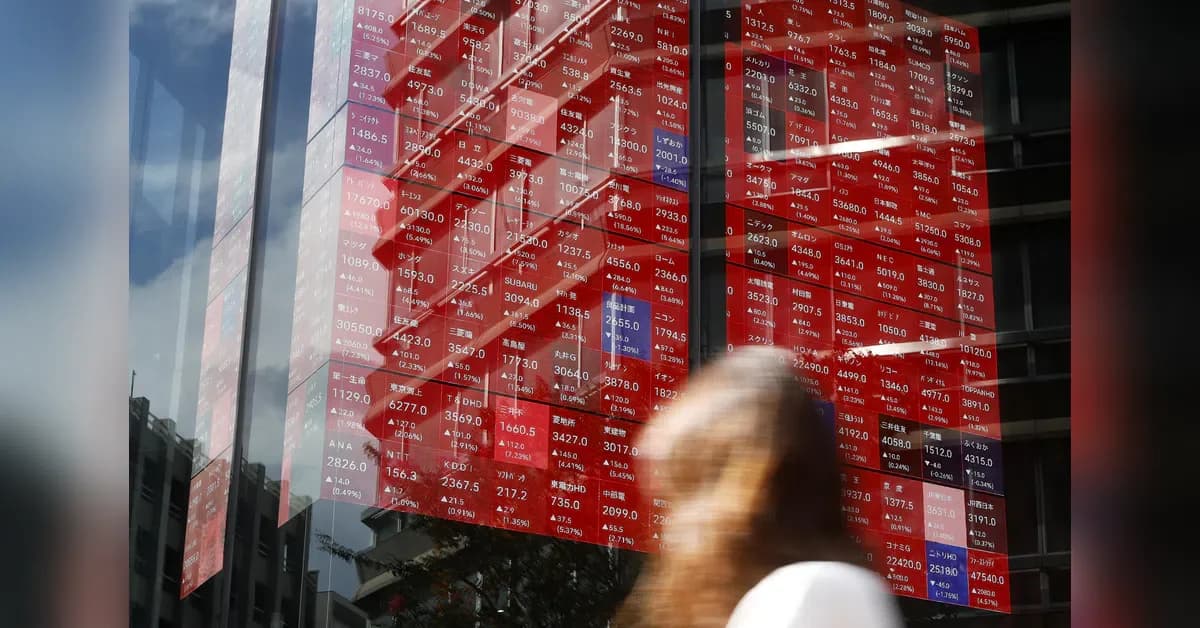
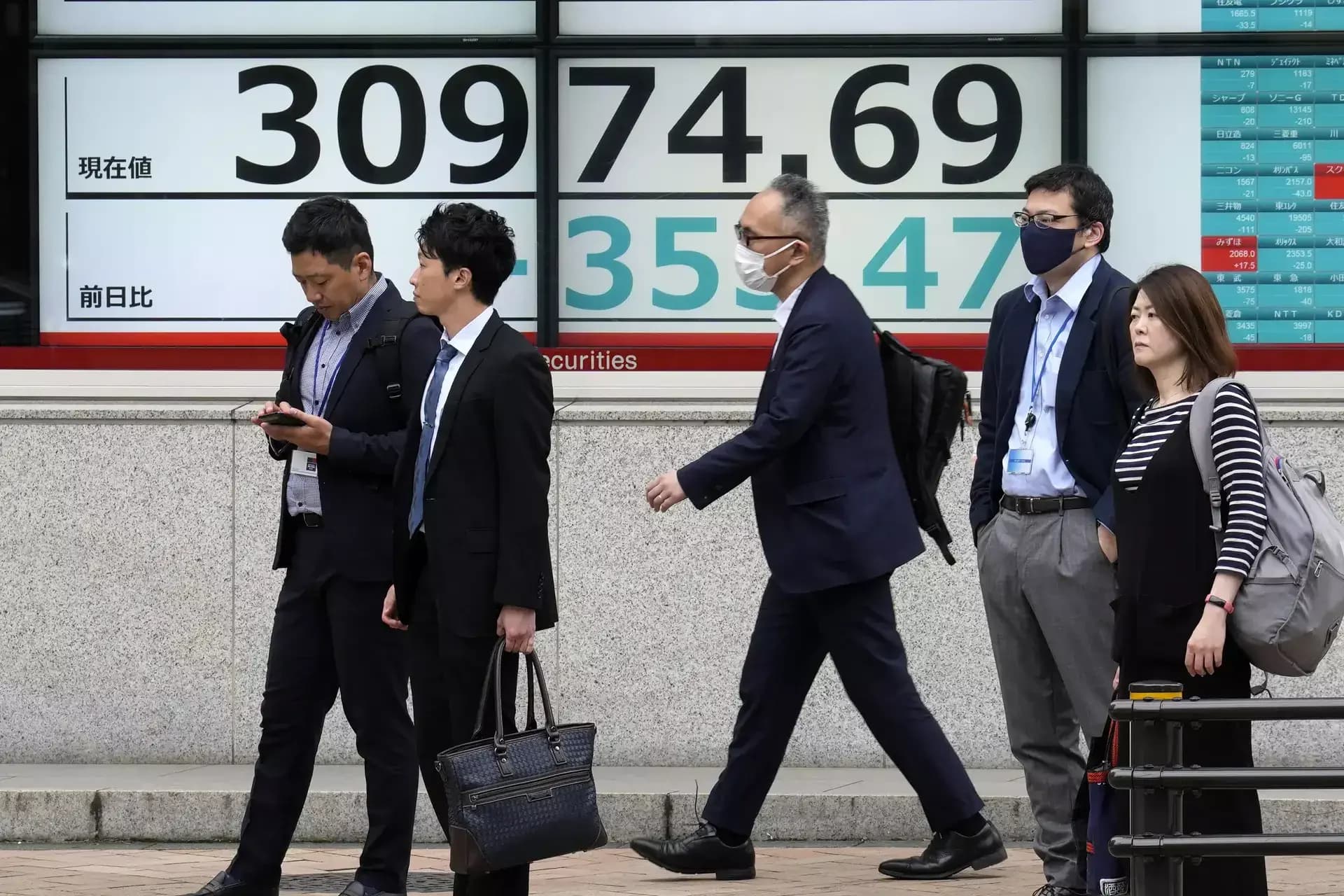
Asian markets opened lower on Friday, extending the previous session's weakness after Brent crude climbed above $100 per barrel amid intensifying Gulf tensions and fresh US tariff announcements. MSCI's broadest index of Asia-Pacific shares outside Japan fell 1%, while Japan's Nikkei slid 2.9% and South Korea's KOSPI dropped 3.7%. The sell-off was primarily driven by escalating geopolitical tensions, with US military launching air strikes on Iran into Friday morning while Tehran fired at neighbouring Arab countries hosting US bases. Nasdaq futures were last up 0.1% as bumper results from Intel offered only fleeting support in the face of broader worries about oil and rates. Wall Street fell overnight after Alphabet and Tesla, the first two of the so-called "Magnificent Seven" megacap tech companies to report this season, spooked investors as both burned through cash in their most recent quarter for their big spending on AI infrastructure.
Crude oil prices are retreating after Brent hit $100 again last week as the United States and Iran took a break from hostilities over the weekend. However, with the outcome of the war still highly uncertain, the outlook for stock markets has dimmed. The recent oil price spike has challenged the market's bullish outlook, with renewed Middle East conflict, disrupted oil supplies creating extended market turbulence ahead. After the Houthis declared a maritime blockade on Saudi Arabia last week and demonstrated they meant it by striking tankers in the Bab el-Mandeb Strait, market watchers had to accept the fact that the Middle East war has spilled beyond the Strait of Hormuz—which remains almost entirely closed. The situation in the Ukraine war developed in negative ways, as well, with Ukrainian drone attacks on the Caspian Pipeline Consortium network prompting a sharp reduction in Kazakh oil production. These developments have disturbed as much as a quarter of the world's oil and a solid portion of the world's gas, creating significant supply disruptions.
Big Tech's leaders now plan to spend a combined sum of over $725 billion this year alone to pursue their artificial intelligence plans, creating significant exposure to energy market volatility. After the Houthis declared a maritime blockade on Saudi Arabia last week and demonstrated they meant it by striking tankers in the Bab el-Mandeb Strait, market watchers had to accept the fact that the Middle East war has spilled beyond the Strait of Hormuz—which remains almost entirely closed. The industry is already short on energy supplies in the context of their planned AI data center growth, and any disturbance of energy commodity supply would only aggravate the situation further. Higher oil and gas prices, after all, inevitably result in higher inflation everywhere else since energy costs underpin all other costs in any given economy. The conflict has entered a decidedly more dangerous phase, with Helima Croft, head of global strategy at RBC Capital Markets, noting that it could shift the sentiment of the 'market always finds a workaround' camp. Any report about de-escalation in Hormuz has sent oil prices lower, lulling many into a false sense of security that would make a bigger oil and gas supply shock more devastating than it could have been otherwise.
Markets are now betting central banks will have to turn more hawkish, with a one-in-three chance of a Fed rate hike as soon as next week - a sea change from merely a week ago, while a move in September is more than fully priced in. Money markets are now fully pricing in a Fed rate rise by September, with investors now monitoring whether a sustained rise in oil prices spills over into broader inflation expectations and corporate earnings. The European Central Bank left rates unchanged overnight but a September rate hike is about 70% priced in. The jump in crude prices has complicated the outlook for central banks, with money markets increasingly pricing in tighter monetary policy amid concerns of a genuine reopening of the inflation question. Inflation has remained top of the agenda for markets this morning, said Deutsche Bank's global head of macro research Jim Reid, citing the jump higher in Brent oil. Indeed, the strikes between the US and Iran show no sign of easing, and the Houthis said they targeted two oil tankers in the Red Sea yesterday, raising fears that the conflict is widening.
Wall Street experienced its worst session in a month as oil price surges and geopolitical tensions weighed heavily on major technology companies. The S&P 500 fell 1.2% and is on track for its first back-to-back weekly loss since March, while the Dow Jones Industrial Average dropped 506 points (1%) and the Nasdaq composite sank 2.2%. Alphabet fell 7.1% even though the parent company of Google delivered stronger profit and revenue than analysts expected, as investors focused on how much Alphabet is planning to spend on artificial-intelligence investments. Alphabet raised its forecast for capital spending over the full year after its investments last quarter doubled to nearly $45 billion from a year earlier. Tesla tumbled 14.5% after Elon Musk's electric-vehicle company reported a weaker profit for the latest quarter than analysts expected. American Airlines fell 8.4% even though it reported a much bigger profit for the spring than analysts expected, as the airline raised airfares to offset higher fuel prices during the latest quarter. Southwest Airlines lost 6.2%, even though it also reported better profit and revenue than analysts expected. Stocks fell under the pressure of rising oil prices which raise costs for businesses and erode their customers' ability to spend.