Wall Street closed sharply lower on Thursday as investor sentiment weakened on renewed concerns over heavy AI spending following Big Tech earnings. The NASDAQ Composite declined 2.2% to end at 25,137.69 due to a 7% fall in Alphabet and a 14% downturn in Tesla after their latest earnings reports. The S&P 500 lost 1.2% to settle at 7,408.30, while the Dow Jones Industrial Average dropped 506 points (1%) to 51,711.65. Microsoft, Meta Platforms and Amazon were also in the red, with the Magnificent Seven companies falling 4.78% - their biggest one-day drop since the tariff tantrum in April 2025. Together, big tech wiped out $797 billion in market capitalisation on Thursday, with Alphabet contributing significantly to this decline. As per Charles Schwab's Head Trading & Derivatives Strategist Joe Mazzola, "It wasn't enough to overcome geopolitical headwinds, and worries intensified in the bond market, where the benchmark 10-year note yield posted a new 2026 high of 4.71%."
Alphabet shares fell 7.13% after the company posted robust Q2 earnings with revenue jumping 21% to $119 billion and net income swelling 298% due to other income from unrealized equity gains. However, the company announced it will increase its AI-related expenditure to $205 billion in 2027 to meet the exploding AI-cloud computing demand. The revised spending outlook has reignited investor concerns over the massive AI investments being made by hyperscalers, even as companies continue to defend the spending as necessary to meet surging demand. The move comes at a time when investors have become increasingly cautious about the soaring cost of the artificial intelligence race, with growing concerns that spending on AI could slow if the technology fails to deliver the expected gains in profitability and productivity. The company spent roughly $45 billion during the second quarter, pushing free cash flow into negative territory for the first time since becoming a public company, changing Alphabet's character from a cash generation machine to an industrial-sized fuel line for AI infrastructure. Together, big tech wiped out nearly $767 billion in market capitalisation on Thursday, with Alphabet contributing significantly to this decline.
Tesla shares nosedived by 14.52% to close at their lowest level since March 2025 after reporting a sharp earnings miss for the second quarter, with operating expenses growing faster than revenue. The electric vehicle manufacturer's disappointing results added significant pressure to the technology sector, intensifying the broader selloff in large-cap technology stocks. Tesla reported negative free cash flow in the second quarter for the first time in more than two years, adding to investor concerns about the company's financial health. Despite the earnings strength from other major tech companies, investors remained cautious about the overwhelming expenditure on AI infrastructure across major tech companies, with the combination of soaring energy prices and escalating geopolitical tensions prompting investors to reduce exposure to risk assets. Tesla's shares plunged after profits fell well short of expectations despite strong vehicle deliveries, while Elon Musk described 2026 as a massive capital spending year and argued that Tesla should invest as quickly as possible without becoming wasteful. The ambition remains vast, spanning Full Self-Driving, robotaxis, Optimus, electric vehicles, and energy storage, but the road between today's spending and tomorrow's payoff is getting longer while profitability is being asked to pay the toll.

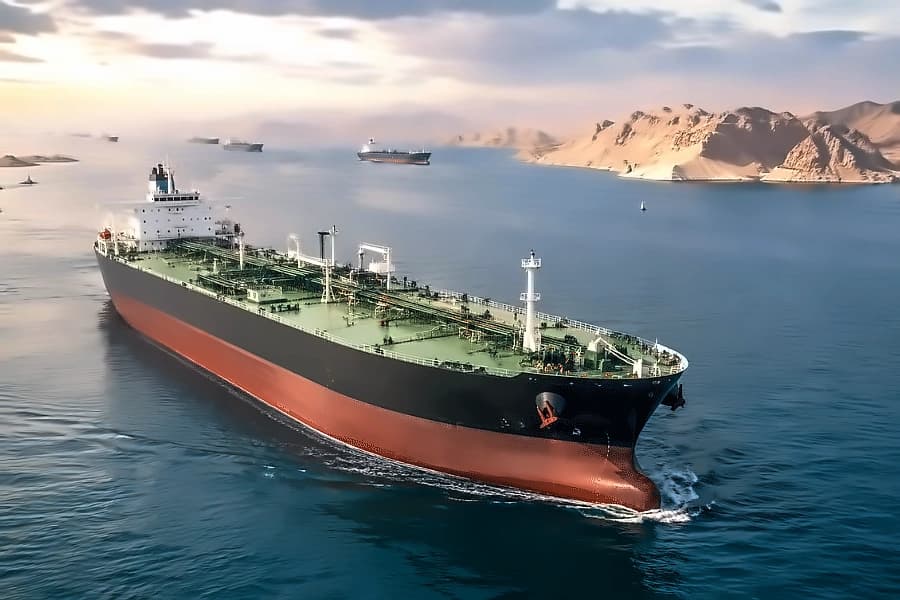
Crude oil prices experienced another sharp surge, with Brent crude crossing the $100 mark and US WTI crude climbing over $92 per barrel, representing the highest level of crude oil prices since May. At 7:19 am IST, Brent Crude was trading 0.75% lower at $99.94 per barrel, while West Texas Intermediate also fell 0.97% to $91.29 a barrel after Iran-backed Houthis reportedly attacked tankers in the Red Sea. The surge came after US President Trump threatened further attacks on Iran and told Axios in an interview that he is close to a decision of launching a "massive strike" on Iran without Israel's involvement. Trump also wrote on Truth Social that the US will hold Iran and the Houthis responsible for any further shipping attacks in West Asia, his remarks coming after two Saudi Oil tankers were attacked in the Red Sea by Iran-backed Houthis. Brent crude jumped 7% to settle at $100.69, touching $102 during the day - the highest price since May for the most actively traded Brent contract. Oil prices are also facing tailwinds due to the Black Sea disruptions along the Russian coast, as per CNBC TV18. Oil prices have now climbed more than 30% from the pre-conflict levels seen earlier this month, as per Trading Economics. Gasoline prices tend to follow oil prices higher and a gallon of regular costs an average of $4.09 across the United States, according to AAA, though this remains below May highs of roughly $4.56. Energy shares advanced 0.558% as oil prices threatened to reaccelerate inflation and boost bets the Federal Reserve could raise interest rates as soon as next week.
The negative sentiment in the US market spilled over to global markets, with France's CAC 40 dropping 1.6% for one of the larger losses in Europe. South Korea's Kospi jumped 4.4% earlier in the day, showing mixed reactions across Asian markets. The S&P 500 is on track for its first back-to-back weekly loss since March, highlighting the sustained pressure from multiple factors. The yield on the 10-year U.S. Treasury note rose above 4.69% from 4.67% late Wednesday, hitting the highest level since January 15, 2025 before President Trump's second term began. Traders are betting on a 36% chance the Fed will hike the federal funds rate at its meeting next week, up from the nearly 12% probability seen a week ago, according to CME Group data. Higher oil prices are making stocks fall under pressure which raise costs for businesses and erode their customers' ability to spend, with companies like American Airlines falling 8.4% and Southwest Airlines losing 6.2% despite reporting better profits than expected. Higher oil prices pose a key risk for India, the world's third-largest crude importer and consumer, by stoking inflation, widening the trade gap, and squeezing growth and corporate margins.