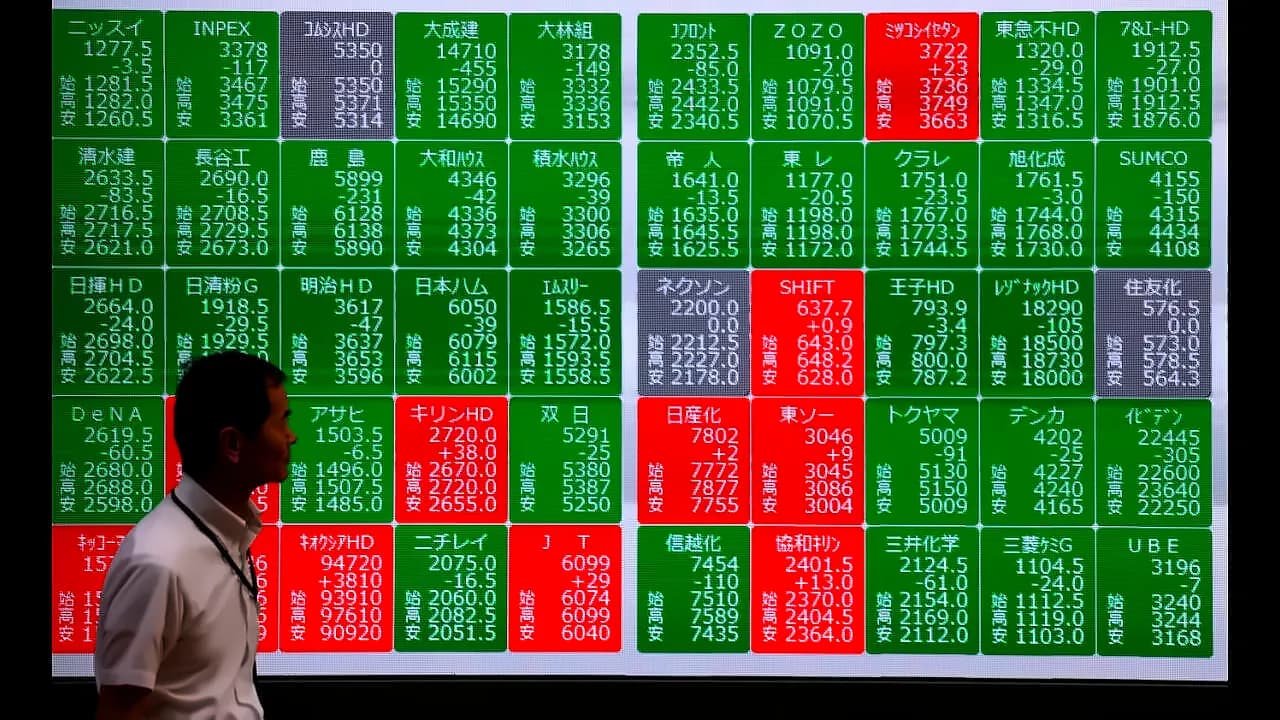
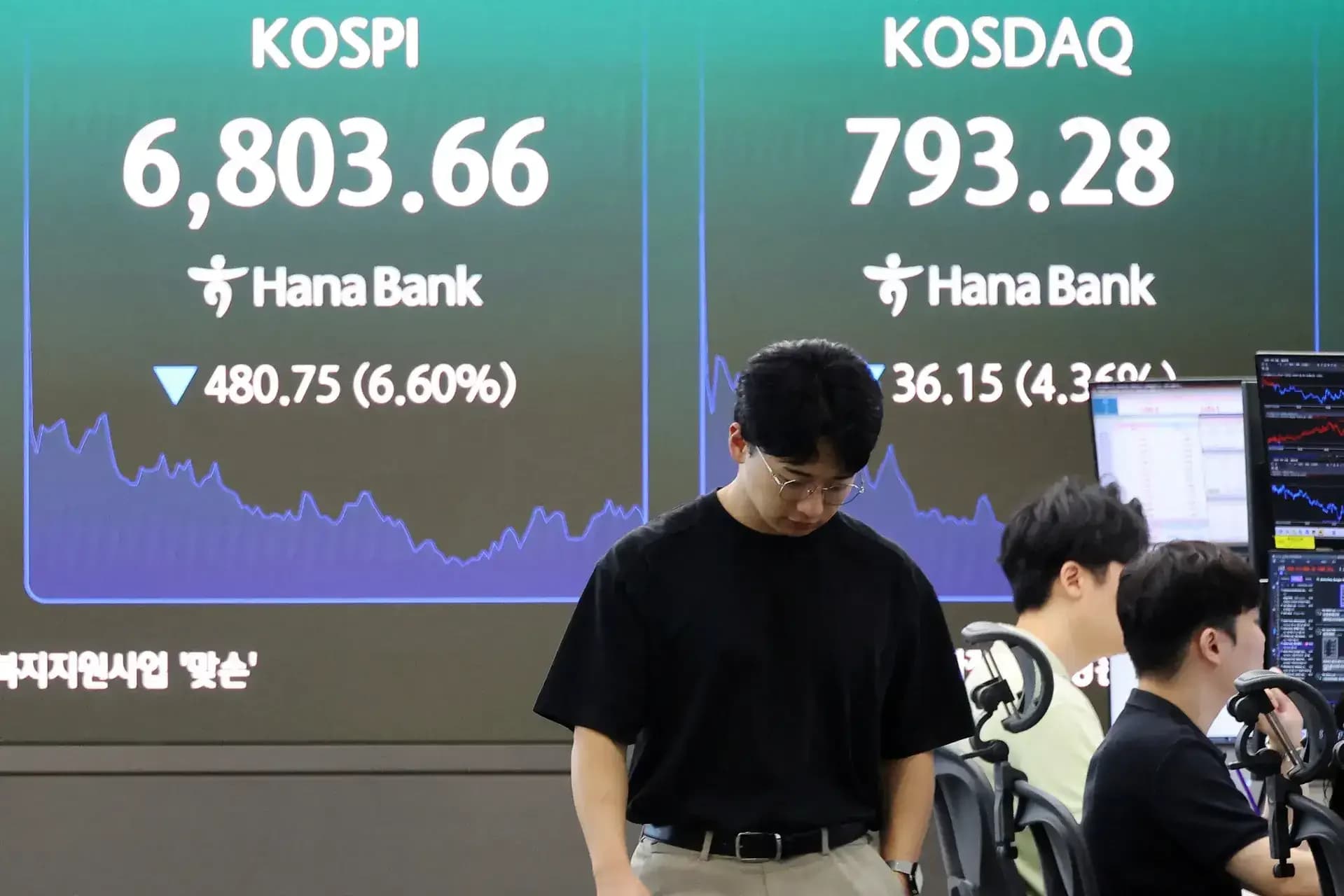
Asian equities fell sharply on Tuesday with MSCI's broadest index of Asia-Pacific shares outside Japan falling 2% in early trading, as reported by Business Standard. Japan's Nikkei 225 dropped 2.64% to 67,206.79 in early trading, extending losses to four sessions as the benchmark index fell for the fourth consecutive day. South Korea's Kospi plummeted 7.4% or nearly 400 points to 5,914.35, marking its lowest level since late July after having crossed 9,000 in June at the peak of the global AI boom. Japan's Topix index slipped 0.56% to 4,081.76. The decline was primarily driven by technology shares as chipmakers led regional losses, with semiconductor giants SK Hynix and Samsung Electronics declining 8.8% and 7.7% respectively. According to Reuters, the selloff was led by technology shares as a widening conflict in the West Asia kept oil prices elevated, supporting the dollar ahead of an earnings season that will set the tone for the rest of the year.
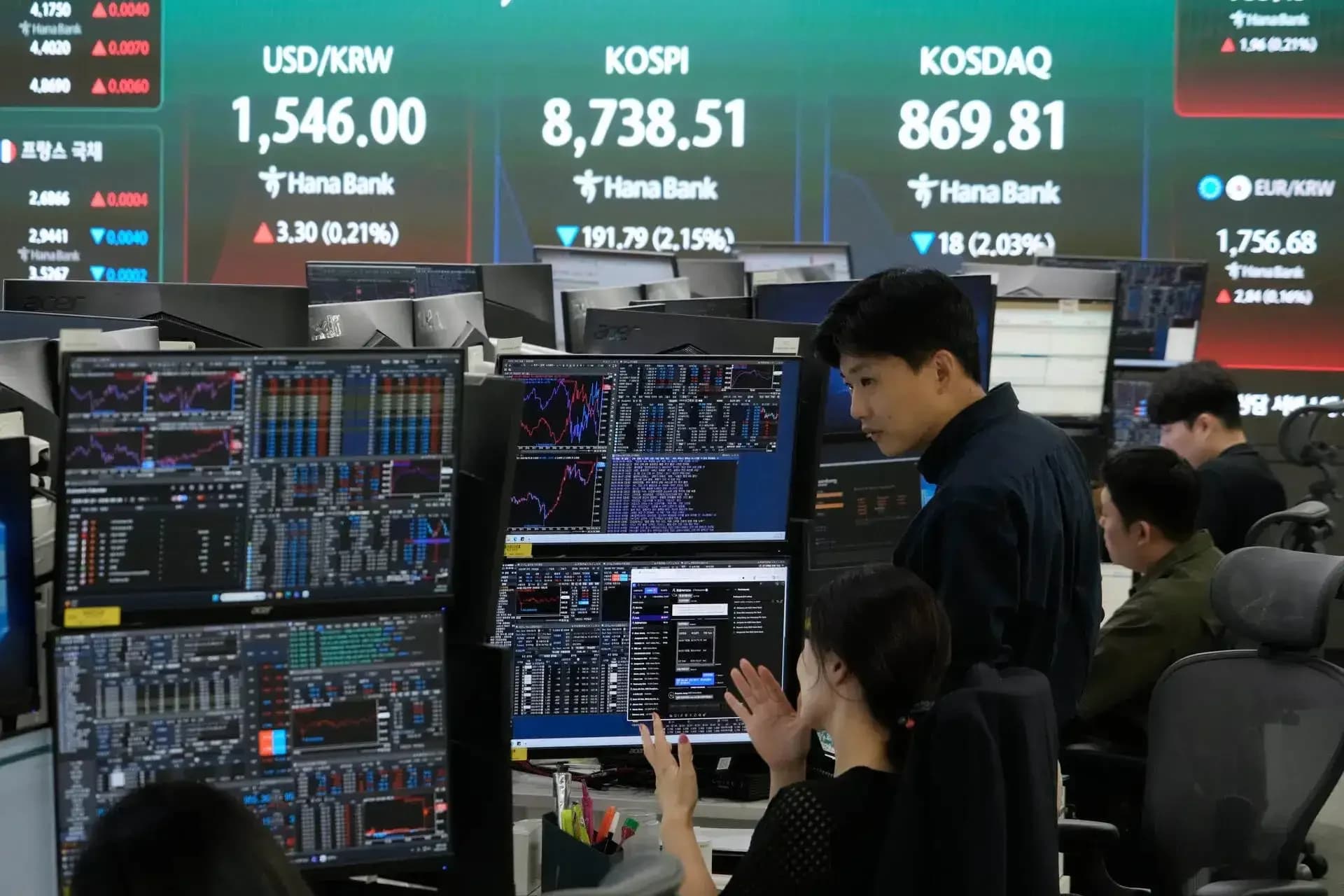
The semiconductor sector weakness has created sustained selling pressure across AI-related equities, with semiconductor stocks breaking below recent trading ranges. As reported by Business Standard, the tech-heavy Nasdaq fell 0.5% overnight, dragged by chipmakers as investors fret about the durability of the rally in AI stocks amid higher competition between the US and China. The previous day's 2.7% drop in a US gauge of chipmakers on Monday, with the Nasdaq 100 Index losing 0.7%, has continued to impact Asian markets. According to Reuters, concerns over the returns on massive investments in AI infrastructure and hyperscalers have weighed on sentiment, with market participants also assessing the potential impact of geopolitical developments on energy prices. Nonferrous metal stocks were the worst-performing industry group on the Topix, falling 4.79%, while Kioxia Holdings was the biggest percentage loser, tumbling 13.02%. The sell-off was severe enough for the Korea Exchange to halt program sell orders for five minutes after the KOSPI 200 futures index fell 5.08%.
In stark contrast to the Asian decline, Indian technology stocks staged a sharp rebound with the Nifty IT index rising 3%, led by gains of as much as 5% in HCL Technologies and Tata Consultancy Services (TCS). The combined market capitalisation of IT stocks increased by ₹26,000 crore, while the Sensex jumped more than 600 points and the Nifty gained nearly 1% as a result of the tech-led rally. As reported by The Economic Times, this divergence across Asia's technology landscape highlights how India's IT sector is showing strength even as investors question whether the most aggressive assumptions around the AI buildout can hold. The market reaction reflects investors rotating into services over semiconductor hardware exposure, as the artificial intelligence trade faces reality checks in markets that powered its spectacular rise.
Economic data released on Tuesday added to concerns over inflationary pressures, with Japan's wholesale prices rising 6.8% year-on-year in September, while yen-based import prices surged 24.5%, highlighting the potential impact of higher import costs on businesses and the broader economy. As Reuters reports, rising energy prices could further complicate the outlook for Japanese companies, particularly if geopolitical tensions disrupt supplies or push commodity prices higher. Oil prices have surged to Brent crude futures at $105.9 per barrel, near a two-week high, as reported by Business Standard, with the renewed jump keeping pressure on yields and taking some shine off expensive growth stocks. The cautious sentiment helped keep the US dollar near an 18-month high, with the euro at $1.1157 and the Japanese yen at 158.50 per US dollar.
Currency markets drew attention as the Japanese yen strengthened 0.1% to 158.42 per dollar, while the offshore yuan hardly changed at 6.6952, as reported by CNBC TV18. In India, the GIFT Nifty index predicted a muted start with a positive bias, while traders would be watching the Indian rupee closely after the Reserve Bank of India (RBI) launched its most aggressive currency defence in more than a decade. The move signals that the RBI would use every tool available to stop the rupee slipping beyond 97 per dollar. On policy, Cleveland Federal Reserve President Beth Hammack said smaller, more frequent adjustments can help anchor inflation expectations, according to a Bloomberg report, though she stopped short of backing another rate rise this month.