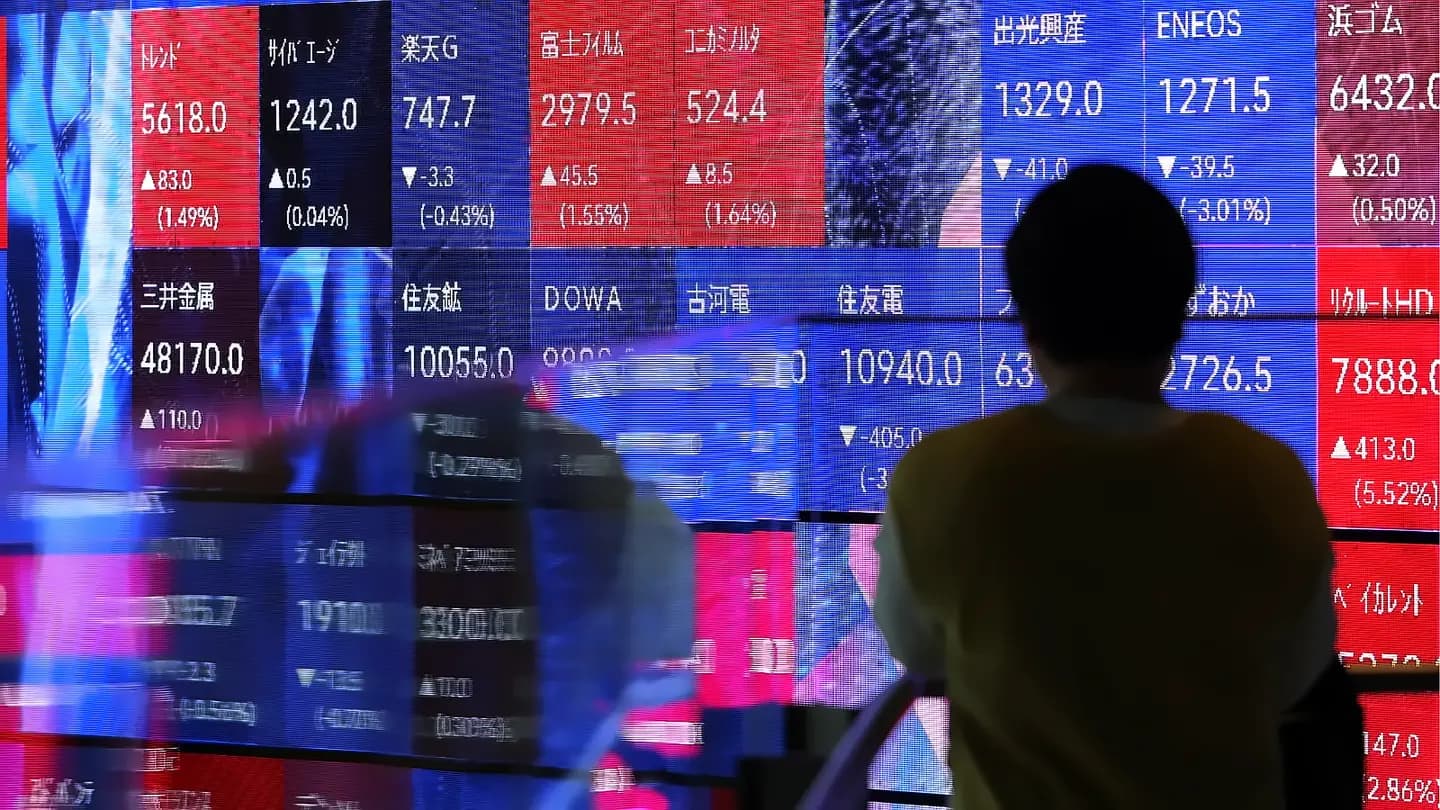
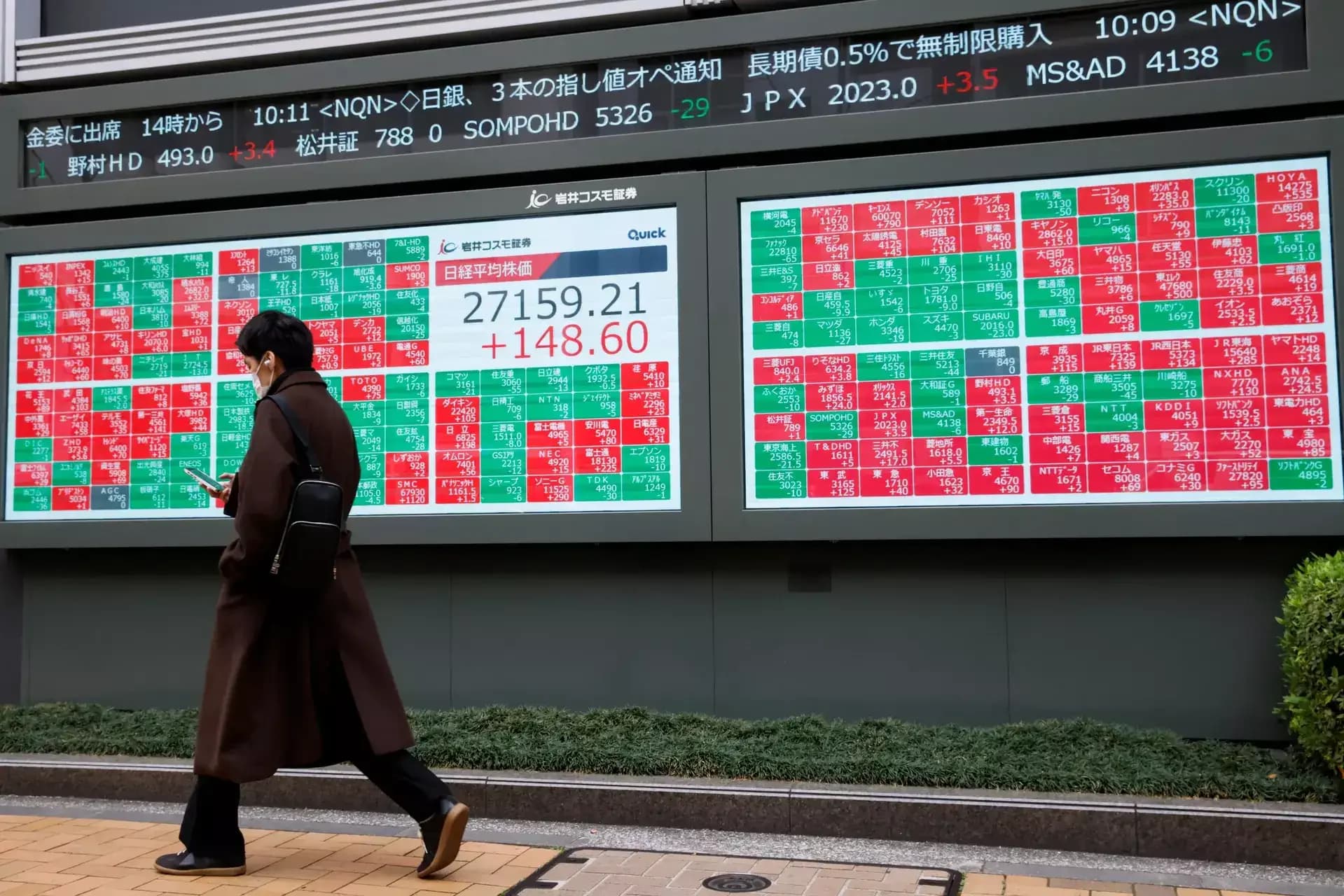
Japan's Nikkei share average surged past the 65,000 level for the first time, reaching 65,316.79 with a 3.12% gain and touching an all-time intraday record of 65,408.57. The broader Topix climbed 1.39% to 3,946.67, marking a significant milestone for the Japanese stock market. There were 144 advancers on the Nikkei index against 79 decliners, with shares related to the AI sector among the steepest gainers. Lasertec, a semiconductor inspection equipment maker, and Fujikura, a cables and optical fibre producer, both jumped more than 11%, reflecting improved market sentiment as optimism surrounding a potential peace deal in Iran boosted demand for risk assets.
US President Donald Trump said over the weekend that Washington and Iran had "largely negotiated" a memorandum of understanding on a peace deal that would reopen the Strait of Hormuz shipping lane for petroleum. Trump later said he had told his representatives not to rush into any deal, adding to signs of improving risk sentiment. Brent crude benchmark oil price rose by more than 4% to $94.20 (£69.60) a barrel, reversing earlier declines as negotiations have now stalled and sporadic attacks in the region have continued. The rally had previously been driven by expectations that a potential deal would reopen the Strait of Hormuz, but negotiations have now stalled and sporadic attacks in the region have continued. Trump has said his representatives will be in Pakistan on Monday for negotiations, with Vice-President JD Vance leading the US delegation, though Iran's state media said Tehran had "no plans for now to participate" in the talks.
Sydney, Bangkok, Taipei, Singapore and Wellington also fell, with Jakarta tumbling 2.7%, while Seoul, which has renewed record highs in recent days thanks to the artificial intelligence stock boom, was trading up 1.2%. The divergent performance reflects mixed sentiment across different sectors and geographic regions. Stock markets were mixed on Monday, with the Dow Jones Industrial Average flat, while the S&P 500 and Nasdaq both closed 0.2% lower. The falls were bigger in Europe, with the UK's FTSE 100 index finishing down 0.5% and both Germany's Dax and France's Cac 40 dropping by more than 1%. However, Asian markets had risen earlier, with Japan's Nikkei index closing up 0.6% and South Korea's Kospi climbing 0.4%. Data showed today that China's consumer spending in April grew at the slowest pace in more than three years -- a stark sign of the challenges Beijing faces to reignite domestic activity. Last week's talks on trade between China and the United States have offered "a degree of relief for Asian markets", according to MUFG's Michael Wan, providing some support despite the broader regional decline.
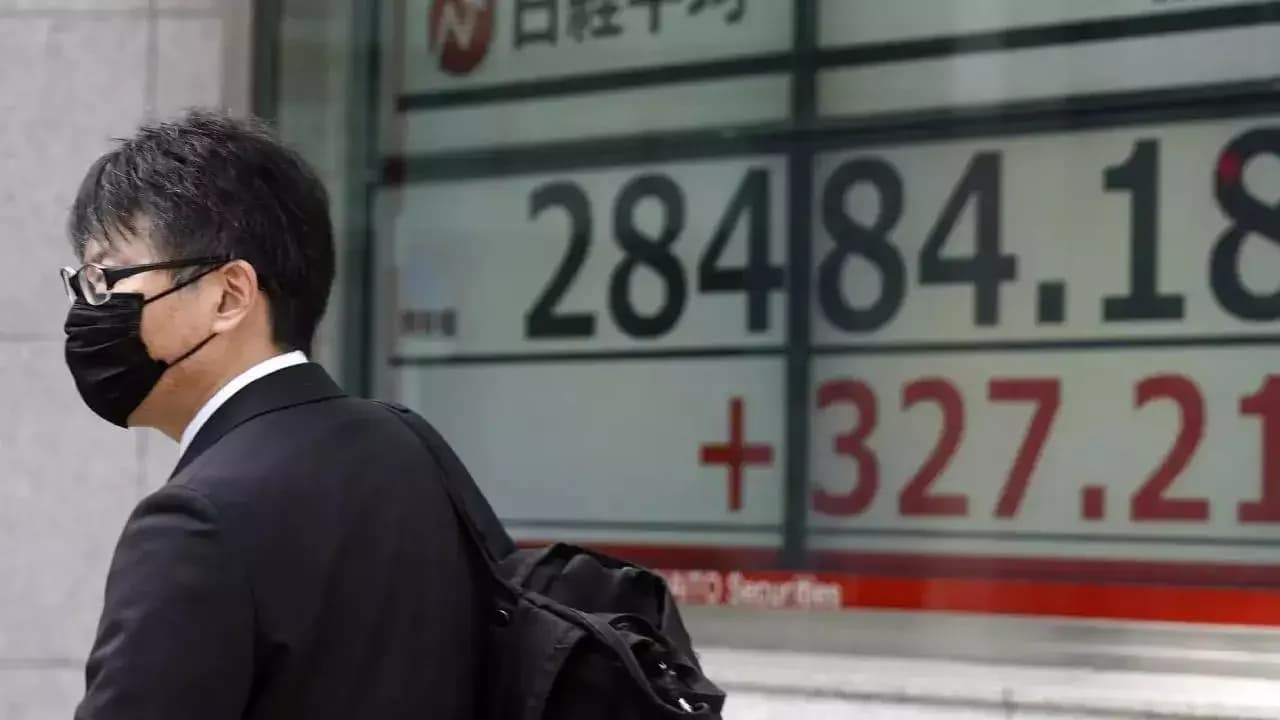
Despite broader market uncertainty, the AI memory chip boom continues to drive exceptional performance in key technology companies. In Tokyo, shares in memory chip maker Kioxia were not yet trading after a reported rush of buy orders following stellar quarterly results on Friday. Kioxia, the world's third-largest producer of NAND flash memory chips -- used as storage in AI data centres -- has seen its stock soar nearly 300% over the past year. The firm has forecast an eye-watering 1.3 trillion yen ($8.2 billion) in operating profit for April-June, saying it is "riding the large wave of AI demand, which has led to record high revenue and profits." In South Korea, Samsung Electronics -- which has also profited massively from the AI memory chip boom -- resumed union talks in a bid to avoid a strike over bonus payments, due to start Thursday. Later Monday, traders will have their eye on a meeting of G7 finance ministers and central bank chiefs that kicks off in Paris, with bond selloffs in the spotlight.
The conflict has triggered a global energy crisis with prices rising sharply, while some countries are facing fuel shortages. Asia has been hit particularly hard as the region relies on shipments that usually pass through the Strait of Hormuz for around 90% of its energy needs. Governments have ordered employees to work from home, cut the working week, declared national holidays and closed universities early in order to conserve their supplies. Some South East Asian countries, including Singapore and Thailand, have called on people to curb their use of air conditioning to save energy. Even China -- which is thought to have reserves equivalent to three months of imports -- is making adjustments, limiting a fuel price hike as citizens are faced with a 20% jump in price. Airlines across the region have announced measures to deal with soaring jet fuel prices, with the head of the International Energy Agency warning that Europe has "maybe six weeks of jet fuel left". In the UK, petrol and diesel prices eased at the end of last week after a series of hikes.