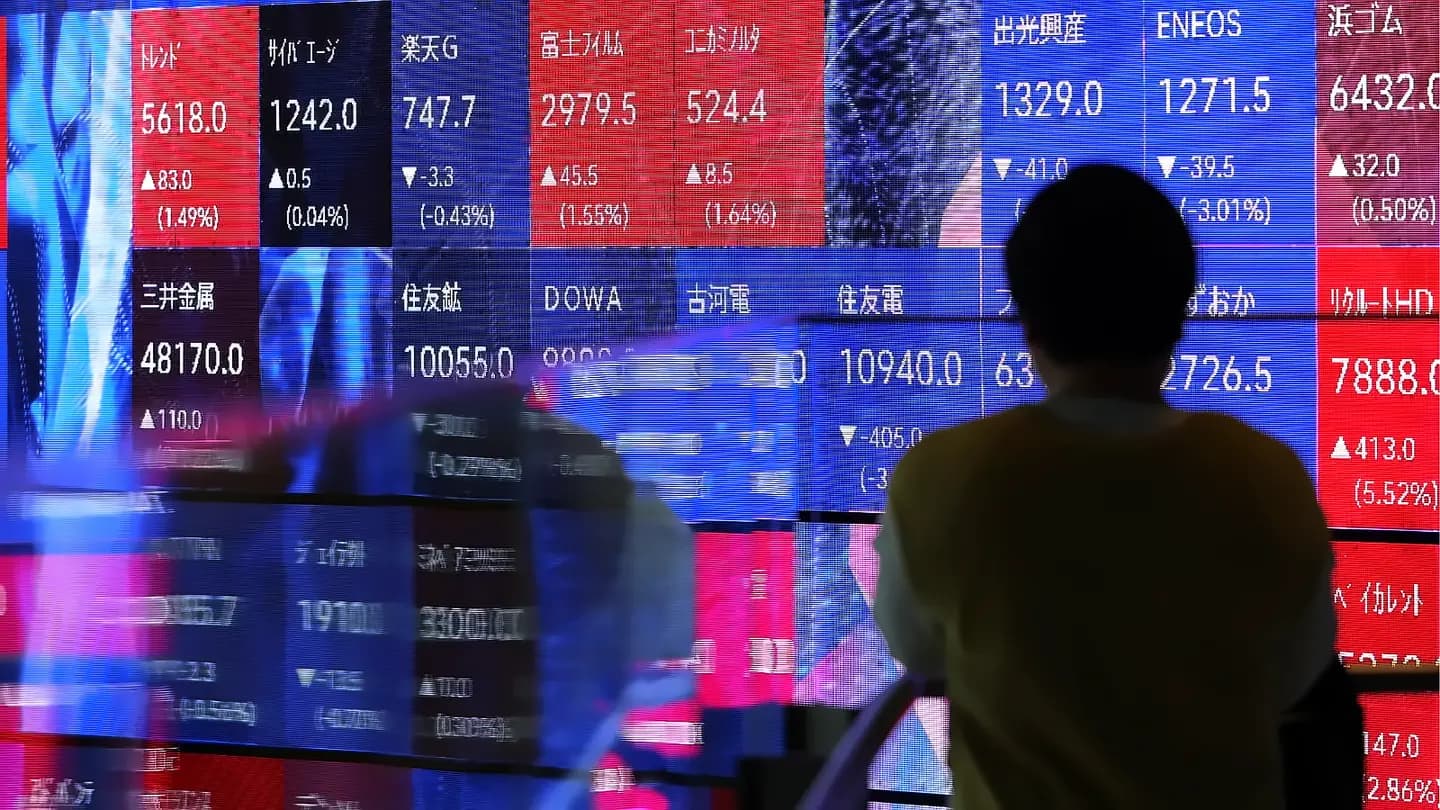
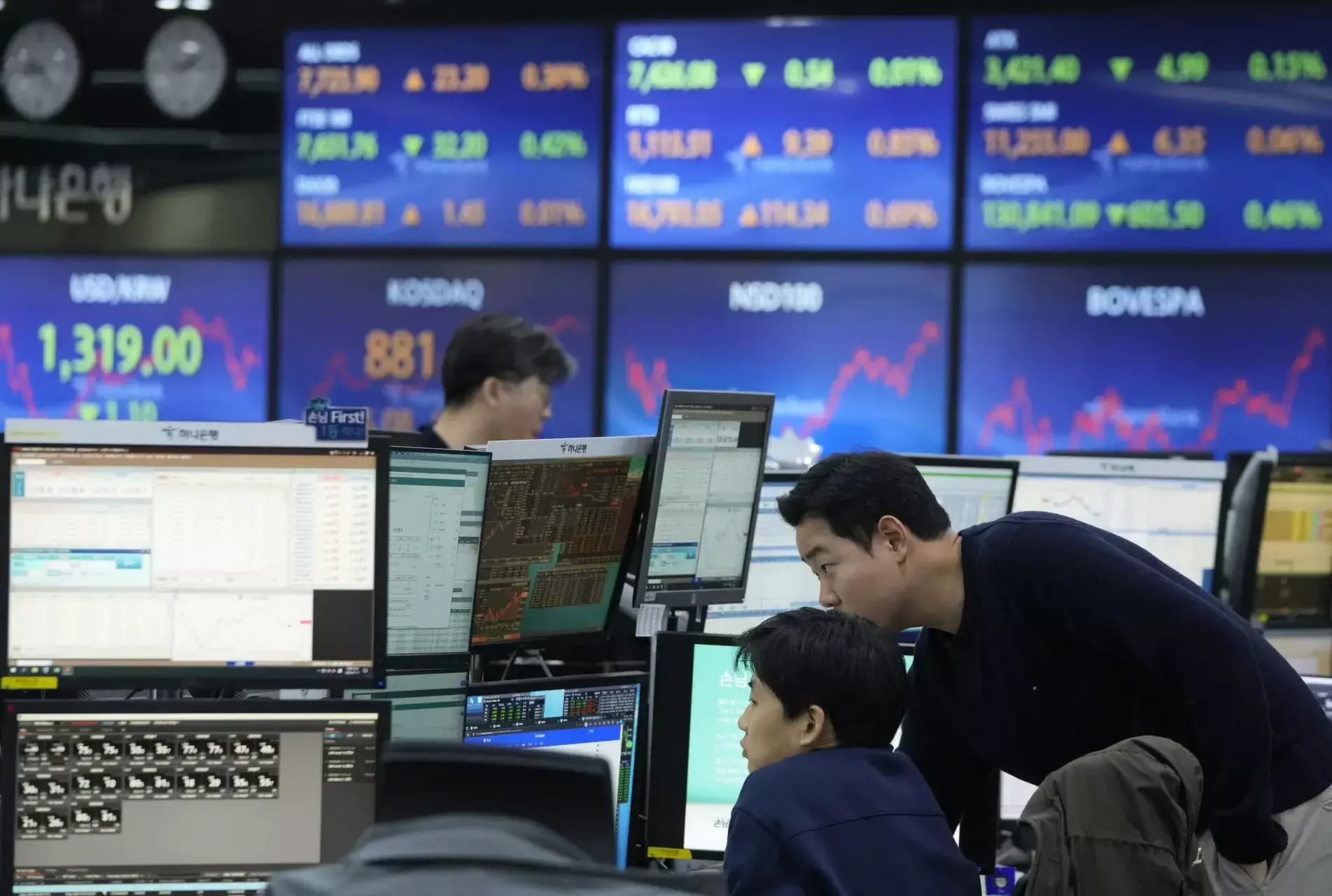
South Korea's Kospi surged over 5% on Wednesday, extending its two-day recovery to 7% following a heavy July selloff that dragged the world's best performing major market down 24% for the month. The rally was fueled by record highs on Wall Street led by AI earnings, easing oil prices amid US-Iran peace deal talks, and strong fundamental demand for semiconductor giants like Samsung. Semiconductor stocks led the rebound after major artificial intelligence hyperscalers eased concerns over whether heavy spending on data centres was putting excessive pressure on cash flows. Samsung shares surged more than 3% and SK Hynix soared over 7%, both companies having reported strong quarterly results last week. Samsung posted a record quarterly profit, driven by its semiconductor business, and said it expects a favourable supply-demand environment for memory chips to continue through at least 2027.
Oil prices traded at $80, sharply lower from $100 last month amid hopes of a US-Iran peace deal that could open the Hormuz Strait. U.S. Treasury Secretary Scott Bessent said Washington and Tehran could reach an agreement to reopen the Strait of Hormuz as early as Tuesday or Wednesday, according to CNBC. U.S. Secretary of State Marco Rubio said the U.S. was participating in talks involving Iran and Oman, while Qatar, which is serving as a key mediator in the negotiations, said efforts were continuing to secure a short-term breakthrough that could pave the way for broader discussions between the U.S. and Iran. The rally followed strong Wall Street performance, with the S&P 500 and Dow Jones Industrial Average ending Tuesday at fresh record highs, lifted by strong earnings from AI-linked companies including Caterpillar and Palantir.
J.P. Morgan Private Bank's Asia Mid-Year Outlook reveals a region being pulled in two directions by competing forces. The report highlights that Asia's AI export dividend remains substantial but is not being distributed evenly across economies. Taiwan remains one of the clearest beneficiaries because of its dominant position in advanced semiconductor fabrication, while Korea's export growth accelerated dramatically during the first half, driven by strong demand and tight supply in high-end memory products. Japan has benefited through semiconductor equipment, precision machinery and industrial automation, and China remains indispensable as a manufacturing and assembly centre, particularly in mature-node semiconductors and optical components. India, Indonesia and the Philippines have captured far less of the hardware-driven boom because they remain less integrated into the semiconductor and AI infrastructure ecosystem.
The Japanese yen strengthened to 157.60 per dollar after Japan and the United States conducted a coordinated yen buying intervention on Saturday, with Treasury Secretary Scott Bessent stating the U.S. will do "whatever it takes" to support Japan's efforts to stabilize the yen. Bessent also told public broadcaster NHK that he was sure Bank of Japan Governor Kazuo Ueda will "do what is best" for the country's economy, following a series of remarks calling for higher Japanese interest rates. The yen remained well above recent 40-year lows of around 164 per dollar, with Tony Sycamore at IG noting that with U.S. involvement adding credibility to the intervention, the move has given authorities an effective tool to buy time while they wait for fundamental factors to turn more positive. The offshore yuan was little changed at 6.7476 per dollar, while interest rate-sensitive two-year U.S. Treasury yields hovered near two-week lows as easing oil prices prompted traders to reprice for lower odds of a Federal Reserve interest rate hike in September.
US job openings eased in June, but hiring picked up slightly, indicating relatively steady demand for workers heading into the summer. That stability gives the Fed room to stay focused on inflation, though Friday's jobs report could quickly change the conversation, according to Bret Kenwell at eToro. A red-hot print could strengthen the case for a September rate hike, particularly with inflation still elevated, while a disappointing report combined with last week's weaker-than-expected gross domestic product growth could give the Fed more cover to remain on hold. The latest US earnings also remained supportive of sentiment, with Caterpillar Inc. jumping after strong growth driven by data-center spending, and McDonald's Corp. advancing after CEO Chris Kempczinski hailed an "opportunity to raise the bar in the US and accelerate performance in our largest market". The odds of a hike at that September meeting have receded to a 60% chance from 75% a week ago, as easing oil prices prompted traders to reprice for lower odds of a Federal Reserve interest rate hike.