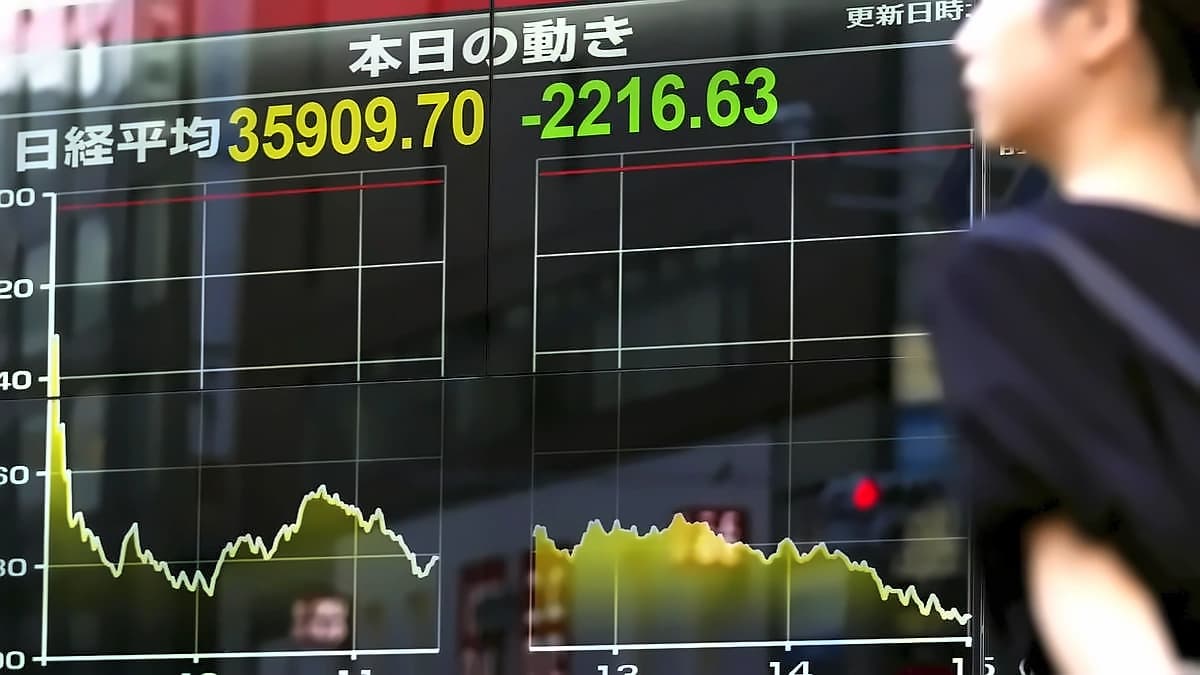
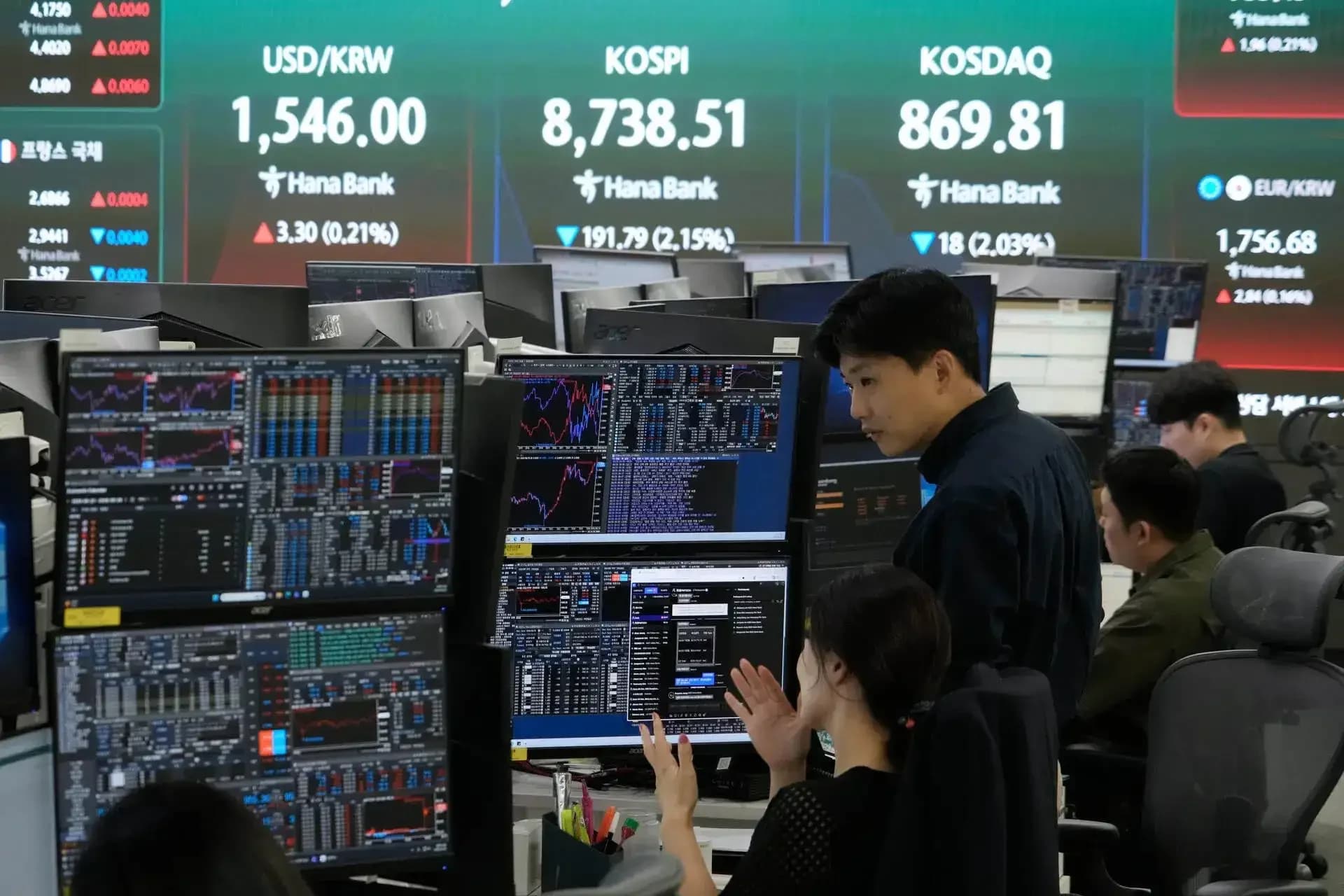
Global markets declined on Thursday as a mild pullback in sovereign bond yields was countered by a jump in oil prices and indicators of the massive debt that technology companies may need to sustain their dramatic artificial intelligence-fueled growth. According to Business Standard, Wall Street's main indexes fell, with the S&P 500 down about 0.5% and the Nasdaq off nearly 1.3%. Chipmakers, which have soared over 80% so far this year, were clear underperformers on the day following a report that OpenAI's annualized revenues were $20 billion less than the company previously signaled. The pan-European STOXX 600 fell 0.75% to around its lowest since June, while France's CAC-40 dropped 0.5%, nearing its lows for the year in March. Overnight in Asia, Japan's Nikkei had shed 1.4% and South Korea's chipmaker-heavy KOSPI slumped 2.6%.
Asian equities came under pressure as reports emerged that major tech companies were seeking to raise billions in debt to purchase AI chips, adding to funding concerns in already strained sovereign bond markets. According to The Wall Street Journal, Broadcom was looking for $50 billion in financing, while SpaceX was planning to issue $30 billion in investment-grade debt and raise $10 billion in loans to buy chips from Nvidia. The news saw credit default insurance on SpaceX jump to record highs, while its shares and bonds lost ground. Nigel Green, CEO of deVere Group, warned of a dangerous loop where Nvidia was bankrolling the very customers who buy its products, leaving global investors at risk if the expected profits failed to materialise. "The AI build out started on cash," said Green. "It's increasingly running on credit, and credit changes the risk profile entirely. Debt has to be repaid on schedule, whether the revenues show up or not, and this debt is landing in the bond funds and pension pots of savers right around the world."
Oil prices experienced significant gains as commodity investors weighed supply constraints from a storm heading for North American oil-producing regions and Houthi attacks on Saudi Arabia. According to Business Standard, oil prices settled 4% higher, with Brent crude futures at $104.28, on revived concerns about the war in the Middle East and growing supply disruptions due to a hurricane approaching the US Gulf Coast. The price rise came as around 12 million barrels per day of crude oil and 2 million bpd of refined products have left the Middle East on tankers in the last 7 to 10 days, as commodities trading giant Vitol's CEO Russell Hardy noted on Tuesday. The Group of Seven nation, along with the European Union, agreed to release 100 million barrels of diesel stocks to tackle soaring commodity prices triggered by the Hormuz energy shock. Oil prices remained a key concern for investors, with higher energy costs raising fears of renewed inflationary pressure. The International Energy Agency said completing previously announced oil releases as quickly as possible could bring about 100 million barrels to the market, although analysts questioned whether this represented a fresh intervention of that size.
Minutes of the Federal Reserve's last meeting released on Wednesday showed "most" members considered another rate hike likely by year end, though they would approach each meeting with an open mind. According to Business Standard, markets imply just a 17% chance the Fed will move again this month, but are nearly 83% priced for a rise in December. "We expect a second Fed hike in December, though we see a strong chance the Fed ultimately concludes further tightening is unnecessary," analysts at Goldman Sachs wrote in a note. The prospect of a pause in tightening helped keep 2-year Treasury yields at 4.78%, while 10-year yields nudged up to 5.298% having hit a 24-year top of 5.326% overnight. The Japanese yen held steady near 157.90, with the Japanese currency protected by the threat of intervention.
Despite market concerns about AI debt and funding, major semiconductor companies reported record quarterly results. Samsung Electronics on Thursday reported a 783% jump in third-quarter operating profit to 107.4 trillion won ($80.17 billion), though its shares lost 2.4%. TSMC, the world's largest contract chipmaker, also reported a record third-quarter revenue of T$1.49 trillion ($46.71 billion), up 50% from the year-earlier period, with its shares falling 1.35%. The US quarterly earnings season picks up pace next week with big banks, including JPMorgan, set to report results. Optimism around strong earnings has buoyed US stocks lately despite shaky geopolitical developments and concerns about rising interest rates. The tech and energy sectors are expected to report the biggest quarterly earnings growth, while the broader S&P 500 is expected to post a punchy 30.6% increase in quarterly earnings, according to LSEG data.