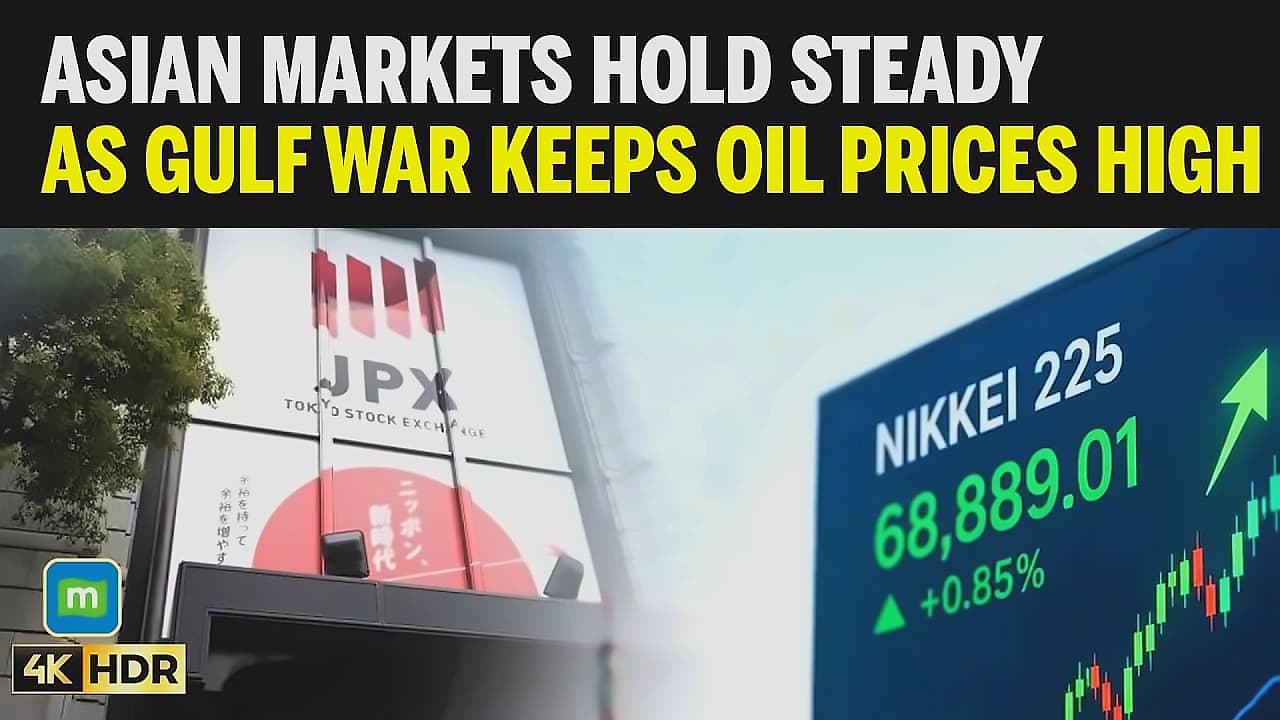
Asian markets opened slightly higher on Monday as investors assessed the latest military exchanges between the United States and Iran, while preparing for a packed week of corporate earnings that could set the tone for global equities. Japan's Nikkei 225 rose 0.58%, South Korea's Kospi added 0.02%, and Australia's ASX 200 gained 0.10%. According to NDTV Profit, U.S. equity futures pointed to a weaker opening, with Dow Jones Industrial Average futures falling 135 points, S&P 500 futures declining 0.3%, and Nasdaq-100 futures losing 0.5% as investors adopted a cautious stance ahead of the cash session. The geopolitical tensions also weighed on bond markets, with yields on U.S. Treasuries moving higher across the curve, and the benchmark 10-year yield rising to about 4.58%. The U.S. dollar strengthened against all other Group-of-10 currencies as markets remained sensitive to developments in the Middle East and the upcoming earnings season.
Oil prices climbed significantly as Brent crude advanced more than 3% to around $78.50 a barrel, reflecting renewed concerns over the stability of one of the world's most important energy corridors. According to NDTV Profit, the geopolitical tensions weighed on bond markets, with yields on U.S. Treasuries moving higher across the curve, and government bonds in Australia and Japan also coming under pressure. The spike in oil prices pushed 10-year Treasury yields up 2 basis points to 4.58%, while Fed fund futures slipped 2 ticks, implying 34 basis points of policy tightening by the end of the year. U.S. officials said around 20 vessels had been escorted through the strait in the previous 24 hours, though ship tracking sites showed little traffic moving. The U.S. military said it was launching fresh strikes on Iran aimed at keeping the Strait of Hormuz open to traffic and in response to Tuesday's assault on three cargo ships transiting the strait.
The latest military exchanges between the United States and Iran continued into Sunday, with U.S. Central Command confirming additional strikes on Iranian targets over the weekend. As reported by NDTV Profit, Iran targeted U.S. facilities across several Gulf countries and declared the Strait of Hormuz closed, though President Donald Trump rejected that claim on Sunday, saying commercial traffic was continuing through the strategic waterway. The latest escalation followed U.S. airstrikes ordered by Trump on Saturday in response to an Iranian attack on a commercial vessel transiting the strait. The military said the operation was intended to reduce Iran's ability to launch attacks against commercial ships and civilian vessels using the Strait of Hormuz, with the exchanges continuing into Sunday as tensions heightened concerns about the security of energy supplies and shipping routes.
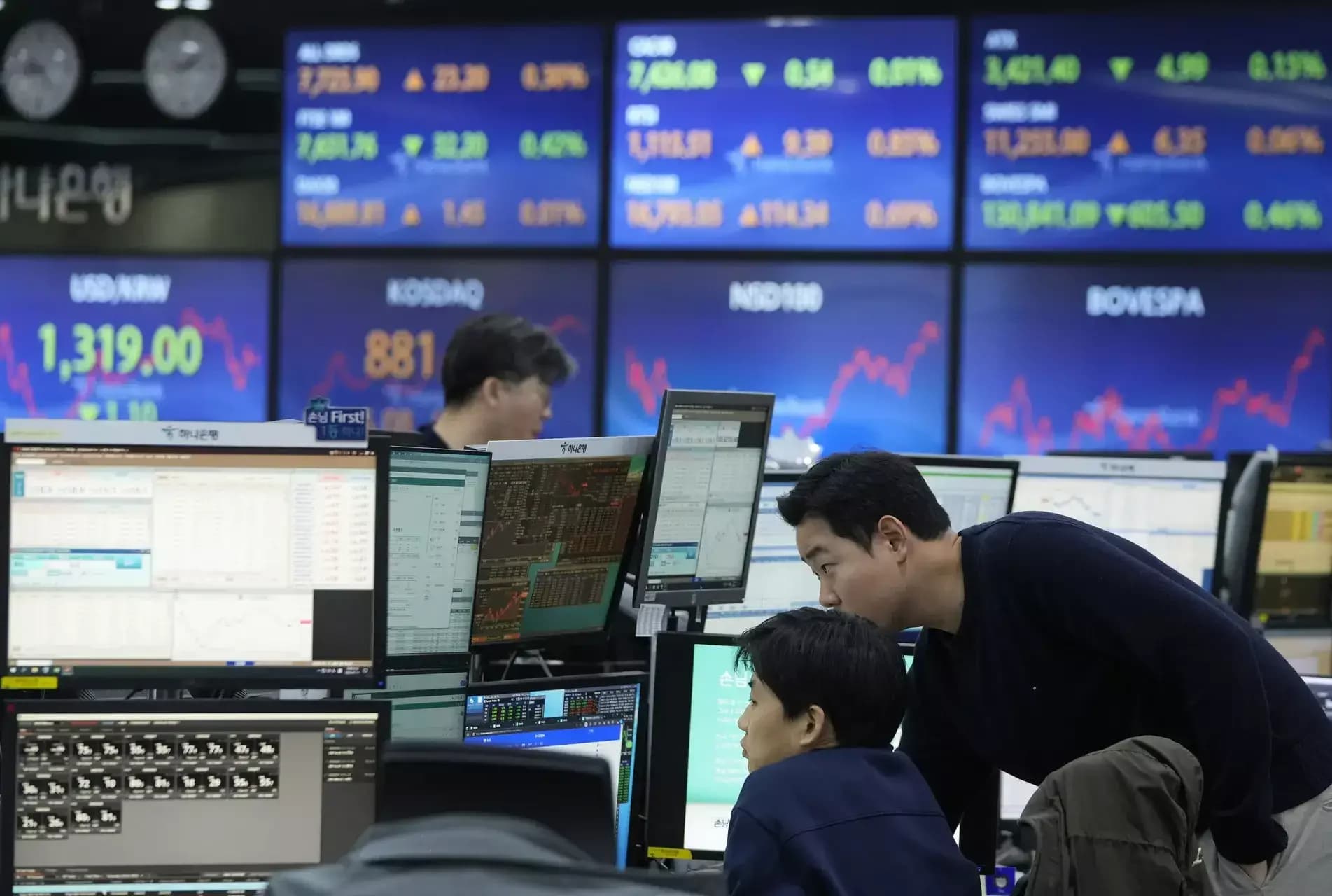
South Korea's red-hot market eased 0.4%, and will be in focus having shed almost 8% last week as leveraged bets on semiconductor shares came under pressure. According to The Economic Times, the market has recently become something of a bellwether for the chip sector globally and further losses could ripple out more broadly. South Korean chipmaker SK Hynix's U.S.-listed shares jumped almost 14% in their Nasdaq debut on Friday, though news that Apple had sued OpenAI and two former employees for trade secrets theft emerged after markets closed. The spike in oil prices has added to the pressure on the chip sector, with investors increasingly concerned about the sustainability of the semiconductor bubble.
Markets are expected to remain sensitive to developments in the Middle East and the upcoming earnings season, with investors assessing whether geopolitical risks will outweigh corporate performance in driving sentiment this week. As reported by NDTV Profit, equity investors will be hoping the earnings season proves as upbeat as forecast with the major banks kicking off from Tuesday, while Netflix and General Electric are also on the docket. The dollar added 0.1% on the yen to 161.96, regaining some of the ground lost on Friday when Japanese Finance Minister Satsuki Katayama floated an idea to encourage the $1.8 trillion Government Pension Investment Fund (GPIF) and other retirement vehicles to bring some of their money home. The euro eased a fraction to $1.1403 as Europe is far more reliant on foreign oil than the U.S.