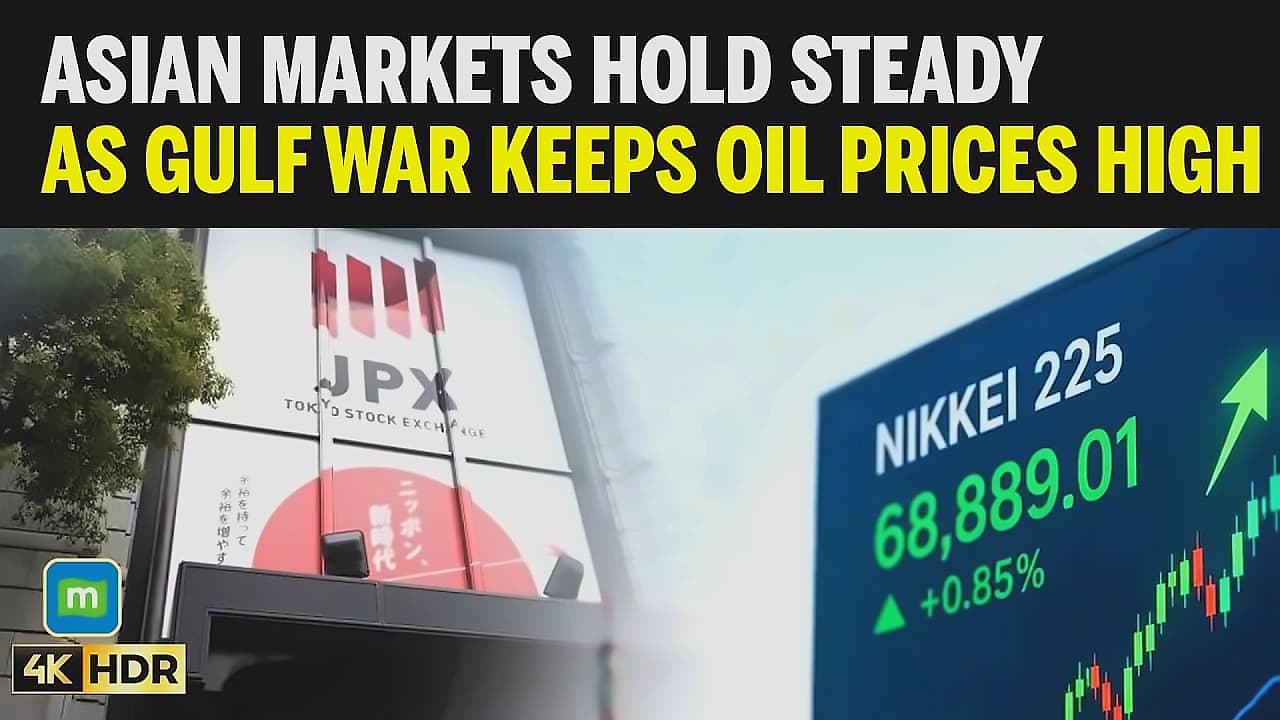
Asian equities showed mixed performance on Tuesday as investors assessed renewed uncertainty over the US-Iran conflict and rising crude prices. According to latest reports, South Korea's Kospi bucked the regional trend, surging 3.04% after returning from a holiday, while Japan's Nikkei 225 fell 1.1%, ending its five-session rally as Middle East tensions disrupted oil supplies and revived inflation concerns. The divergent performance reflects varying investor sentiment across different markets, with South Korean shares climbing 1.9% in the previous session as traders returned after a holiday on Monday. The region's equity markets demonstrated resilience as investors turned their attention to AI optimism and technology sector gains, with chipmakers notching gains in US trading as details of Anthropic's surging sales growth stoked bullish sentiment around artificial intelligence.
Oil prices extended their advance for a third straight session as expectations of a near-term settlement between Washington and Tehran weakened significantly. Brent crude climbed above $91 a barrel after settling at its highest level since late July, while West Texas Intermediate traded near $85. The elevated oil prices are being driven by ongoing Iran conflict and disrupted traffic through the Strait of Hormuz, a critical shipping route for global energy markets. As reported by The Economic Times, crude oil prices rose as shipping traffic through the strategically important Strait of Hormuz again came to a halt, with the rise in oil prices heightening concerns that prolonged disruptions to energy supplies could fuel inflation globally. The agreement referenced by Trump was signed in June and technically expired on Monday, adding another layer of uncertainty around the ceasefire and the outlook for the conflict.
US President Donald Trump ruled out extending the 60-day ceasefire agreement with Iran, significantly raising tensions in the region. According to latest reports, Trump told reporters, "No," when asked whether he would seek an extension of the memorandum of understanding signed in June - which technically expires Monday. The truce was meant to give Washington and Tehran a window to reach a more lasting peace deal within 60 days. Two months after the pact's signing at the Palace of Versailles outside of Paris, with Trump flanked by world leaders and business titans and celebrating renewed flows of oil, both sides have said the agreement is defunct. Trump indicated that Washington was not under pressure to reach an agreement quickly, stating that informal discussions with Iran's Revolutionary Guard were taking place. The President's hardline stance has created renewed uncertainty about the prospects of a lasting peace deal, with the agreement technically expiring Monday after the 60-day window provided in the June memorandum of understanding.
Tensions in the Middle East have intensified significantly beyond the US-Iran conflict, with multiple fronts creating a complex regional security environment. Israel's military said it killed senior Hezbollah commander Abu Hassan Alaa in southern Lebanon on Saturday, with eleven people dying in the Israeli strikes. Prime Minister Benjamin Netanyahu said the strikes were in retaliation for an attack by the militant group that seriously injured three soldiers. In recent days, Israel has also struck Iran-backed Hamas in Gaza, the Yemen-based Houthis have attacked ships in the Red Sea, and several vessels have been hit by projectiles in the Strait of Hormuz. Trump has warned that if "Oman gets in the way we'll bomb the s-- out of them," without giving further details, while Oman is not a formal US military ally but has served as a close US security partner. Iran has used the relative lull in fighting to prepare for a potentially broader confrontation, with Tehran installing hard-line veterans in key security posts and accelerating missile and drone production.
Asian sovereign bonds followed Treasuries into significant decline as oil prices and geopolitical tensions created broader market concerns. Asian sovereign bonds followed Treasuries into the plunge tank, with Australia and New Zealand under pressure and Japanese yields extending their climb, while the US 30-year sits around 5.32%, back in 2007 territory. The important shift is that the long end is no longer taking its marching orders from the Fed, with the front end looking at softer inflation and weaker activity to conclude that the tightening cycle is probably done, while the long end faces deficits, heavy issuance and $91 oil. As noted by Investing.com, the Fed may finally be taking its foot off the brake, but Uncle Sam is still loading the boot with debt while oil climbs back into the passenger seat. The combination of rising oil prices and continued fiscal expansion is creating a challenging environment for bond markets, with traders being forced to put geopolitical premium back into oil barrels just as the bond market is already nursing a fiscal hangover.