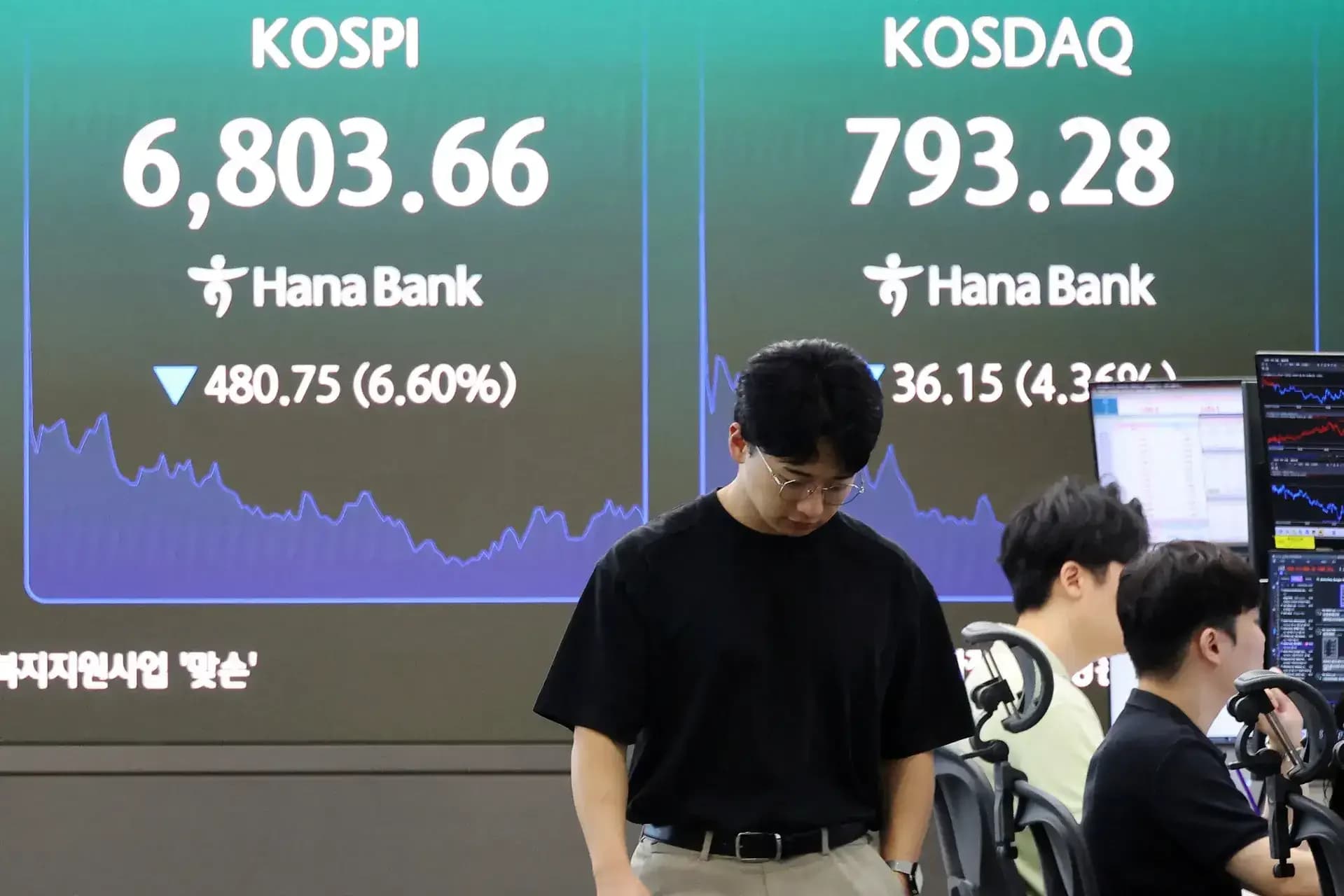
Asian equities slipped on Tuesday September 1 as fresh conflict in West Asia sent oil prices climbing and stoked fresh worries over inflation and the odds of another rate increase by the Federal Reserve. The MSCI Asia Pacific Index dropped 0.2%, dragged lower by declines in South Korea and Japan. The Kospi shed 0.74%, while the Nikkei 225 fell 0.91%, with Hang Seng futures pointing 0.4% lower, signalling a soft open in Hong Kong. The Topix bucked the trend, rising 0.12%. The regional weakness followed a downbeat session on Wall Street, where the S&P 500 Index closed 0.3% lower on Monday August 31, even as chip stocks bucked the broader retreat.
Renewed hostilities between the US and Iran triggered the sell-off, with American forces striking an island in the Strait of Hormuz and Iran retaliating with attacks on the United Arab Emirates and Jordan, marking the first direct exchange of fire between the two sides in roughly a month. The escalation pushed Brent crude past $91 a barrel in early Asian trading, while West Texas Intermediate climbed 1% to $86.63. Iran subsequently launched missile and drone attacks on US bases in Jordan, while the UAE's military dealt with a drone coming from Iran over its territorial waters. As per SPI Asset Management's Stephen Innes, "The Middle East had finally gone quiet enough for oil traders to start sanding some of the war premium out of crude. Then Sunday arrived, with a reminder that quiet in the Strait of Hormuz is not the same as peace."
Most emerging Asian currencies and equities fell on Monday as hawkish comments from US Fed Chair Kevin Warsh boosted bets on a possible September rate hike, strengthening the dollar and pressuring regional assets. The MSCI emerging market currency index was largely unchanged in Singapore afternoon trading after hawkish comments from Fed Chair Kevin Warsh pushed the dollar to a near two-week high. The index remained on course for a 1.8% gain in August, marking its second consecutive monthly advance. Warsh's remarks on Friday that the Fed still needed to address inflation prompted markets to price in roughly a 57% chance of a rate hike in September, with the shift reducing expectations for a weaker dollar and putting pressure on emerging-market currencies that had benefited from softer US economic data.
Bond yields remained high after US Federal Reserve Chair Kevin Warsh indicated on Friday that more work was needed to bring inflation under control. The yield on the two-year Treasury, which closely tracks expectations about Fed moves, jumped to 4.35% from 4.22% just before Warsh's speech at an annual conference. Markets have increased expectations of a possible US interest rate rise in September, with swaps now reflecting around a 60% probability of a hike, up from roughly 34% before Warsh's speech. In a highly anticipated speech at the Jackson Hole symposium of central bankers and economists in Wyoming, Warsh left traders with few doubts that he was ready to increase borrowing costs. Warsh said: "We must be confident that underlying inflation is moving to our objective, clearly and at sufficient speed. Otherwise, we have work to do." He called the spike in inflation - currently at 3.7% and nearly double the Fed's 2% target - "concerning," and said he would be "hard-pressed" to describe current financial conditions as "restrictive," a potential hint that rate hikes could be on the horizon. However, he stopped short of saying he would support a hike, adding: "I stand here today committed to a discipline, not to a decision."
Currency markets stayed subdued as the Japanese yen barely moved at 159.83 per dollar and the offshore yuan flat at 6.7175. The regional weakness followed a downbeat session on Wall Street, with the S&P 500 Index closing 0.3% lower on Monday August 31. The rise in oil prices added to pressure on regional equities, with higher U.S. Treasury yields combined with elevated oil prices posing challenges for Asian currencies. As per Reuters, citing ACCM research director Glenn Yin, "Rising yields can attract capital toward U.S. assets while expensive energy worsens trade and inflation pressures in oil-importing economies." The Indonesian rupiah fell 0.3% to 17,755 per dollar but remained on track for a 1.4% monthly gain, which would be its strongest monthly performance since May 2025. The Philippine peso also declined 0.3% and traded near a record low, while the Thai baht was little changed after touching a two-week low. The South Korean won gained 0.5%, taking its year-to-date advance to about 5.1%, supported by strong semiconductor exports and headed for a second consecutive monthly gain.
Attention will now turn to a string of crucial data releases over the next two weeks before the Fed makes its decision, with jobs data this week and the consumer price index (CPI) next week. Investors are now awaiting the U.S. nonfarm payrolls report due Friday and consumer price data on September 11 for further clues on the Fed's policy path and the possibility of a rate hike next month. Traders have raised bets on a September rate rise after Federal Reserve Chair Kevin Warsh reaffirmed his focus on curbing inflation at last week's Jackson Hole gathering, sharpening attention on this week's US employment report, as reported by Bloomberg. With earnings season largely behind investors, attention this week will also turn to the US labour market, with the Labor Department's monthly jobs report due on Friday. The report will provide another key data point for markets ahead of the Federal Reserve's September meeting. Elsewhere, spot gold was little changed, while Bitcoin was down 0.4% at around $78,301 and Ether fell 1.9% to around $2,444. The rise in oil prices could further complicate the rate outlook as investors assess its impact on inflation, with crude prices up about 50% so far this year and Brent moving in a range of almost $17 a barrel during August.