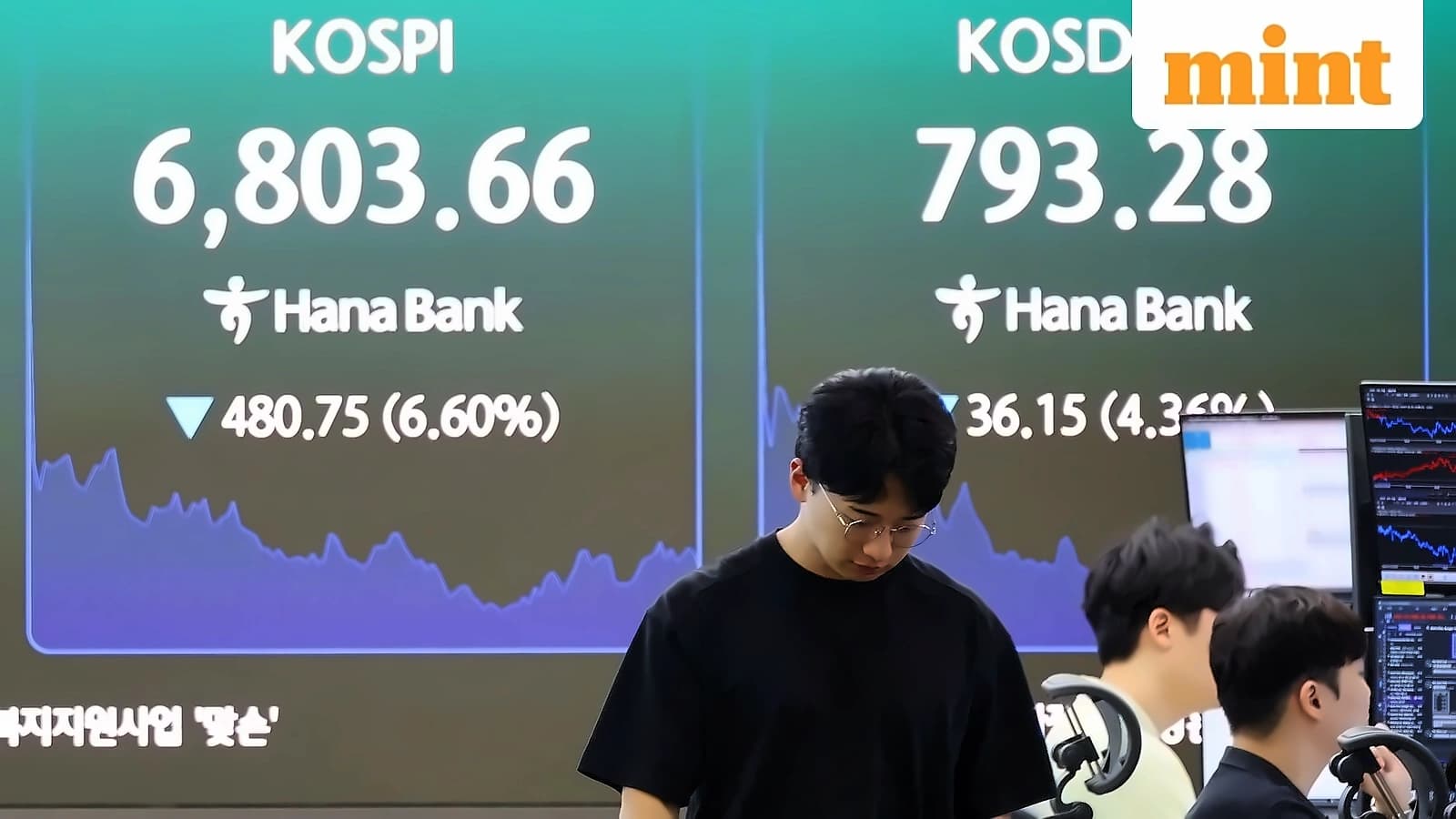
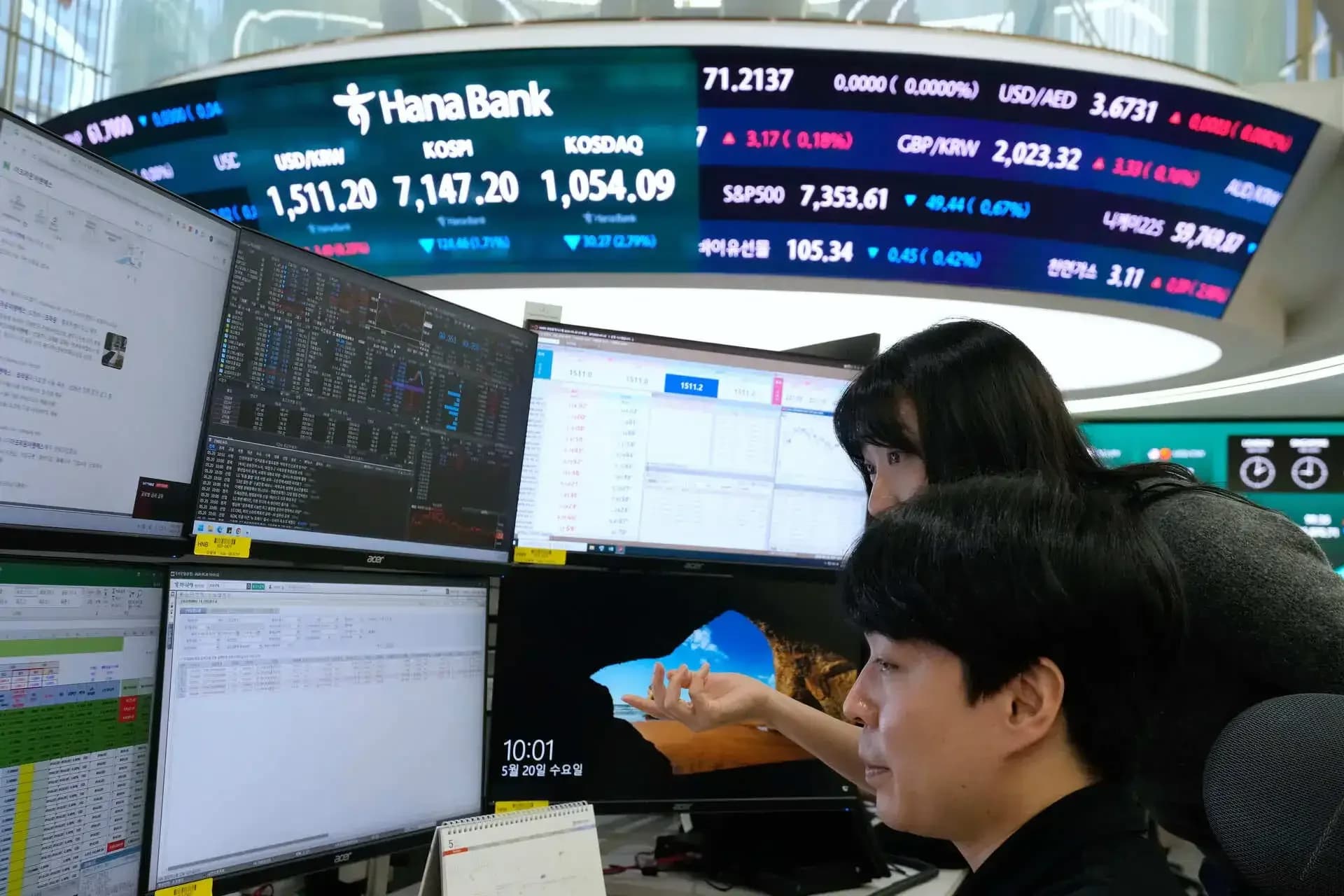
Asian markets showed positive momentum on Wednesday before trimming earlier gains as Brent crude steadied around $100 per barrel after US strikes on Iranian targets weakened optimism around a possible agreement to end the conflict. According to reports from Business Standard, MSCI's broadest index of Asia-Pacific shares outside Japan was up 0.3% after giving up stronger early gains. The rally came despite ongoing uncertainty over the shaky truce between the United States and Iran, which has been rocking energy markets for three months. S&P 500 futures rose 0.6%, though the advance was smaller than Monday's rally when US markets were closed. European markets showed mixed performance with the Euro Stoxx 50 falling more than 0.7% and the broader pan-European Stoxx 600 trading around 1% lower as Tuesday's session approached close.
Oil markets experienced significant volatility with Brent crude steadying around $100 per barrel after plunging more than 7% on Monday during thin holiday trading in London and New York. As reported by Business Standard, the price movements reflect market uncertainty over the potential extension of the current truce between the US and Iran. WTI dropped over 4% and is trading around $92.6 per barrel, showing divergent performance from Brent crude. The latest developments show oil futures rebounding with both WTI and Brent crude climbing by about 3% following the US strikes. The price movements come as US Secretary of State Marco Rubio stated that negotiations aimed at ending the conflict could require 'a few days' to reach an agreement'. US forces struck missile launch sites in Iran and vessels allegedly attempting to deploy mines, according to US Central Command. Iran's foreign ministry characterized US strikes in Hormozgan province as a 'gross violation' of the ceasefire, while the US maintained its strikes were defensive in nature. The rebound in oil prices has clouded hopes for an interim agreement to reopen the Strait of Hormuz.
The dollar strengthened against all major peers as traders sought safe-haven assets amid the geopolitical tensions. The euro was up 0.09% at $1.1638, while the yen strengthened 0.05% to 159.19 per dollar. The Reserve Bank of New Zealand is widely expected to hold its key rate at 2.25%, while the main event in Australia on Wednesday is the release of consumer price data for April. At a central bankers meeting in Tokyo, Bank of Japan Governor Kazuo Ueda noted that supply shocks were looming large. Treasuries rallied across the curve as cash trading resumed following the holiday break, while government bonds in markets including Japan and Australia declined. The 10-year Treasury yield has plunged to 4.51% as trading resumes after yesterday's closure due to bank holidays in both the US and UK, with hopes that the Strait of Hormuz will be fully reopened helping to calm fears about runaway inflation.
US President Donald Trump said negotiations with Iran on an interim arrangement to extend the ceasefire and reopen the strait were 'proceeding nicely', as reported by Business Standard. Meanwhile, Pakistan's military chief Asim Munir — acting as a key intermediary between the sides — told China that a deal was 'close to being reached'. However, risk appetite weakened as oil prices rebounded, clouding hopes for an interim agreement to reopen the Strait of Hormuz. US Secretary of State Marco Rubio stated that the Strait of Hormuz must remain accessible 'one way or the other' as traffic through the chokepoint has dropped sharply, with only a few dozen ships currently using the route each day, compared with the usual 125 to 140 vessels. The latest developments show Trump indicating that Iran's enriched uranium doesn't necessarily have to be brought to the United States but can be destroyed at another location, suggesting the White House wants a deal. However, Trump is pressing his Muslim allies involved in the negotiations to accept the Abraham Accords, which would force countries such as Saudi Arabia and Pakistan to normalise ties with Israel, adding complexity to the negotiations. Market analysts remain cautious about the prospects for a comprehensive deal, with Kyle Rodda, senior financial market analyst at Capital.com, noting that 'a lot of good news is priced in, leaving room for disappointment if something comprehensive isn't announced'. The elevated oil prices and persistent inflation concerns have reinforced expectations that the Federal Reserve could keep interest rates higher for longer.

In commodities, spot gold reversed earlier gains to fall 1% to around $4,525 an ounce after initially rising 0.36% to $4,522.14, according to Business Standard. Copper increased 0.46% to $13,686.50 a metric ton. In cryptocurrencies, bitcoin fell 0.18% to $75,883.90, while ether remained little changed at $2,075.39. The precious metals and cryptocurrency movements reflect broader market uncertainty amid geopolitical tensions and potential policy changes. Despite the renewed volatility, traders remained cautiously optimistic as shifting headlines around Middle East negotiations continued driving market swings. Gold posted decent gains of 1.4% on Monday but lagged other precious metals and equities, with the strong resistance in the $4,580 region holding back a much bigger rebound that should ideally have been triggered by the sharp pullback in bond yields.