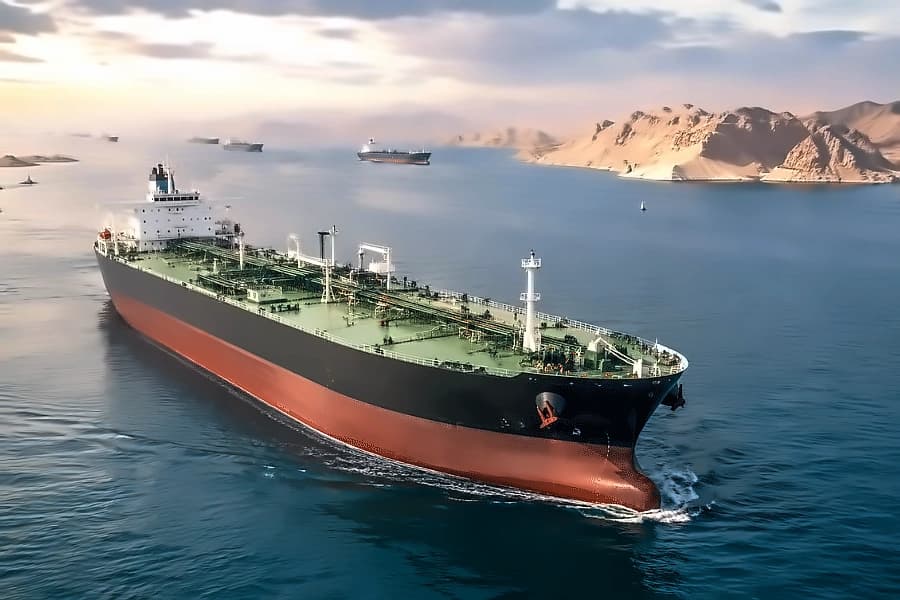
US President Donald Trump told Axios in an interview that he was "close to making a decision" on attacks that would be "bigger than ever before" against Iran, as the Hormuz crisis deepens and oil prices remain elevated above $100. "Iran isn't ready to make a deal and they haven't received enough pain yet," Trump reportedly said, underscoring the escalating tensions that have rattled global markets. In a Truth Social post Thursday, Trump threatened "major military punishment" on Iran and the Houthi militant group it backs in Yemen if they target commercial ships, adding to the mounting pressure on the region. The president's remarks come after mediation efforts faltered when Iran on Thursday rejected a ceasefire proposal from Trump carried to Tehran by Iraq's prime minister, according to the New York Times citing Iranian and Iraqi officials.
Global crude oil prices remained elevated on Friday, with international benchmark Brent crude rising 0.43% or 44 cents to remain above the $100-a-barrel level, while US West Texas Intermediate (WTI) crude gained 0.69% or 64 cents to $92.83 a barrel. In the domestic market, crude oil futures for August delivery on the Multi Commodity Exchange (MCX) were trading at ₹8,865 per barrel, down ₹159 or 1.76% at around 10 a.m., according to latest market data. The sustained elevation in oil prices comes as renewed geopolitical tensions and fading hopes of a ceasefire have reignited fears of persistent inflation. Brent crude is on track for a weekly gain of about 10% as the conflict simmers, despite some recent declines, as reported by multiple sources.
Oil prices spiked after Iran-backed Houthi forces attacked Saudi tankers in the Red Sea, opening a new front alongside continued disruptions in the Strait of Hormuz -- two of the world's most critical oil transit routes. The Houthis claimed strikes on Saudi oil tankers this week, opening a new front in a conflict that has driven oil prices above $100 a barrel and US retail gasoline prices over $4 a gallon. According to market experts, the attack on Saudi tankers by the Iran-backed Houthis in the Red Sea is the main reason for the recent sharp spike in Brent crude to about $100. The rally in crude comes as the conflict in the region continues to intensify, with the US launching fresh air strikes on Iran two weeks after the effective collapse of an interim truce. Tehran reportedly fired missiles at neighbouring Arab countries hosting US military bases, fuelling concerns over prolonged supply disruptions and adding to the multiple fronts of conflict in the region.
US Central Command said Thursday it launched a 13th consecutive night of strikes intended to degrade Iran's ability to attack commercial shipping in Hormuz, as the Americans push to regain control over the Strait of Hormuz and restore the flow of international shipping. Trump warned "that from this point forth, any and all damages done to Ships, Cargo, or anything related thereto, will be paid for by Iranian Money that the US has in its possession, and controls." The US has about $2 billion of blocked Iranian funds inside its borders, with a much larger portion estimated at $24 billion to more than $100 billion in other countries prevented from being transferred by US sanctions. Iranian Foreign Minister Abbas Araghchi said "seizing another nation's assets to pay for unrelated future claims is an incendiary precedent." President Trump threatened "major military punishment" against the Houthis if their attacks on ships continue, writing on social media: "If they do this again, the US will hold Iran responsible, in that the Houthis are a Surrogate and/or Proxy of Iran, and major military punishment will be inflicted upon Iran and, of course, the Houthis, themselves."
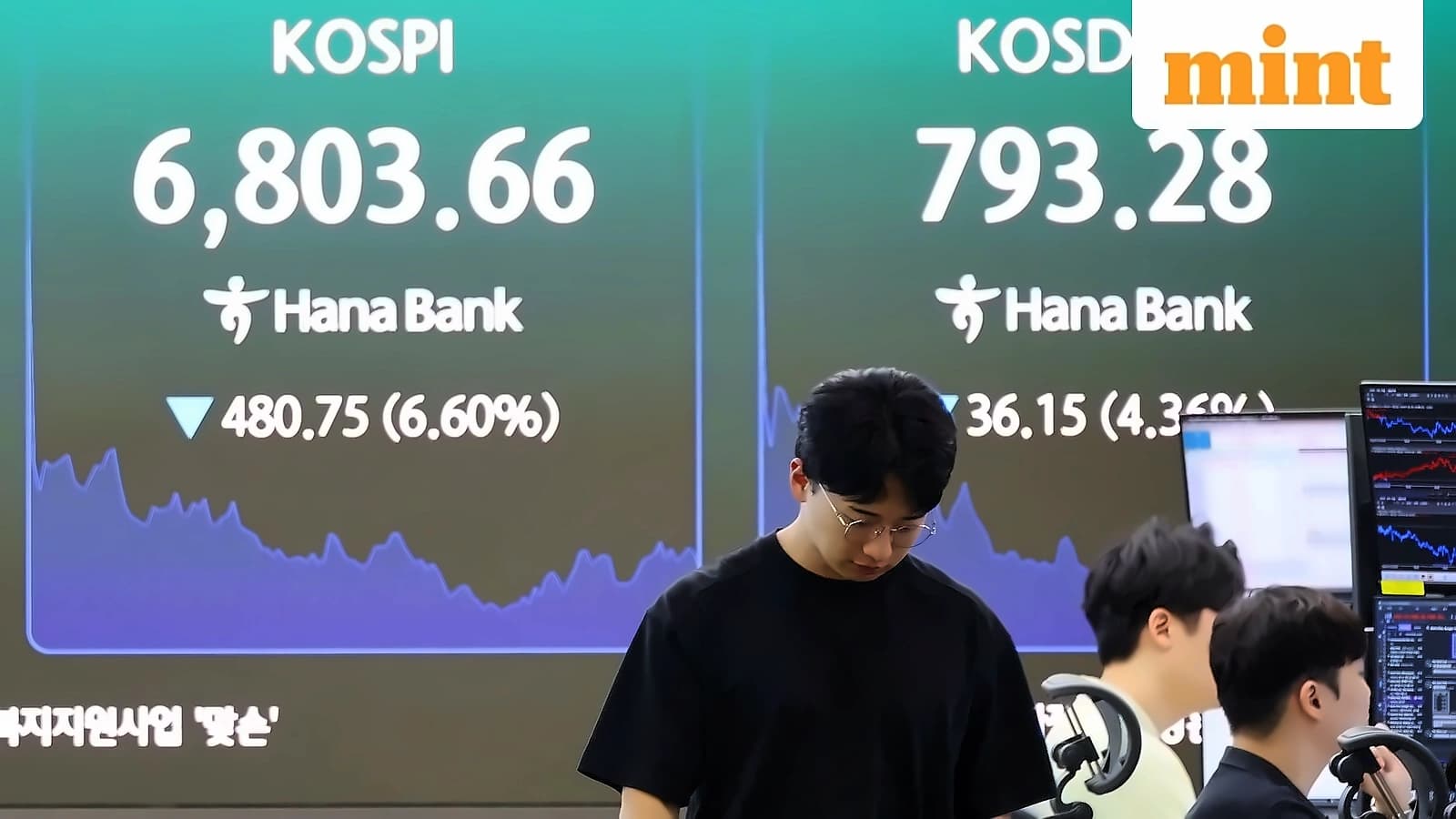
The sharp rise in oil prices has weighed heavily on global equity markets, with Asian markets experiencing significant declines. In Asia, Japan's Nikkei tumbled around 3% while Hong Kong's Hang Seng slumped more than 3% and South Korea's KOSPI plunged over 5%. Overnight, Wall Street ended lower, with the S&P 500 slipping 1.21% and the Nasdaq declining 2.15% amid concerns that elevated energy prices could keep inflation higher for longer. The euro weakened to a three-week low below $1.14 against the dollar as oil prices approached $100, reflecting investor concerns over the region's economic outlook. Markets now expect roughly two additional quarter-point interest rate increases from the European Central Bank before the end of the year, following its June policy move, with the ECB indicating that further tightening remains possible.