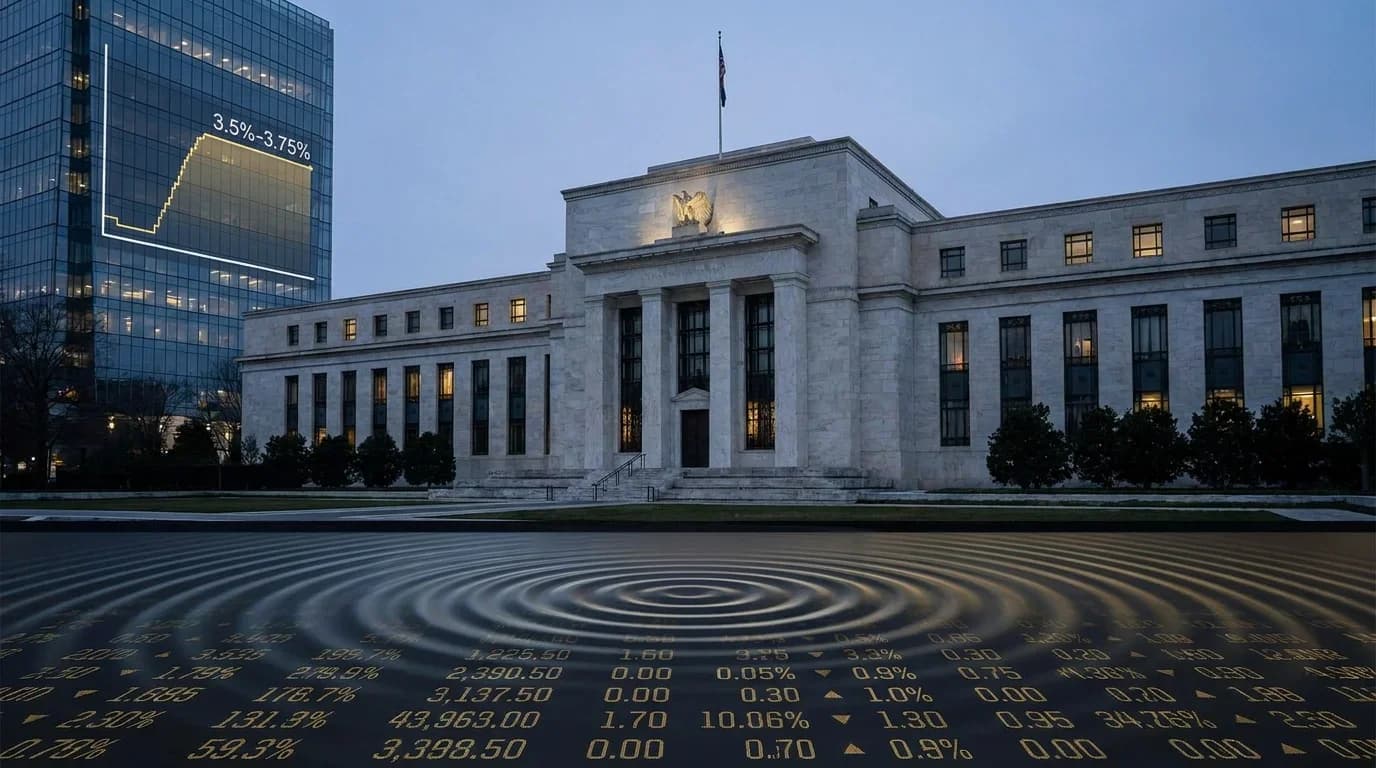
The Federal Reserve kept the benchmark federal funds rate unchanged at 3.5% to 3.75% in its first policy decision under Chairman Kevin Warsh, but nearly half of policymakers signalled they could support a rate hike later this year as inflation remains elevated. According to euronews, this marks a significant shift from previous projections, with nine Fed officials forecasting at least one interest rate increase this year, while six policymakers projected two or more rate increases. The central bank also removed language from its policy statement that had suggested its next move would be a rate cut, reflecting growing concern about persistent inflation that is running at its highest level in three years. This represents a sharp change from March, when no officials pencilled in a hike and the committee as a whole forecast one cut in 2026.
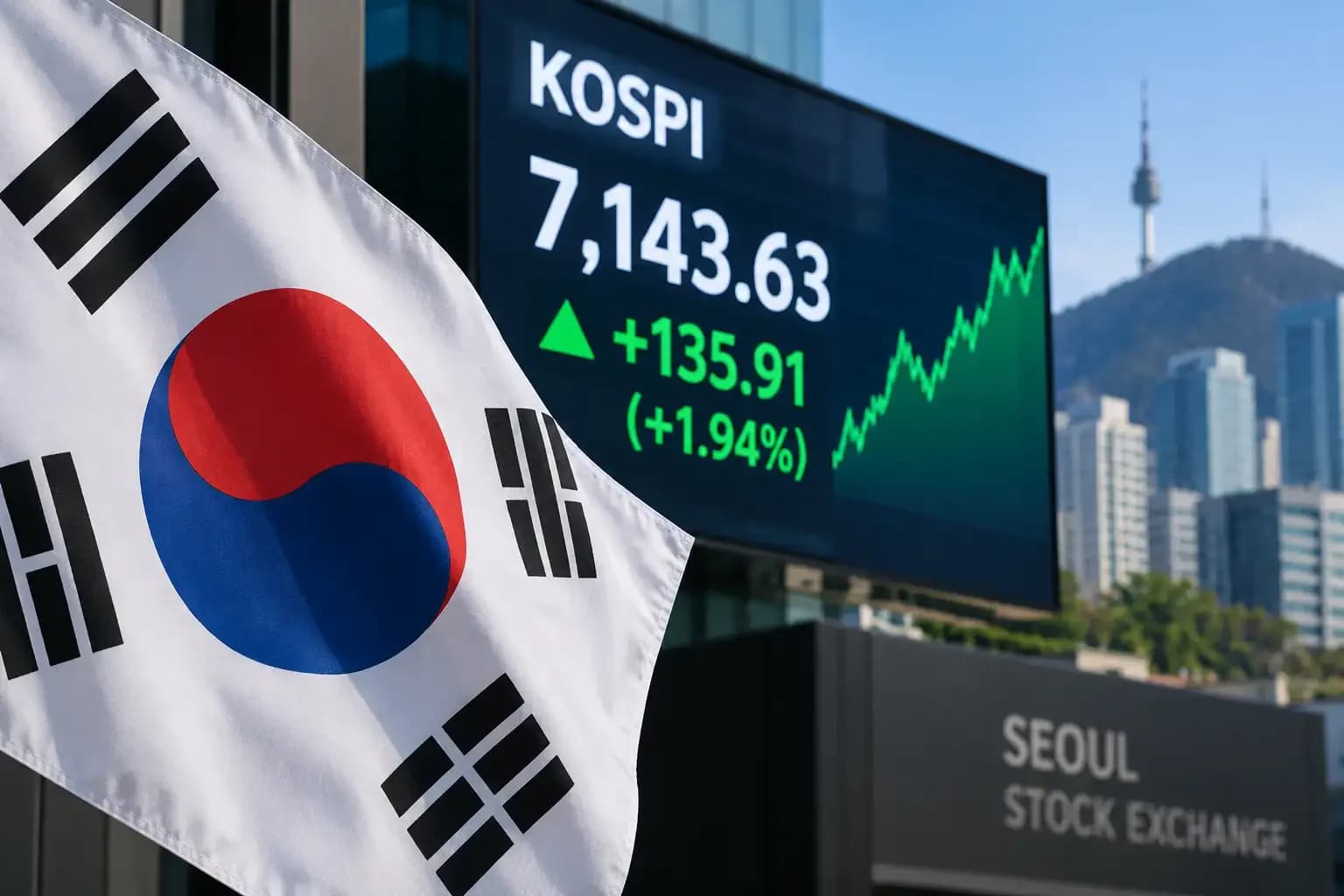
Asian stocks were steady on Thursday as investors assessed progress towards ending the war in the Middle East after the presidents of the US and Iran signed an interim peace deal. According to reports from NDTV Profit, Japan's Nikkei 225 climbed 1.44%, while South Korea's Kospi added 0.93%. The MSCI's broadest index of Asia-Pacific shares outside Japan was flat, with markets showing mixed reactions to the geopolitical developments. Japan's Nikkei 225 rallied to another record high, surging past the 71,000 level for the first time, on solid gains in semiconductor and AI-related shares. US stock futures, the S&P 500 e-minis, were up 0.81% at 7,484.8 as markets reacted to the Federal Reserve's more hawkish message.
In his first press conference as Fed chair, Warsh refrained from signalling what the central bank's next move might be, saying he encouraged his colleagues to submit rate forecasts but chose not to submit his own projection. As reported by euronews, Warsh said he had previously criticised the projections for potentially locking the Fed into a specific policy outlook. The Fed also struck forward guidance from its policy statement, with Warsh telling reporters he is forming five task forces to examine such areas as how the Fed communicates, the sources of data it uses in making policy decisions, and the frameworks it uses to evaluate inflation. This approach contrasts with previous Fed chairs who typically provided more detailed guidance about the central bank's next steps.
U.S. equities retreated after the announcement, with the Dow Jones Industrial Average ending down 0.98% to 51,492.55 after reaching a record intraday high. According to NDTV Profit, the S&P 500 lost 1.21% to 7,420.10 and the Nasdaq Composite fell 1.34% to 26,021.66. Government bond markets also reflected the shift in expectations, with the two-year U.S. Treasury yield touching 4.1759% compared with a US close of 4.163%, while the benchmark 10-year Treasury yield rose to 4.471% from its previous close of 4.463%. The two-year Treasury yield, which is sensitive to monetary policy outlook, moved higher as investors adjusted to the prospect of tighter policy settings.
The interim peace deal between the US and Iran extends a ceasefire announced in April by another 60 days to allow the two sides to negotiate a final truce, though uncertainties still hover as US President Donald Trump threatened to resume attacks. According to Capital.com, major geopolitical risk persists and will remain a major driver of market action. Oil prices fell significantly, with US crude dipping 1.25% to US$75.83 and Brent crude down 1.4% to US$78.41 per barrel, as recent declines in oil prices have begun to ease worries about an economic slowdown. The benchmark 10-year Japanese government bond yield rose two basis points to 2.620%, poised for its highest close since June 16, while traders are now fully pricing in a U.S. rate increase by October.