The US Federal Reserve raised its benchmark interest rate by 25 basis points to 3.75-4.00% - the first rate hike in three years - with the FOMC approving the decision by a unanimous 12-0 vote. According to reports from Business Standard, this quarter-percentage-point increase brings the Fed's target rate to 3.75-4.00% as the central bank attempts to control inflation that has remained stubbornly above its target. US President Donald Trump called Wednesday for lower interest rates after the Federal Reserve raised them, posting on his Truth Social network: "We are 'carrying' almost every country in the World, and that cannot go on any longer. LOWER THE INTEREST RATES FOR THE UNITED STATES, AND FAST!" However, the White House criticized the Fed's decision as 'unfortunate', with spokesman Kush Desai telling Fox News: "Today's rather unfortunate decision by the Federal Reserve to hike interest rates was not, from the administration's point of view, backed by a particularly compelling economic case." Fed Chair Kevin Warsh defended the decision, stating that "we made this decision today based on our assessment of the situation" and emphasizing the Fed's independence by saying "part of the independence of the Federal Reserve is we stay in our lane."
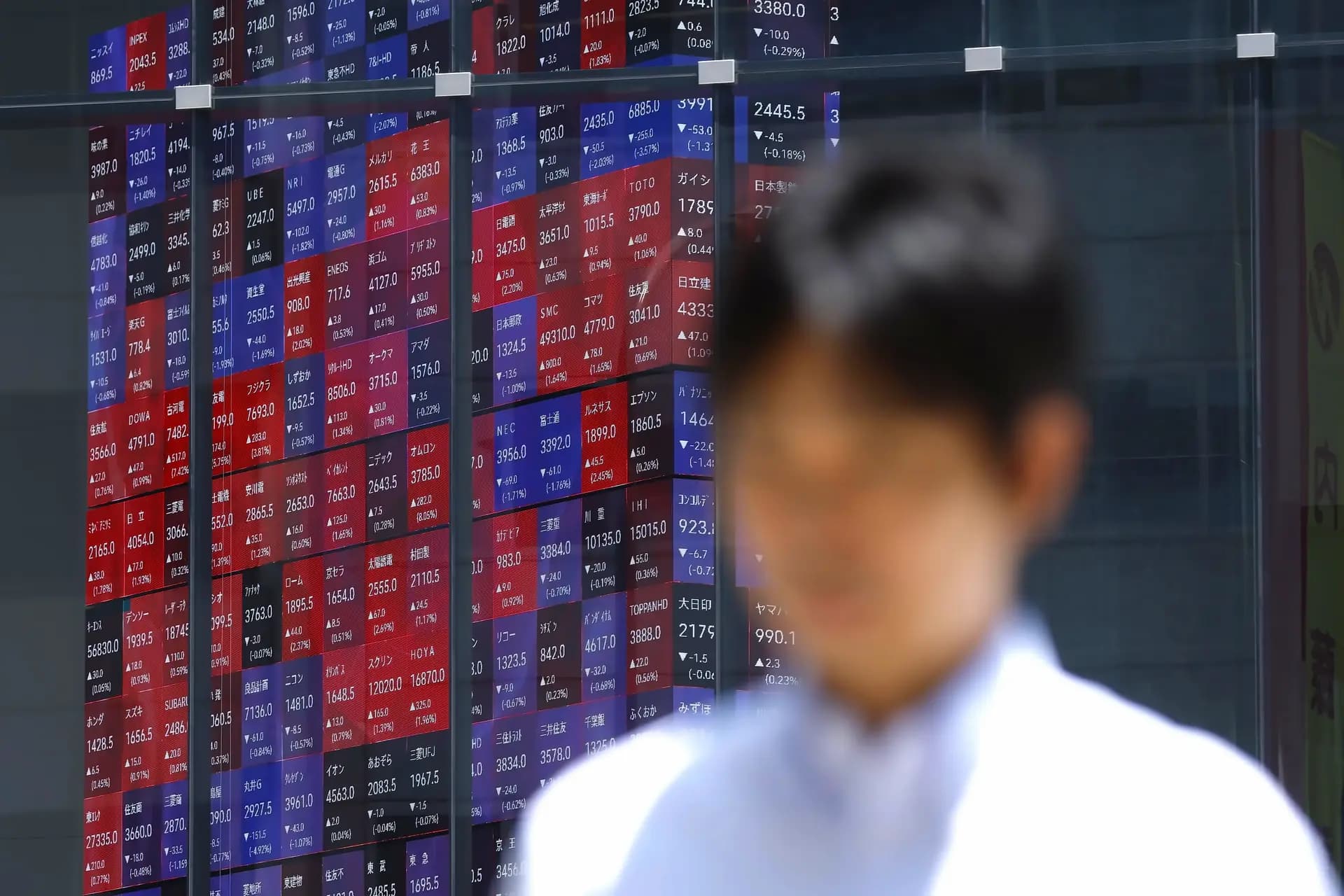
Asian markets have edged up about 0.1% following the Fed decision, with Japan's Nikkei 225 rising 0.30% and South Korea's Kospi adding 0.29%, as reported by Investing.com India. Shorter-dated Asian sovereign bonds sold off in sympathy with Treasuries as the front end continued to digest the Fed's firmer message, but the broader cross-asset reaction has been notably more orderly than the initial New York move suggested. Hong Kong's Hang Seng fell 0.7% to 24,533.46, and Shanghai Composite lost 0.4% to 3,877.46. Australia's S&P/ASX 200 climbed 0.3% to 8,718.20, while Taiwan's Taiex jumped 1.3% and India's Sensex edged up 0.3%. Market reactions were described as "pretty much expected" since the rate rise aligned with market expectations, though ongoing geopolitical tensions continue to influence investor sentiment.
Wall Street showed mixed reaction following the Fed's announcement, with the S&P 500 up 0.32% at 7,609.76 and the Nasdaq gaining 0.70% to 26,164.26, while the Dow Jones Industrial Average was down 0.11% at 52,036.22. According to Business Standard, the decline was attributed to the rate hike decision and ongoing geopolitical uncertainties. The Fed's September 2026 dot plot shows a higher interest-rate path than projected in June, with the median federal funds rate projection raised to 4.1% for 2026 from 3.8%, while the median for 2027 has been lifted to 4.1% from 3.6%. The median is now 3.9% for 2028, compared with 3.4% in June, signaling the possibility of further monetary tightening ahead. Markets had widely expected the rate hike, with US futures trading higher despite the previous session's decline. As Investing.com India notes, "the 25 basis point move was fully priced and, in many respects, looked like a hike the Fed almost had to deliver once the bond market had already written it into the script."
Following the Fed's announcement, the US 10-year Treasury yield dropped to 4.955%, down 4.1 basis points from a nearly two-decade high, as reported by Business Standard. The two-year US Treasury yield jumped to 4.72% compared to around 4.67% late Tuesday. The US dollar gained the most since June and held steady near a two-week high ahead of the Federal Reserve decision that traders expect will mark the first in a series of US interest rate hikes. The US dollar fell early Thursday to 156.04 Japanese yen from 156.26 yen, while the euro was trading at $1.1467, up from $1.1465. Oil prices edged slightly lower with Brent crude trading 0.1% lower at $105.89 due to cooling Middle East supply jitters, while gold is trading at $4,379.20, up 1.07% or $46.40. Bitcoin is down 0.16% at $75,805.62.
Asian markets have moved beyond the immediate hike impact and are now debating whether the Fed can deliver another rate increase, with Investing.com India noting that "the market has now moved to the harder question: was this the first step in a sequence, or was it simply the Fed paying the toll the bond market demanded before getting back in the car." The relatively calm Asian reaction suggests markets are not convinced that last night's hawkish message needs to become today's panic, with S&P 500 and Nasdaq 100 futures also ticking higher after Wall Street was pushed to its lowest levels since July. Fed funds futures were showing roughly even odds of another increase at the central bank's October meeting, while additional hikes were being priced into expectations for 2027. Inflation remains a key concern for policymakers, with the latest core Personal Consumption Expenditures price index rising 3.3% annually, remaining well above the Fed's 2% target. The front end remains the obvious pressure point because another hike is firmly back in the conversation, but the rest of the market is asking whether the data will cooperate, particularly if core inflation continues to ease and broader growth remains uneven.