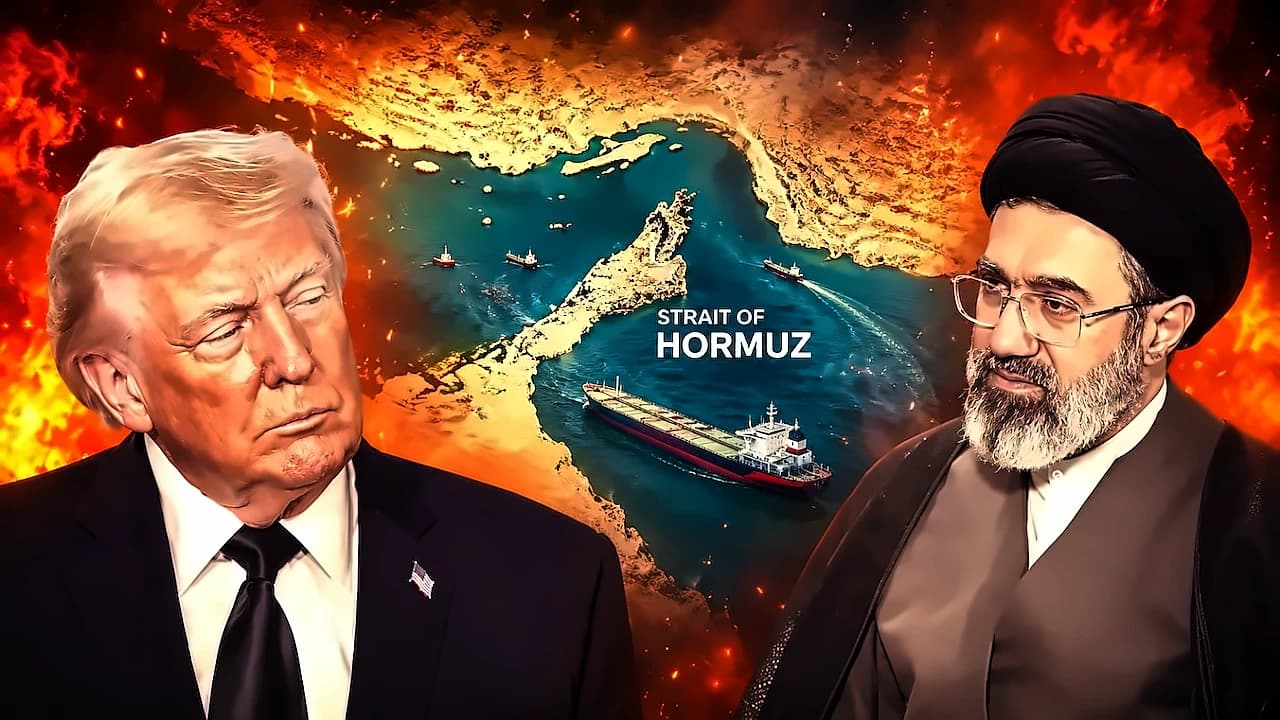
Several Arab nations have joined Pakistan in urging US President Donald Trump to allow more time for negotiations to end the Iran conflict. According to reports from Axios and CBS News, the United Arab Emirates, alongside Qatar and Saudi Arabia, have made appeals to Trump regarding the ongoing diplomatic process. This regional diplomatic effort comes as there were indications of progress in talks to end the conflict, though Trump was reportedly preparing for a possible fresh round of strikes, though he hadn't made a final decision. As per Bloomberg, the UAE joined Qatar and Saudi Arabia in these appeals to Trump, with several people familiar with the matter confirming the coordinated regional effort. UAE Presidential adviser Anwar Gargash has now provided a more measured assessment, stating that the US and Iran have just a '50-50' chance of reaching an agreement that would free up the Strait of Hormuz. Speaking at the GLOBSEC Forum in Prague, Gargash warned Iranian officials not to overplay their hand, saying they have 'missed a lot of chances over the years because there's a tendency to overestimate their cards.'

Iran's fuel shortage has emerged as a critical factor in the ongoing conflict, with officials revealing the country faces a daily shortfall of roughly 20 million liters before the latest war began. According to Reuters, MP Reza Sepahvand recently disclosed that production stands at around 105 million liters a day while consumption is closer to 135 million liters. The crisis stems from war damage, disrupted imports and pressure on petrochemical units, pushing a long-running structural problem into public view. Iran's refining system depends on aging infrastructure, limited maintenance and technology constrained by years of sanctions, leaving production increasingly out of step with demand. Fuel consumption is rising due to expanding cities, heavy reliance on private cars and millions of older, fuel-inefficient vehicles. Cheap subsidized gasoline encourages overuse, while large price gaps with neighboring countries fuel widespread smuggling that pulls millions of liters out of Iran each day.
Earlier this week, Pakistan's army chief Field Marshal Asim Munir arrived in Tehran and was welcomed by Iranian Interior Minister Eskandar Momeni, according to the military's press wing. As reported by Business Standard, Munir is expected to take part in discussions covering US-Iran negotiations, with a Pakistani security official familiar with the matter confirming his participation in the diplomatic talks. Pakistan's Interior Minister Mohsin Naqvi is currently in Iran as part of ongoing mediation efforts, having met with Iranian Foreign Minister Abbas Araghchi to review the latest proposals aimed at ending the conflict. The discussions come amid continued diplomatic efforts to de-escalate tensions and advance negotiations between Washington and Tehran, particularly on remaining points of disagreement. However, Iran's Foreign Ministry spokesman Esmaeil Baqaei cautioned that the visit does not necessarily mean 'we have reached a turning point or a decisive situation,' adding that the disagreements between Iran and the United States were 'deep and extensive.'
US Secretary of State Marco Rubio acknowledged there had been 'slight progress' in negotiations, telling media at a NATO foreign ministers meeting in Sweden that there was 'a little bit of movement, and that's good.' However, Trump told reporters at the White House that Iran was 'dying to make a deal.' The president has threatened further attacks on the Islamic Republic if it doesn't agree to terms acceptable to the US. Since the ceasefire went into effect six weeks ago, Trump has veered between assurances that a peace accord was almost at hand and threats of new aerial assaults. Rubio has warned that if Iran attempts to create a 'tolling system' in the Strait of Hormuz, similar practices could emerge in multiple strategic waterways around the world, stating such a move would set a precedent that 'will happen in five other places around the world.'
The Republican-led Senate has signaled mounting opposition to continuing the war with a procedural vote, as reported by Business Standard. On Thursday, party leaders abruptly canceled a vote on the conflict as GOP absences threatened an embarrassing defeat for the president. Senator Roger Wicker, chairman of the Senate Armed Services Committee, cautioned that Trump was being 'ill-advised to pursue a deal that would not be worth the paper it is written on.' Wicker stated that the commander-in-chief needs to allow America's armed forces to finish the destruction of Iran's conventional military capabilities and reopen the strait, referring to the Strait of Hormuz, which has been a major obstacle in the diplomacy. Those anxieties, reflected in several polls, have resonated on Capitol Hill, months before midterm elections that will determine control of Congress. The latest developments show US crude oil inventories fell sharply while emergency petroleum reserves dropped to their lowest level in nearly two years, as the war involving Iran continues to disrupt one of the world's most critical energy chokepoints.