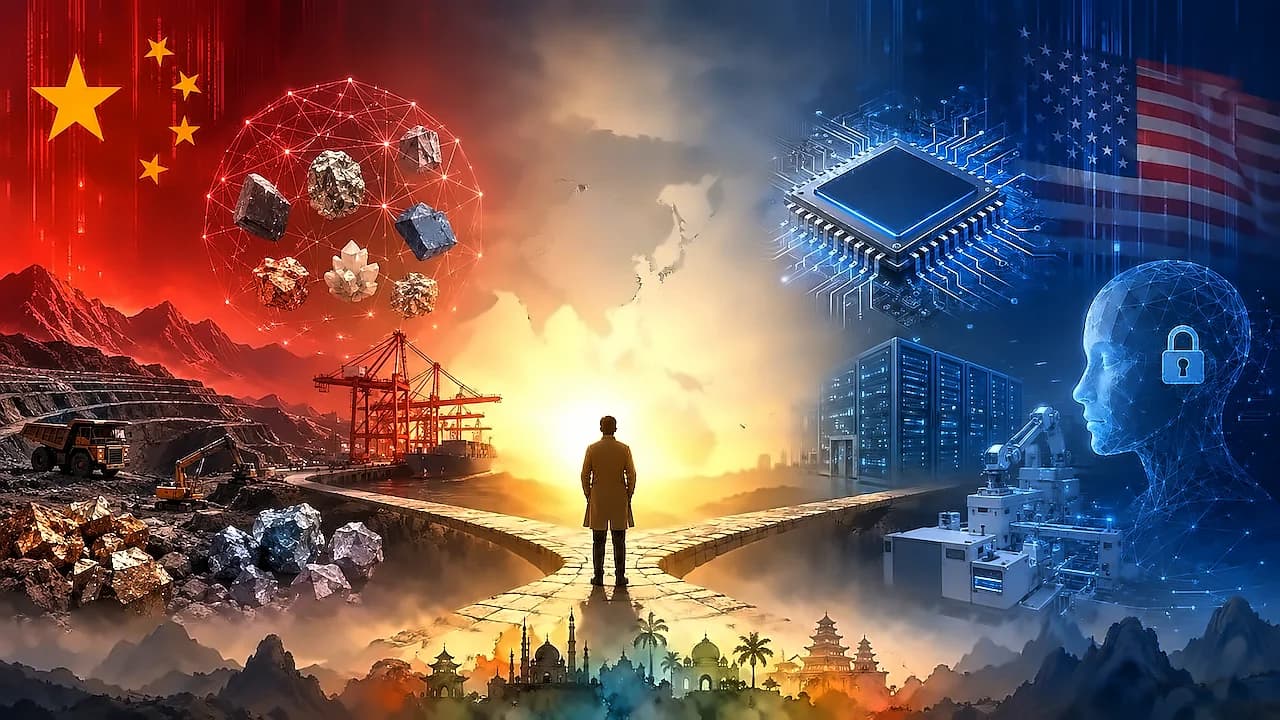
The global artificial intelligence landscape is rapidly dividing into two competing blocs, creating what analysts describe as a mine-to-model supply chain competition. According to reports from The Reason Why, China controls the critical minerals and raw materials essential for AI development, while the West maintains dominance in chip manufacturing, lithography machines, and AI technology. This strategic divide extends beyond technology to include open versus closed AI model approaches, with leading US models remaining proprietary while Chinese models are largely accessible to developers worldwide. The divide is particularly pronounced in Asia, where China processes most of the rare earths, metals and minerals needed for AI, with no meaningful alternative available, while the West leads in chips, lithography machines, and advanced AI models. However, this competition unfolds against a backdrop of broader economic rivalry between the G7 economies, expanding at a collective average of just 1.0% to 1.1%, and the expanded Brics+ coalition, which controls roughly 28% to 30% of global nominal GDP. Recent developments suggest that China is implementing what analysts call 'AI dumping' - flooding the market with cheap, subsidized LLMs at 1/30th the cost of frontier alternatives, potentially undermining Silicon Valley's dominance in just 30 weeks, similar to how Tokyo took 30 years to compete with Detroit.
The AI race extends beyond just model performance to fundamental accessibility and control mechanisms. As reported by The Week In Whys, ChatGPT's new 'Astra' model represents the closest approach to AGI yet, capable of learning, planning, exploring and transferring skills across different areas without separate programming for each task. However, ChatGPT remains a closed model, with the company controlling the underlying technology, training data and workings, preventing users from modifying or deploying it freely. Other US-based models such as Gemini and Claude are also closed, while Chinese models like Qwen, Kimi and DeepSeek are open source, generally cheaper to use and more easily deployable across different companies and applications. This open-closed divide creates significant implications for global AI adoption and development, with the actual race being about the ecosystem that runs these models - metals, minerals, data centres, electricity, chips, and manufacturing rather than just model performance.
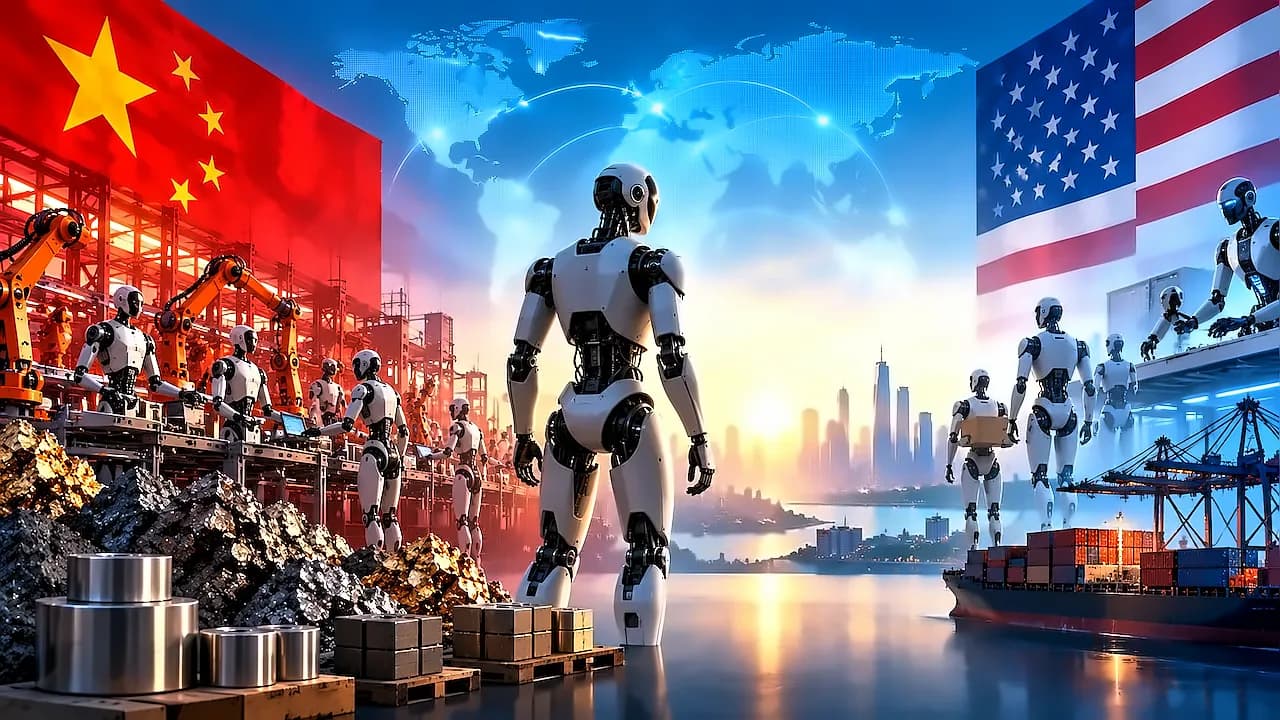
China has implemented comprehensive controls over critical AI minerals and materials, significantly impacting global supply chains. As reported by The Reason Why, the country has tightened controls on key minerals and increased checks on goods used for both civilian and military applications. Chinese firms have historically withheld key technology and parts from Indian companies, with EV and electronics manufacturers experiencing delays in obtaining necessary components. The country has also restricted Chinese experts from training Indian workers at Foxconn plants in India, demonstrating its commitment to protecting its strategic AI resource advantage. China processes over 80% of the world's rare earth elements and controls the lion's share of global solar panel, battery, and EV processing pipelines, while Brics nations, particularly China and India, possess a large share of the world's global oil refining capacity, enabling them to process and export petroleum products globally. Recent analysis suggests that Chinese warehouses and auto plants already operate with a handful of humans supervising blunt-force robots, while autonomous vehicles are statistically safer drivers than humans, though political friction comes from integrating automated systems with human drivers who overestimate their own ability.
The United States and its allies have implemented significant restrictions on technology transfer to China, affecting the global AI supply chain. According to reports, the US and allies restrict sales and servicing of ASML's lithography machines in China, which are essential for semiconductor chip manufacturing. The country has also restricted exports of high-end chips such as Nvidia's A100 and H100 models, while limiting American investment in sensitive Chinese sectors. To address supply chain vulnerabilities, the US has launched Project Vault, a public-private initiative planning to build reserves of around 60 minerals with up to $10 billion in financing from the Export-Import Bank. The West cannot rebuild its supply chains as quickly or cheaply as China did, making these initiatives critical for reducing dependence on Chinese resources. Meanwhile, the G7 maintains high dominance over the top tiers of the global value chain, holding key monopolies in advanced semiconductor design, lithography equipment, biotechnology, aerospace, and high-end software services. Recent developments indicate that future wars will likely be fought from Tampa — Special Operations Command headquarters — using smaller, cheaper drones and forward-deployed personnel to validate satellite imagery, as the US industrial complex and procurement system still operates on 1960s–70s logic.
The West has established multiple initiatives to counter China's resource dominance, including Project FORGE for coordinating mining projects and MINVEST for financing critical mineral development. As reported by The Reason Why, the Pax Silica initiative brings together 24 member countries, including India, to create a comprehensive AI supply chain network covering everything from critical minerals to advanced technologies. The Pax Silica initiative aims to bring the entire AI supply chain under the US-led group, including critical minerals, chips, data centres, electricity, logistics, AI models and finance, with the goal of reducing dependence on China. Meanwhile, Brics+ has established a dominant position in global energy markets, accounting for over 42% of global crude oil production and controlling roughly half of the world's proven natural gas reserves. The alliance has also developed alternative financial mechanisms, with the New Development Bank (NDB) approving over $40 billion in infrastructure loans, targeting that 30% of its total lending portfolio be issued in local member currencies. Recent analysis suggests that China's actual goal in AI, as in everything, is stability, with both superpowers potentially sharing an interest in mutual regulation, though concrete progress toward an international AI regime remains limited.
Southeast Asian countries are demonstrating the complexity of navigating these competing AI blocs, with five ASEAN countries joining WAICO while Singapore and the Philippines participate in Pax Silica. According to reports, Indonesia has joined WAICO but says that national interests will trump any alliance, while Malaysia is developing sovereign AI cloud infrastructure while maintaining links with Western semiconductor ecosystems. The situation becomes particularly complex for countries like Kazakhstan, which has joined both WAICO and Pax Silica, holding significant mineral reserves that make it attractive to both blocs, though Reuters reports suggest the US may warn against dual participation. India's position is complicated by geopolitical factors, as it has border issues with China and Pakistan, both WAICO members, while coming closer to Western powers in defence cooperation. The country is the only original BRICS member to stay out of WAICO and join Pax Silica. Meanwhile, Brics+ members Brazil, Russia, and India also serve as primary suppliers of global food stocks, exporting vast percentages of the world's grain, soybeans, sugar, and fertilisers, while the G7 maintains high dominance over global maritime insurance, financial auditing, credit rating agencies, and cross-border investment capital. Recent developments indicate that China's playbook is familiar from the Silk Road, Africa, and Latin America: subsidize conversion, lock in customers, win twice — access to data and long-term infrastructure dependence, with American labs alleging that Chinese models are distilled from frontier alternatives through bootlegging techniques.