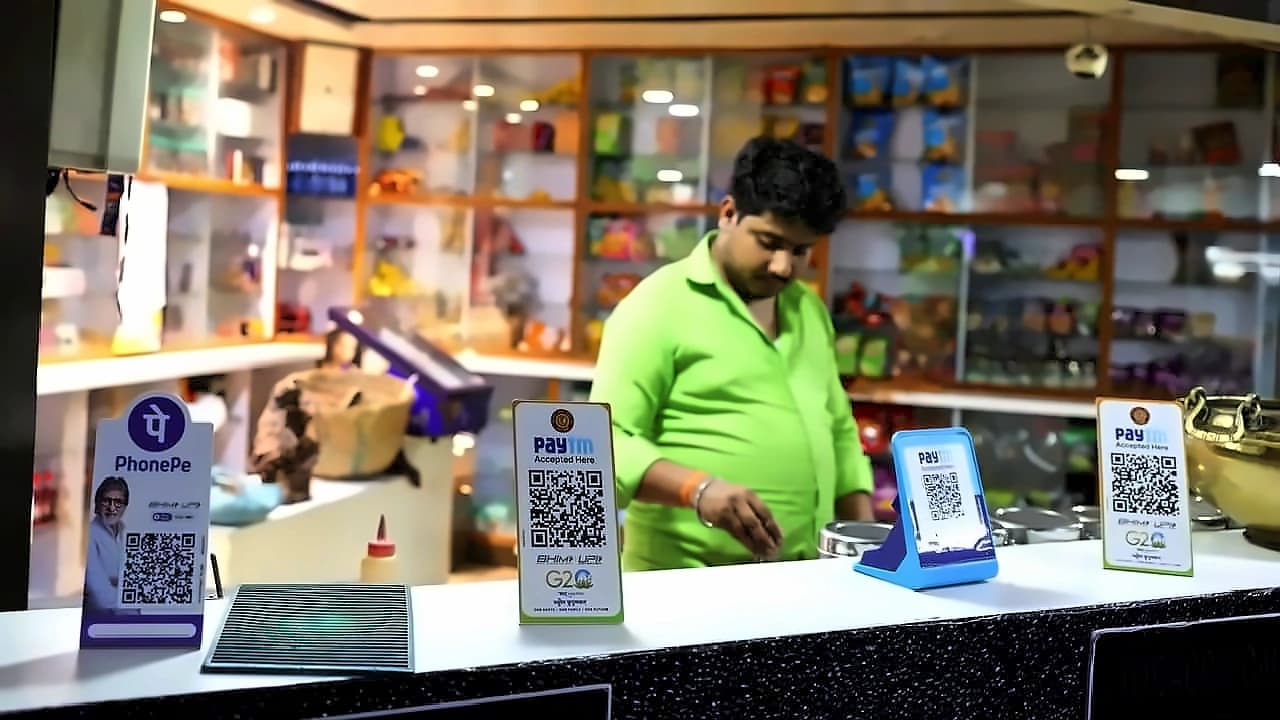
India is set to reintroduce a Merchant Discount Rate (MDR) of 0.3% on UPI transactions of ₹2,000 and above within the next two weeks, according to reports from The Financial Express citing sources in the know. The Department of Financial Services is reportedly going to issue a gazette notification within a week, setting out which electronic payment modes will retain statutory protection from charges. Once the notification is in place, the UPI and Services Steering Committee, chaired by the National Payments Corporation of India (NPCI), will be tasked with deciding the MDR's exact scope, structure and rollout. Consumers will continue to use UPI free of cost, with the levy falling solely on merchants accepting digital payments, maintaining the government's commitment to consumer protection while addressing industry funding concerns.
The National Payments Corporation of India (NPCI) is exploring the addition of a similar clause to its UPI circular to protect users from MDR charges, though enforcement would ultimately rest with the RBI. This development comes as concerns mount that merchants could pass UPI-MDR fees to customers in the absence of specific rules and enforcement mechanisms. A 2017 RBI circular on rationalisation of MDR for debit card transactions already includes a provision stating: "Banks are also advised to ensure that merchants onboarded by them do not pass on MDR charges to customers while accepting payments through debit cards." Unlike debit cards, UPI has no rule yet protecting users from MDR fees since the real-time payment rail has been completely free of MDR fees for the past six years. "Similar principles will apply to UPI that exist (for debit cards). Since the provision already exists for a payments instrument, a similar framework could be included in UPI circulars. But, enforcement of the rule has to be done by the RBI," said a source familiar with the matter. Vishal Jain, founder and senior partner at Ayaam Legal, explained that while MDR costs are not passed on to users, confusion persists because merchants often levy convenience fees on consumers, which are entirely separate from MDR.
The Taxation and Other Laws (Amendment) Bill, 2026 passed by Parliament has fundamentally altered the regulatory landscape for electronic payment charges. According to reports from Business Standard, the amendment to Section 10A replaces earlier references to payment modes prescribed under Section 269SU of the Income-tax Act with provisions allowing the central government to specify electronic payment modes on which banks and system providers cannot impose charges. However, this amendment does not itself impose MDR, prescribe a rate, or set ₹2,000 as a threshold - it merely provides the legal framework for future policy decisions. The legislation creates the enabling framework; it does not itself set an active MDR or establish the final categories of exempt merchants, with actual rates, exemptions and precise turnover or transaction thresholds to be decided subsequently. As Finance Minister Nirmala Sitharaman clarified in Rajya Sabha, "No MDR framework has been yet been finalised."
The latest government clarification has settled the biggest concern raised after the passage of the Taxation and Other Laws Amendment Bill, 2026 - ordinary users will not have to pay a fee for making UPI payments. Person to Person transfers will remain free, and routine payments made by consumers will not attract a new charge. According to recent reports, UPI payments are currently free for merchants, while card transactions carry MDR. The government introduced zero MDR on UPI from January 2020 to encourage digital payments and reduce cash usage, with the absence of MDR not meaning UPI transactions have no cost - banks, payment service providers and other participants still incur technology, processing, security and infrastructure costs. The ₹2,000 cut-off originates from the government's UPI incentive scheme that began in FY2021-22, originally called the 'Incentive Scheme for Promotion of RuPay Debit Cards and Low-Value BHIM-UPI Transactions (Person-to-Merchant)'. As reported by Business Standard, the scheme was renamed in FY2024-25 to the 'Incentive Scheme for Promotion of Low-Value BHIM-UPI Transactions (Person to Merchant - P2M)' with an estimated outlay of ₹1,500 crore.

UPI's scale underlines what is at stake in the MDR reintroduction debate. UPI is now the world's largest real-time payments system by volume, commanding close to a 50% global share, and made up 85% of all digital payment transactions in India during 2025-26. In the last financial year alone, the platform processed 241.62 billion transactions worth ₹314.23 lakh crore. The infrastructure supporting this expansion has grown rapidly, with UPI QR deployments rising from 93 million to about 658 million and active QR deployments estimated at more than 700 million to 790 million. The broader UPI infrastructure has helped make this expansion possible, with the system built on digital public infrastructure anchored by open application programming interfaces, universal interoperability and large-scale participation by banks. The system now handles billions of transactions every month and requires banks and payment service providers to maintain servers, payment networks, security systems and fraud controls, making a sustainable revenue arrangement essential for continued growth.
The Parliamentary Standing Committee on Finance has separately urged the government to move quickly on a tiered MDR framework, cautioning that further delay could leave payment service providers overly reliant on government subsidies that fall well short of actual costs. The committee pointed to a stark gap between the ₹2,000 crore set aside for UPI in the 2026-27 budget and the industry's estimated running cost of ₹20,700 crore, noting that the allocation covers barely a tenth of what is actually spent. That estimate is based on a per-transaction cost of ₹1.38 and roughly 150 billion person-to-merchant (P2M) transactions recorded in the previous year. In response, the Department of Financial Services told the committee it was weighing two options to ease pressure on the exchequer: reinstating MDR on select high-value transactions or merchants, and introducing a tiered incentive structure designed to gradually "phase out government support in the next few years." Even if reinstated at 0.3%, the charge would remain well below what merchants currently pay on other digital payment methods: credit card MDR ranges from 1-3% while debit cards attract charges of up to 0.9%. A potential MDR on UPI is only being considered for large merchants, with small merchants continuing to accept UPI for free, as clarified by the Payments Council of India (PCI).