Former NITI Aayog vice-chairman Rajiv Kumar has urged the government to retain zero-fee UPI transactions for at least a few more years, warning that even a small charge could push users back towards cash. As reported by The Economic Times, Kumar told PTI that the government should not impose fees on merchants for UPI transactions of any value, stating 'UPI should be treated as a public good because its wider benefits outweigh the cost of maintaining its infrastructure'. He emphasized that 'their overall benefits well far outweigh the cost of ₹20,000 crore that the public exchequer has to bear for maintaining the UPI infrastructure'. Kumar noted that 96% of UPI transactions by volume are below ₹2,000, while nearly 66% of transactions by value are above that level, presenting a significant opportunity for transactions to shift back to cash. 'Charging the smallest of fees will incentivise the regressive behaviour,' Kumar warned, adding that 'for now, best to continue with status quo for keeping a good thing going'. Kumar has now specifically suggested continuing zero-fee UPI until the currency-to-GDP ratio shows some tendency to decline, before reviewing the situation.
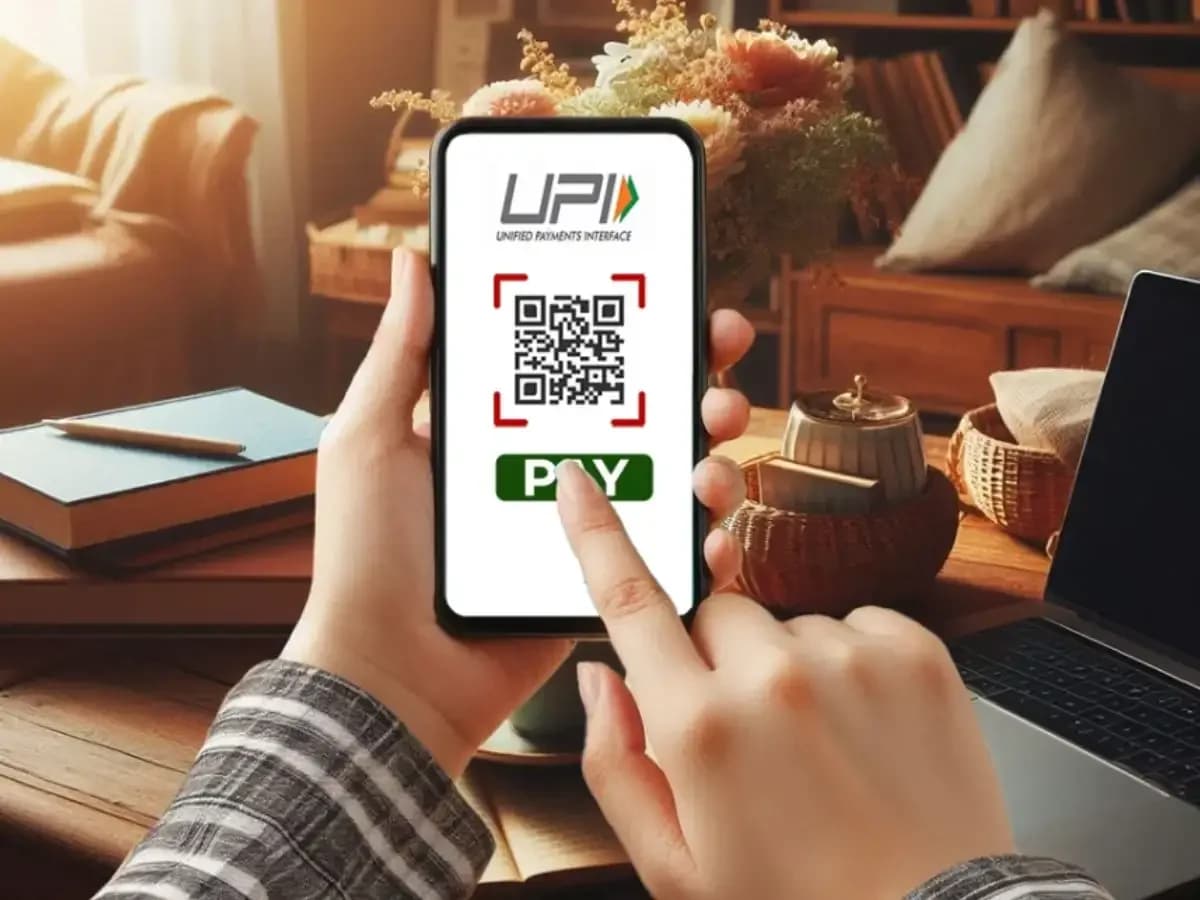
The new framework introduces a 0.4% MDR on person-to-merchant UPI transactions above ₹2,000, capped at ₹300 for payments of ₹75,000 and above, while consumers will not be charged. According to The Economic Times, businesses receiving UPI payments above the exempted ₹2,000 per transaction threshold will have to pay an 18% GST on the applicable merchant discount rate (MDR). However, they would be eligible for tax offsets should they be registered with the GST authorities. The effective cost for merchants is likely to be 47.2 basis points on eligible UPI transactions, rather than the headline 40-bps MDR. The additional tax would raise the cost of a ₹5,000 UPI payment to ₹23.60 from an MDR of ₹20, though GST-registered merchants eligible for input tax credit may be able to set off the tax component. The government estimates the cost of providing a UPI transaction at around ₹1.38, with the 0.4% MDR decided after examining MDR rates in other countries, where charges were broadly between 0.3% and 0.6%.
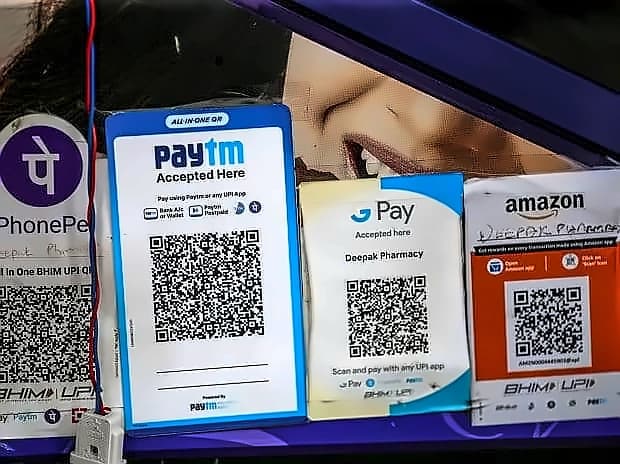
Delhi traders, particularly retailers whose bills frequently cross the ₹2,000 threshold, are expressing concern about the new MDR implementation. Arjun Rawat, who runs a crockery shop in Lajpat Nagar, said around 30-40% of his payments come through Paytm or UPI, with most products priced above the ₹2,000 threshold. Lalit Kalra, owner of Dayal Opticals, said his business could encourage customers to use cash for transactions that attract the charge, stating 'We will have to ask customers to pay in cash. We can't help it, but we will encourage them to pay in cash'. Garment retailer Deepak Nagpal questioned why merchants should bear the cost after years of zero-MDR UPI transactions, saying 'I think the government has cheated us. UPI has been free since Covid, so why is the government charging us now?'. Jewellery shop owner Vijay Gupta described the MDR as another expense, noting they already pay 18% GST and face charges on credit and debit card transactions. The government has stated that around 96% of P2M transactions will remain unaffected by the new MDR rules.

The share of P2M UPI transactions above ₹2,000 has steadily increased from 15.1% in FY23 to 20.1% in the June quarter of FY27, reflecting a sustained shift towards higher-value merchant payments on UPI. As reported by Business Standard, the proposed MDR charges could generate an estimated ₹3,500-₹4,000 crore in annual GST collections, thus unlocking substantial revenue for the exchequer. At current transaction volumes, where high-value P2M payments comprise a significant share of UPI's financial value, this tax-on-MDR model is projected to generate over ₹5,000 crore annually in fresh GST revenue for the exchequer. The Parliament's Standing Committee on Finance warned that the zero-MDR regime 'puts pressure on government finances' and limits the ecosystem's ability to invest in long-term infrastructure, urging that 'establishing a viable revenue mechanism is critical' to ensure UPI ecosystem achieves financial sustainability.
According to tax experts from AMRG Global and Nangia Global, registered merchants absorbing these fees can claim Input Tax Credit (ITC) on the GST paid, thereby heavily softening their overall tax burden. As reported by Business Standard, merchants with output tax liability in the GST system will be able to claim ITC, but those dealing with exempt goods and services under GST will have to bear the GST burden on MDR charges. The regulatory structure provides crucial relief as the 18% GST applies strictly to the 0.4% merchant fee, not the underlying UPI payment amount. Ikesh Nagpal, lead–indirect tax at AKM Global, explained that businesses liable to pay MDR on applicable UPI transactions would also bear GST at 18% on the MDR charged by the payment service provider, with eligible GST-registered businesses able to claim ITC subject to prescribed conditions. Niren Shethia, partner at PW & Co LLP, noted that the stipulated MDR of 0.4% should be inclusive of GST at 18%, with the estimated GST collection potentially reaching approximately ₹2,000 crore annually for the government.
According to EY India and AKM Global, the 18% GST will be leviable on MDR charges recovered by banks from merchants, with input tax credit availability for merchants who receive separate statements or GST invoices. As reported by Business Standard, this structural update strikes a calculated balance by building a lucrative revenue stream for the government while preserving the zero-fee experience that drives India's retail digital adoption. The government's net additional revenue would be lower as eligible businesses could claim input tax credit on GST paid on MDR charges. The carefully calibrated move signals the end of nearly six years of fully free UPI payments, with individuals continuing to have unlimited free usage, with no monthly quotas, volume restrictions or tiered caps. Ikesh Nagpal from AKM Global illustrated that on a payment of ₹75,000 under the standard MDR structure, the MDR would reach the ₹300 cap with GST of ₹54, bringing the total charge to ₹354, with the effective cost reduced to ₹300 where full ITC is available. The government also plans to increase the market share of BHIM UPI, developed by NPCI, which currently accounts for less than 1% of UPI transactions, while PhonePe and Google Pay account for 45.64% and 32.26% of UPI transaction volumes respectively.