Ashwani Mahajan, co-convener of the Swadeshi Jagran Manch (SJM), the economic wing of the Rashtriya Swayamsevak Sangh (RSS), has raised strong concerns about the government's proposed 0.4% Merchant Discount Rate (MDR) on UPI transactions above ₹2,000, calling for the move to be reconsidered. Speaking to The Hindu, Mahajan argued that the fee was not justified by the costs involved, pointing out that the digital payments system had helped bring down banks' costs in terms of ATMs and other infrastructure. He criticized the proposed charge as unfortunate and demeaning an achievement of Bharat, which has global appeal, stating that policymakers have failed to factor in reduced logistics costs due to UPI, making Bharat more competitive. The SJM co-convener also argued that cybersecurity costs should not be cited as a reason for introducing the charge, as such expenses were part of banks' regular operations.
A public interest litigation (PIL) has been filed in the Supreme Court challenging the Centre's recently introduced framework for levying a merchant discount rate (MDR) on certain UPI transactions exceeding ₹2,000. The petition, filed by Advocate Anjan Datta, seeks to invalidate or suspend the framework, which is scheduled to take effect on October 15. The plea challenges the Centre's September 14 notification as well as the framework announced on September 15, questioning the constitutional validity of the amended Section 10A of the Payment and Settlement Systems Act, 2007. According to the petitioner, the provision confers excessive and unguided discretion on the executive to determine which electronic payment systems would qualify for protection from charges. The petitioner has also alleged that the operative instrument governing the levy has not been published in the Official Gazette, with the petitioner questioning whether a press release can form the basis for imposing the charges.
The Finance Ministry has rejected allegations of foreign pressure behind the revised UPI framework, stating that the regulatory changes were driven entirely by domestic priorities. As reported by The Times of India, the ministry clarified that a 0.4% merchant discount rate (MDR) will apply only to specified merchant transactions above ₹2,000 from October 15. The petition argues that the new system is being introduced without proper discussion and that the necessary legal process has not been followed. The PIL further claims that merchants seeking to avoid the additional UPI fees could ask customers to make payments in cash, which could affect the goal of implementing a digital economy. The petitioner has also argued that the charges could place an additional burden on small businesses.
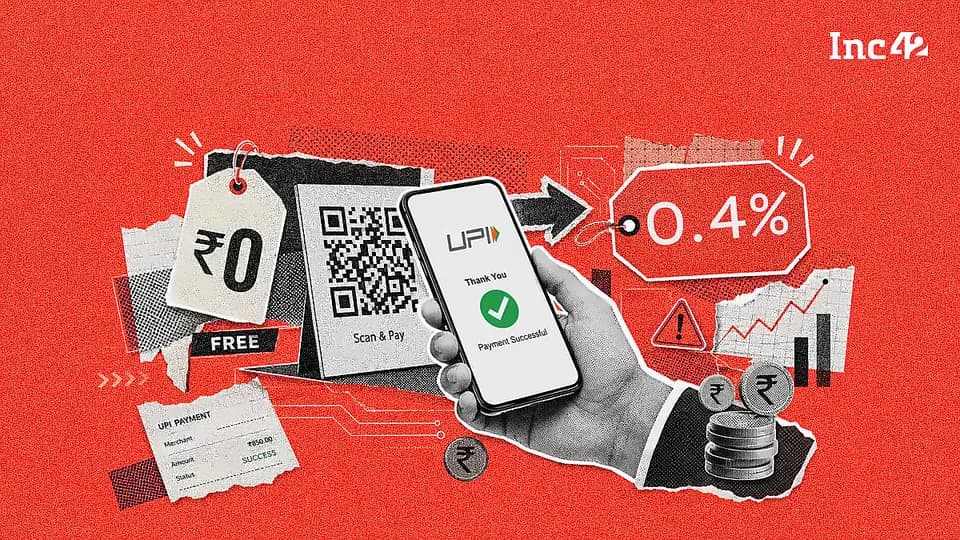
Under the new framework, a 0.4% MDR will apply to specified UPI payments made to merchants when the transaction amount exceeds ₹2,000. As reported by The Times of India, the charge will be capped at ₹300 per transaction for payments of ₹75,000 and above. However, the Finance Ministry's September 14 notification under Section 10A of the Payment and Settlement Systems Act specifies that RuPay debit card payments and UPI transactions up to ₹2,000 are electronic modes on which banks and system providers cannot impose direct or indirect charges. The government has clarified that approximately 96% of merchant transactions will remain unaffected, either because they fall below ₹2,000 or are covered by zero-MDR provisions for small merchants. Small merchants receiving up to ₹1 lakh per month through UPI QR codes under the P2PM category will continue to enjoy zero MDR. Person-to-person UPI transactions will remain free under the new framework, with the government emphasizing that MDR is not a tax or revenue collected by the government or NPCI, but distributed among payment processing participants.
The National Payments Corporation of India (NPCI) has officially announced that the 0.4% MDR on specified transactions will take effect from October 15, 2026. This implementation timeline provides businesses and consumers with advance notice of the new charge structure, allowing for adjustments to payment practices and digital commerce strategies. The move follows amendments to the Payment and Settlement Systems Act, 2007, and notifications issued by the Ministry of Finance in September 2026. According to The Times of India, the government estimates that MDR will apply to only around 4% of merchant transactions, with approximately 96% of P2M transactions remaining unaffected. The government has also announced that an amount equivalent to 5% of total MDR collections will be contributed to a dedicated fund to expand UPI acceptance among small merchants, particularly in tier-3 and smaller markets. The additional revenue is expected to support areas including payment infrastructure, resilience, cybersecurity and innovation.
The announced framework includes specialized rates for essential sectors, with certain essential and thin-margin sectors, including railways, telecommunications, insurance, fuel and agricultural inputs, attracting a flat MDR of ₹5 for transactions above ₹2,000. Capital market transactions will attract a lower rate of 0.02%, capped at ₹300. The Finance Ministry has advised banks to ensure that merchants do not pass the charge on to consumers, while UPI application providers have been prohibited from imposing platform fees or hidden charges on users under the framework. The petition filed by Advocate Anjan Datta has raised concerns about the differing treatment of UPI and RuPay debit-card transactions under the new framework. It points out that the existing no-charge protection for RuPay debit cards does not prescribe a monetary ceiling, unlike the ₹2,000 threshold introduced for UPI transactions. The petitioner has sought an independent review by the Reserve Bank of India and the Union government, along with greater transparency, publication of supporting empirical data and an impact assessment.