The Associated Chambers of Commerce and Industry of India (Assocham) has endorsed the government's latest Merchant Discount Rate (MDR) framework for UPI merchant transactions, calling it an 'important step' towards strengthening the long-term sustainability of India's digital payments ecosystem. Nirmal K Minda, president of Assocham, stated that the introduction of a calibrated MDR structure for large-value UPI merchant transactions was an important step toward the long-term sustainability of India's digital payments ecosystem. According to Minda, "It will support continued investment in technology, infrastructure and payment acceptance networks, enabling UPI to scale further and serve consumers and businesses across the country." The industry body emphasized that the framework will help UPI continue to expand while "strengthening its reach, innovation and infrastructure" across the country, providing crucial support for the payments ecosystem's growth and innovation capabilities.
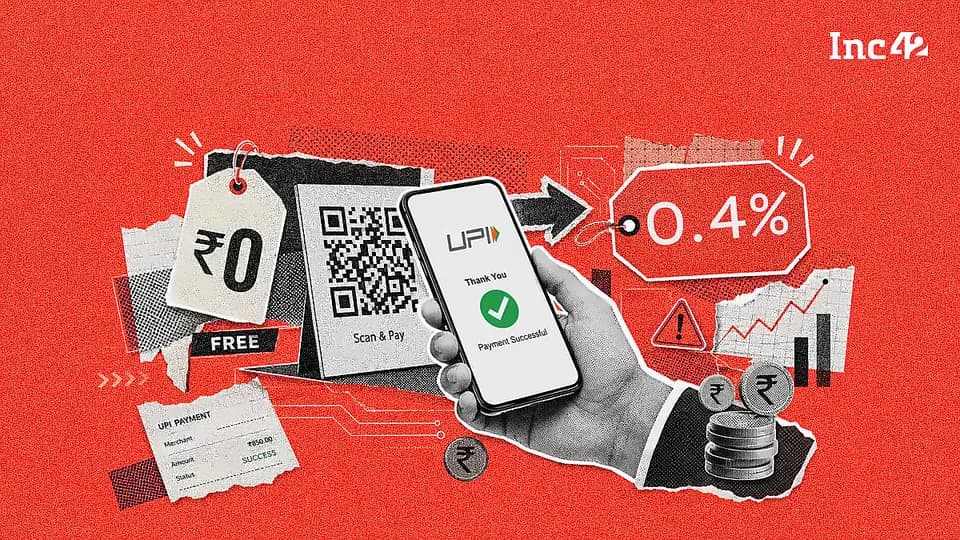
According to reports from The Times of India, the National Payments Corporation of India (NPCI) has notified an MDR of 0.4% on person-to-merchant (P2M) UPI transactions above ₹2,000, with the new charges set to take effect from October 15, 2026. The NPCI Circular was issued on September 15, 2026, following deliberations by its UPI steering committee on operational parameters, fee distribution and category-wise caps. As per the latest reports, P2M transactions above ₹2,000 will attract an MDR of 0.4%, capped at ₹300 when the payment value reaches ₹75,000, while P2P transactions and merchants who receive up to ₹1 Lakh per month will continue to remain free for users. For specified merchant categories, including railways, telecom services, insurance and fuel, a flat MDR of ₹5 per transaction will apply to UPI payments above ₹2,000. The framework comes after the payments industry lobbied the government to introduce MDR on select merchant payments to enable a direct revenue stream from UPI transactions.
As reported by Business Standard, the payment transactions that were previously not chargeable will now generate revenue for the company's payments business. Mobikwik expects to earn this revenue through two distinct channels: as a Third-Party Application Provider (TPAP) on the P2M share of its consumer UPI Gross Merchandise Value (GMV), and as an acquirer on its merchant GMV. The revenue generated from the MDR will be split between ecosystem partners as follows: 0.28% as interchange fee to the issuer bank, 0.12% to the payment service provider (PSP) of the payer, and 0.08% to app providers. This strategic approach positions the company to capitalize on the new fee structure while maintaining user accessibility. The RBI noted that "A fair and appropriate distribution of MDR across ecosystem participants will support continued investment in technology, infrastructure, and acceptance networks which can enable wider UPI acceptance, strengthen customer base, and support sustained growth in transaction volumes."
According to The Times of India, the government has clarified that the new MDR is a charge within the merchant payment ecosystem and will not be directly imposed on customers. As per the Ministry of Finance, "Customers will not be required to pay any charge when making such payments through UPI. MDR is a charge within the merchant payment ecosystem. It is not a charge on customers making UPI payments." The RBI reaffirmed this commitment, stating that "RBI remains committed to ensuring that UPI continues to be safe, seamless, affordable, and accessible, while supporting the long-term sustainability and growth of India's world-class digital payments ecosystem." This regulatory framework maintains the user-friendly nature of UPI while providing revenue opportunities for payment service providers. The implementation represents a balanced approach to monetizing transactions while preserving the accessibility that has made UPI a preferred payment method. NPCI has also clarified that consumers will continue to be able to use UPI for routine payments without paying a transaction charge, and UPI application providers will not be allowed to levy platform fees or other charges on UPI payments.
The new framework comes at a time when monthly UPI transactions touched an all-time high in August, with transaction volume rising nearly 4% MoM to 24.51 Bn from 23.66 Bn in July. However, annual infrastructure, cybersecurity, and operational upkeep costs for the UPI system is increasing parallely, costing around ₹20,000 Cr per year. As per NPCI, data analysis indicates that MDR will apply to only about 4% of merchant transactions, meaning that approximately 96% of merchant transactions will remain unaffected. The framework aims to support UPI's long-term sustainability while keeping transactions free for consumers and small merchants, with 5% of total MDR collections allocated to a dedicated fund to promote UPI adoption among small merchants. The government estimates that only 4% of merchant transactions will be affected by the introduction of MDR, as most transactions either fall below ₹2,000 or qualify for zero MDR under the P2PM framework. Industry leaders, including Pine Labs CEO Amrish Rau, believe the introduction of MDR will materially change the fintech narrative and provide a sustainable revenue model for the sector.