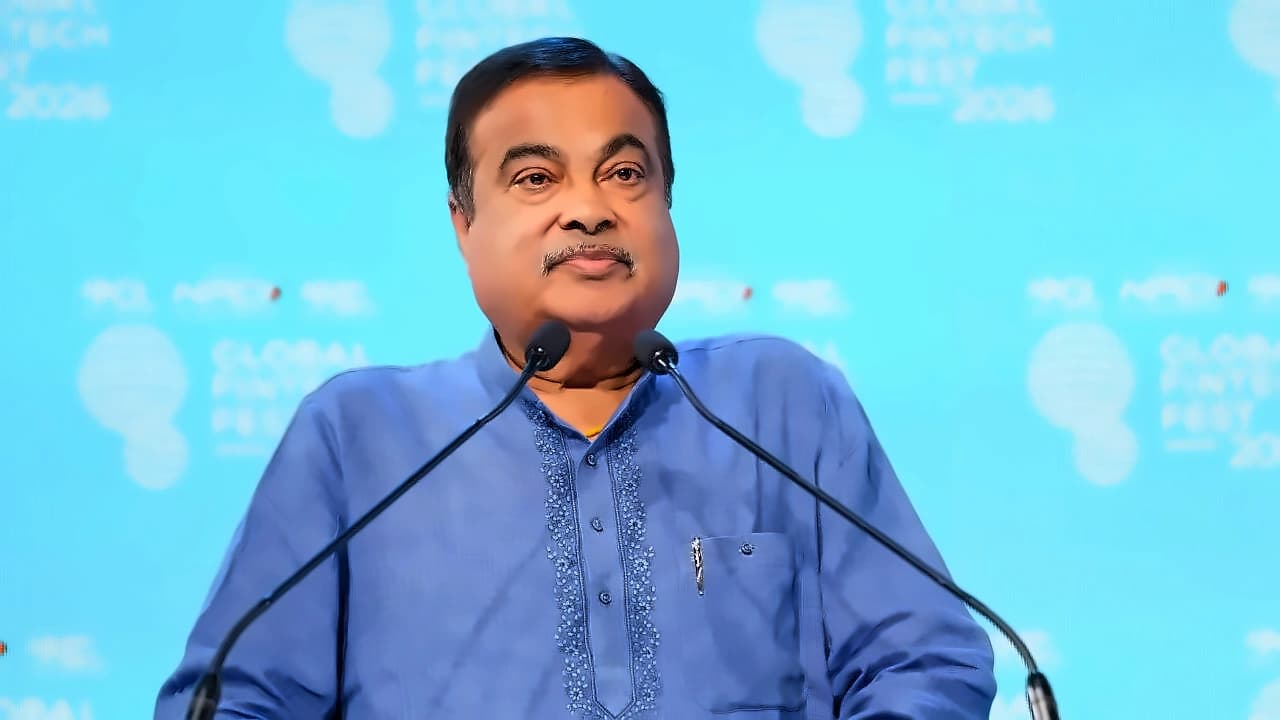
Union Road Transport and Highways Minister Nitin Gadkari has accelerated the timeline for India's barrier-free tolling system, now targeting March 2027 for nationwide implementation. Speaking at the Global Fintech Fest 2026 in Mumbai, Gadkari announced that over 70% of the country's toll plazas will be equipped with Multi-Lane Free Flow (MLFF) technology by the end of December 2026, with the remaining plazas completing the transition by March 2027. The minister directed officials to complete over 70% of the work by the end of 2026, emphasizing that "in one year, we want to get all our tolls free on the MLFF model." The barrier-free system, first launched at the Mundka-Bakkarwala Toll Plaza on Delhi's Urban Extension Road-II in May, enables vehicles to pass through toll points without stopping, with overhead gantries automatically detecting each vehicle and charging applicable tolls at normal speed. As Gadkari explained, "There will be no toll plaza on the way and no one will stop the vehicle," fundamentally changing highway travel across the country.
The barrier-free tolling system is expected to significantly boost toll collection revenues, with ₹7,000-8,000 crore added annually to highway collections, as reported by NDTV. Gadkari explained that the next phase will eliminate remaining delays while boosting toll collections, with the new system combining vehicle number-plate recognition with FASTag for toll collection. The proposed system will use information from both FASTag and vehicle number plates to identify and track vehicles on tolled stretches, strengthening toll collection as the government moves towards a system where vehicles can continue moving through tolling points instead of stopping to pay. Additionally, MLFF could reduce toll plaza operation and maintenance costs to 2-3% from the current 12%, resulting in savings of ₹6,000-7,000 crore annually. According to Gadkari, the wider adoption of FASTag and the shift towards digital tolling has generated an estimated benefit of ₹20,000 crore to ₹25,000 crore annually for the government, with the benefit to the department alone coming to around ₹20,000 crore to ₹25,000 crore per year. The system will eliminate toll plaza stoppages, cut operating costs and save ₹6,000-7,000 crore annually.
FASTag penetration has reached over 98% at National Highway toll plazas, with more than 13 crore FASTags issued in the country, according to Gadkari's announcement at Global Fintech Fest 2026. As reported by NDTV, FASTag was started as a pilot project in 2014, officially launched in 2016, and made mandatory in 2021. The system uses radio-frequency identification technology to automatically deduct toll charges from a linked account as vehicles pass through toll plazas, reducing waiting times at toll plazas by 80-90% from around 12 minutes earlier and up to 30 minutes in some cases. The minister revealed that India's toll collection grew from ₹660.67 crore in FY17 to ₹82,589.9 crore in FY26 over 2,000 toll plazas with digital toll collection. Gadkari said that FASTags have helped increase the toll booth income by 10% or about ₹7,000 crore to over ₹82,000 crore now. The economic value of the time saved by commuters is estimated at ₹68,500 crore annually, with the reduction in waiting time translating into 71 crore hours of annual time savings. The annual savings from reduced toll-plaza waiting times amount to around 71 crore hours and 56 crore litres of fuel, translating into fuel savings worth approximately ₹5,250 crore. "The economic value of the time saved by commuters is estimated at ₹68,500 crore annually," he said, emphasizing that "this is such a big benefit for the people."
The technological advancement in tolling systems has delivered substantial environmental benefits, with Gadkari comparing the reduction in idling and fuel consumption to the plantation of around 2.7 crore trees. Speaking at the Global Fintech Fest 2026, Gadkari highlighted that the shift away from cash-based toll collection has eliminated practices like motorists receiving chocolates instead of small change, with digital payments now enabling exact electronic transactions. The government has introduced an annual pass for non-commercial passenger vehicles priced at ₹3,000 for toll-free travel at 200 toll plazas. Gadkari emphasized that credibility, clarity and goodwill are equally important as technological capability and resources as India builds out its digital infrastructure. He called for greater competition in the tolling market, saying more players should enter the space and push service quality higher. The broader objective is to build a highway system where digital payments are seamless, vehicles face zero stoppage at toll points and technology delivers both economic and environmental gains. Gadkari also urged the industry to develop technology that can detect overloading in trucks, addressing the current lack of transparency in the country's freight sector.
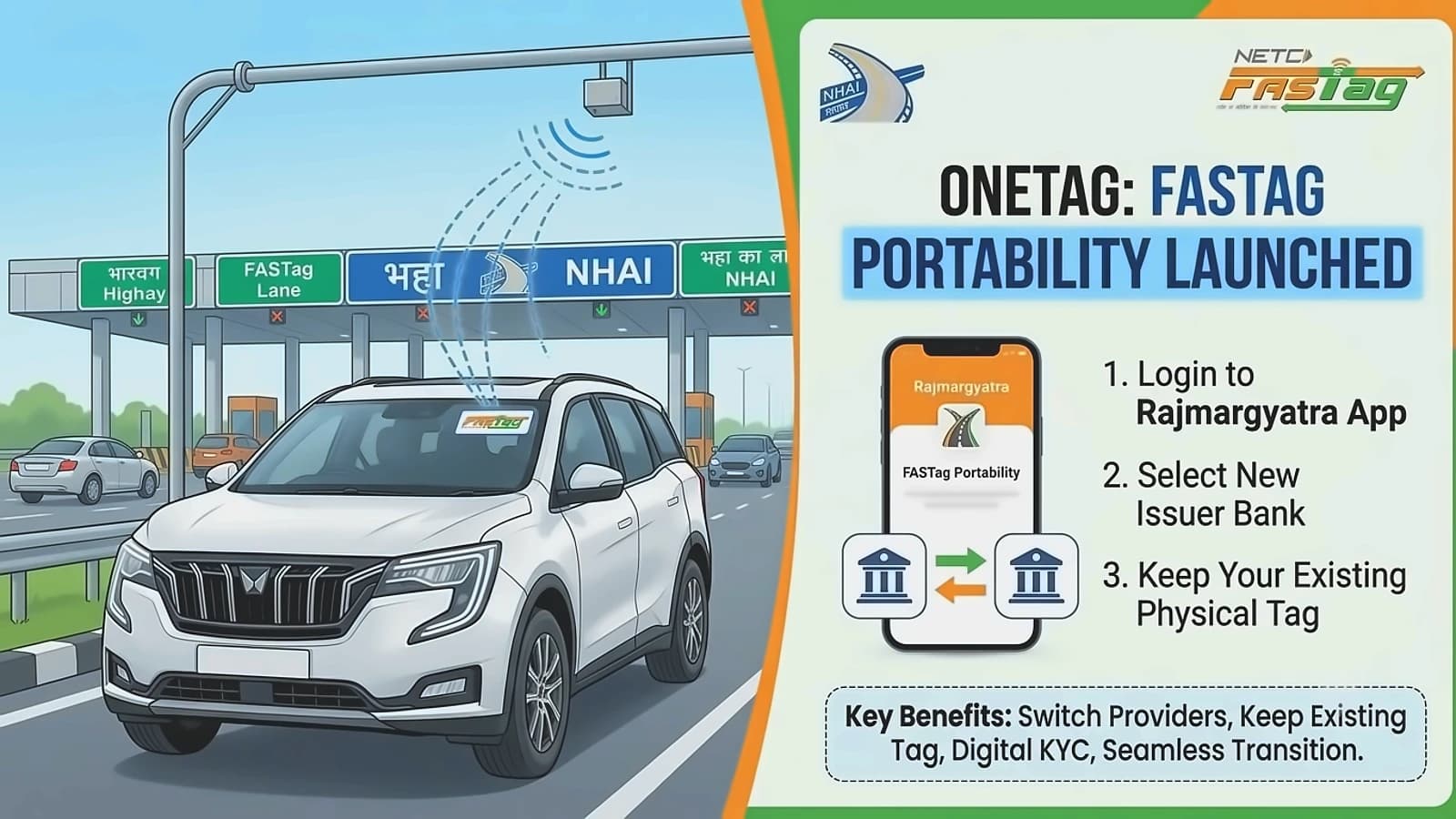
Alongside barrier-free tolling, the government is introducing One Tag to make FASTag more convenient for users. According to reports from Business Standard, under the new system, motorists will be able to change their bank without having to obtain a new FASTag. The minister explained that earlier, changing banks meant purchasing a new FASTag and removing the existing one from the vehicle, but now this will work much like mobile number portability, allowing users to switch banks while retaining the same tag and continuing their journey. The process will be fully digital and can be completed through the Rajmarg Yatra app with digital KYC and wallet setup. The facility enables vehicle owners to connect their existing FASTag to a new bank account through the Rajmarg Yatra app, reflecting India's continuing emphasis on innovation, interoperability and digital infrastructure focused on customer needs. As the country's highway network and wider mobility ecosystem become increasingly connected, there is greater scope to bring tolling, payments, vehicle data and financial services together into a more seamless mobility system.