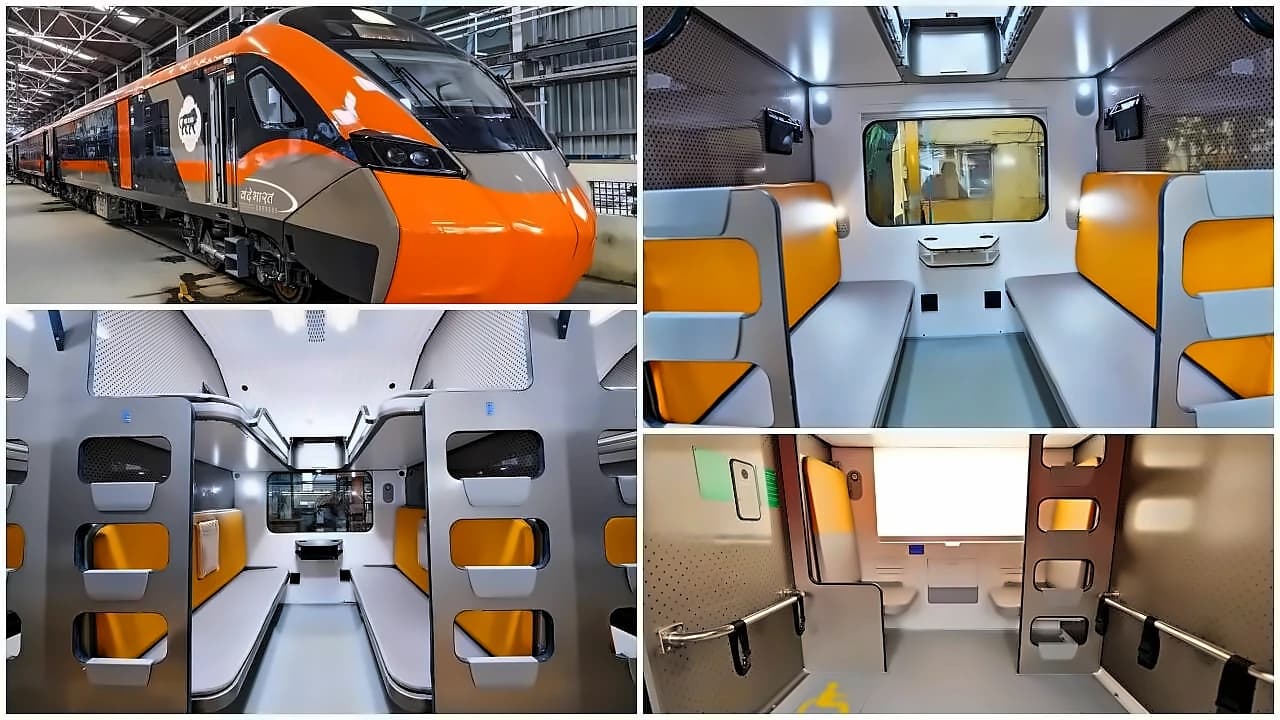
India's first bullet train project has achieved a significant milestone with Integral Coach Factory (ICF), Chennai, awarding a contract worth ₹866.87 crore to BEML Limited for manufacturing two prototype high-speed trainsets. According to The Times of India, these prototype bullet trains will be capable of operating at speeds exceeding 250 kmph with a design speed of 280 kmph. Under the contract, BEML will manufacture two eight-coach high-speed trainsets with rollout scheduled for 2027, with design work currently in its final stages. The trainsets, codenamed B-28, will be built using advanced precision-driven technologies specifically engineered for India's hot and dusty environment, marking a significant milestone for India's engineering and manufacturing capabilities. BEML has established a dedicated 'Aditya' High-Speed Rail Complex in Bengaluru for the manufacture of these bullet trains, featuring fully air-conditioned chair car coaches equipped with world-class passenger amenities and advanced onboard infotainment systems.
The government has strongly rejected criticism by former Japanese Justice Minister Hideki Makihara, describing his views as 'at considerable variance with facts'. In a social media post on X, Makihara accused Indian ministers and officials of 'sheer chaos' and 'sheer recklessness' over alleged delays in the Mumbai-Ahmedabad Bullet Train project. The former minister claimed that Indian officials repeatedly failed to honour commitments and pursued 'self-interest' during negotiations on the Shinkansen project. MEA spokesperson Randhir Jaiswal termed the criticism as 'at considerable variance from facts' and confirmed that discussions on the Mumbai-Ahmedabad high-speed rail project are in fact progressing well. The government emphasized that Japan will provide E10 series trains only in the early 2030s, making the current arrangement necessary for timely operations. The response came after Makihara alleged that the lack of progress was due to India's handling of negotiations and implementation, calling the minister overseeing the project 'awful' and stating 'the minister in charge was especially awful-if the top guy's like that, there's no way to have any decent dealings'. Officials associated with the project clarified that Makihara had not participated in meetings related to the bullet train corridor, with coordination instead carried out by representatives of Japan's Ministry of Land, Infrastructure, Transport and Tourism.
India has decided to operate only semi-high-speed trains on the Mumbai-Ahmedabad High-Speed Rail (MAHSR) corridor, as well as the seven more such corridors to be developed soon. These will not be the much-touted bullet trains or, as they are more properly known, the Shinkansen network. Arunendra Kumar, former Railway Board chairman, explained that India needs a high-speed train link but not necessarily above the 300 km per hour speed to bring metros closer. Railway officials maintain this is the best course for India to adopt, with the Railways needing dedicated passenger route networks that are not available at present. The first operational stretch will use indigenously built high-speed trains, while Japan's next-generation E10 trains will be introduced later, after 2030. The 508-kilometre corridor will connect Mumbai's Bandra Kurla Complex with Ahmedabad through 12 stations across Maharashtra, Gujarat and Dadra and Nagar Haveli, designed for an operational speed of 320 kmph. The decision to make its own bullet trains followed the failure of Japanese suppliers to submit proposals that matched the timeline for commencing operations on the Surat-Vapi section from 2027, with officials stating 'All approvals of drawings, designs, construction schemes, and quality control are done by Japanese experts'.
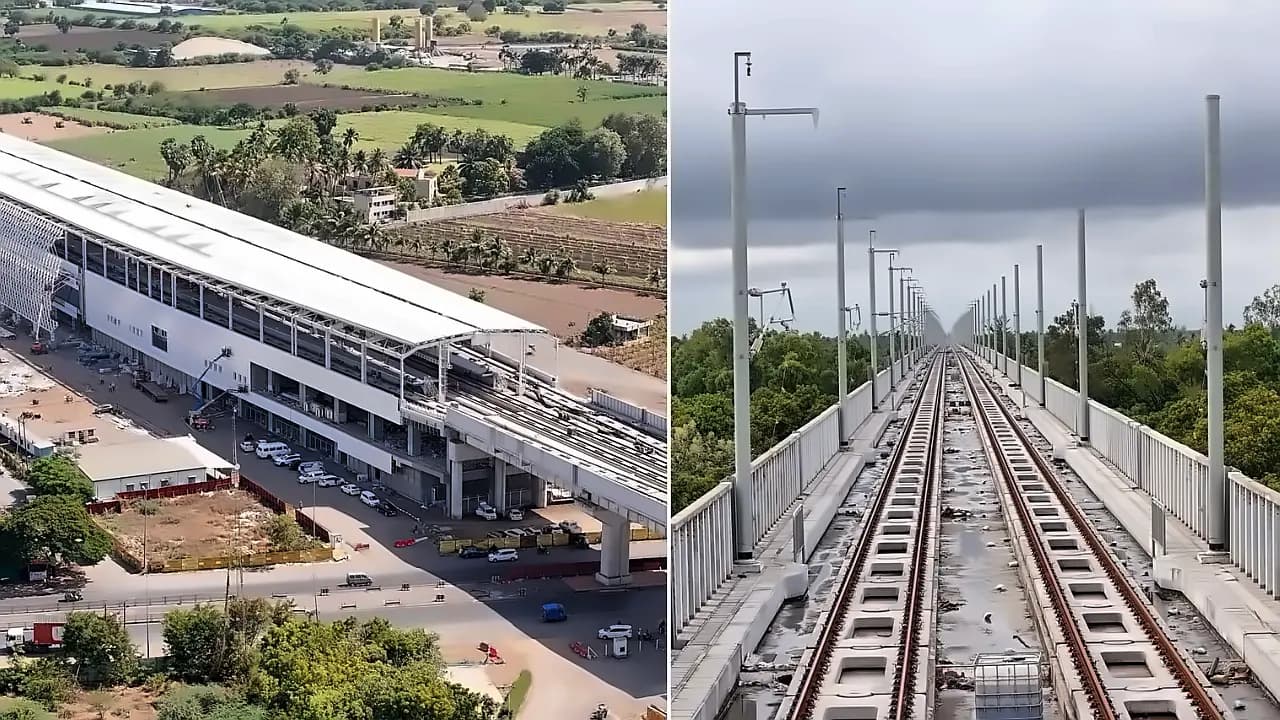
India has decided to deploy globally interoperable signalling systems instead of Japanese ones, ensuring compatibility with international high-speed rail standards and allowing flexibility for future upgrades. Indian officials reiterated that the equipment has already been ordered in line with international specifications and construction is progressing steadily. India is deploying the European Train Control System, which is a modern, radio-based digital signalling architecture. As a Railway Ministry source explained, 'The radio-based system represents a significant upgrade over legacy Second World War-era coaxial copper cable systems, which suffer from signal leakage and are highly vulnerable to localised copper cable theft'. This decision addresses fundamental differences between the countries' engineering protocols, with Japanese protocol suitable for earthquake-prone soil structure with sharp curves and measures not necessary for India. The Japanese side has insisted for a long time that the discussion on the train sets should be linked to the capacity of the tracks, with a Japanese official noting that 'The track that India has engineered has never been tested for these high-speed trains, so the speed of trains on the tracks has to be ramped up gradually'. Tokyo has emphasised that while they are deeply committed to the development of the high-speed trains, they would want their Indian counterparts to also recognise their concerns about track capacity.
The project is primarily financed through an Official Development Assistance (ODA) loan from the Japan International Cooperation Agency (JICA), with additional cost escalation of nearly ₹90,000 crore being fully borne by Indian Railways. As reported by The Times of India, there are no plans to ask Japan for more funds, with the additional cost being covered from Indian Railways' own budget. This financing is provided on commercial terms and carries conditions requiring procurement from suppliers approved by the Japanese side. The corridor is being built with substantial financial assistance from JICA through long-term concessional loans, with construction accelerating across viaducts, tunnels, and stations after years of delays caused primarily by land acquisition and political changes. According to the National High Speed Rail Corporation Limited's website, the estimated project cost is $17 billion, with about 81% of the total project cost being funded by the Government of Japan through JICA and the remaining cost funded by the Government of India. Based on recent developments, India has decided that it will continue with the Japanese loan for the MAHSR project, but others will be financed with debt from domestic and foreign markets.
The decision to use domestically manufactured trains to serve the corridors will not be a stop-gap arrangement but is a demonstration that highlights India's growing capability in advanced rail engineering while preserving the long-standing technology partnership with Japan. Indian government officials point out that there have been two major changes on the domestic front since the bullet train project took off in 2016. First, the Vande Bharat train sets have been launched with speeds ranging between 150 kms per hour to 170 kmph and are manufactured in India at prices of about ₹12 crore per unit. European companies offer similar engines at prices of ₹22 crore, whereas the Shinkansen bids begin at over ₹50 crore. Second, the Indian government has established the National High Speed Rail Corporation Limited (NSRCL), which was initially meant to act as the facilitator for the high-speed corridor between Mumbai and Ahmedabad. Now, however, it feels confident that it can undertake turnkey projects for the other seven corridors. Japanese Prime Minister Takaichi was in India from July 1-3 for the annual India-Japan summit, with both prime ministers reaffirming the importance of the Mumbai-Ahmedabad High Speed Rail as a flagship project and expressing willingness to explore cooperation on future high-speed corridors to achieve India's vision of a national high-speed rail network of 7,000 km. The project has been designated as one of Prime Minister Narendra Modi's flagship infrastructure initiatives and represents the centrepiece of India-Japan strategic infrastructure cooperation.