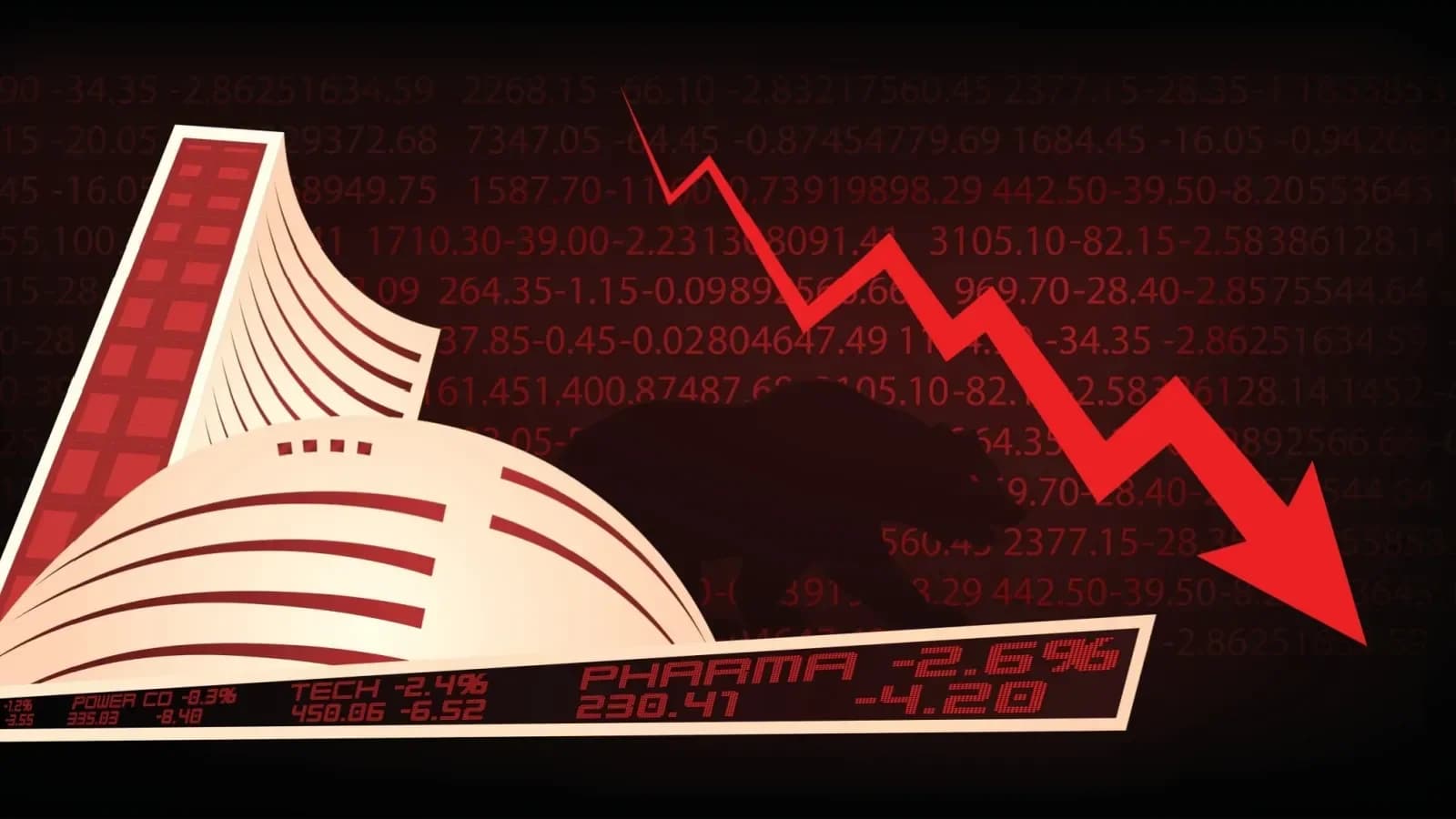
The SENSEX dropped 921 points to 76,407.18 while the NIFTY50 index fell below 24,000 to 23,900.45, according to The Hindu BusinessLine. The sharp decline was triggered after US President Donald Trump reportedly dismissed Iran's response to the latest peace proposal as "totally unacceptable," dashing hopes of a diplomatic resolution and sending Brent crude spiking close to $101 a barrel. The sell-off began with the Sensex opening at 76,638.09 and Nifty 50 opening at 23,970.10, with markets opening sharply lower as fresh US-Iran tensions sent crude oil prices surging and rattled investor sentiment.
The banking sector emerged as a key drag on market performance, with State Bank of India dropping 3.30% to ₹985.70, extending last week's slide after weak net interest margin data. As reported by The Hindu BusinessLine, the banking sector faced significant selling pressure alongside other major financial institutions. Rajesh Palviya, Head of Research at Axis Direct, noted that the Nifty shed 150 points Friday "dragged by a 7% slide in SBI after weak NIMs and renewed US–Iran flare-ups." The banking sector's weakness reflects broader concerns about credit growth and asset quality in the financial services sector, contributing to the overall market decline.
Titan Company fell 5.09% to ₹4,279.30 from its previous close of ₹4,509.00, the steepest drop among blue-chips, directly in the line of fire from the government's advisory against gold purchases. IndiGo slid 3.74% to ₹4,353.70, consistent with broader aviation sector pressure as jet fuel costs mount. Mahindra & Mahindra shed 3.01% to ₹3,230.00, and Shriram Finance declined 2.50% to ₹982.60. Among Nifty 50 stocks, the biggest gainer was Tata Consumer Products, up 3.81% to ₹1,221.00 from its previous close of ₹1,176.20. These declines across diverse sectors indicate broad-based investor caution amid the current geopolitical environment.
The market decline was attributed to persistent geopolitical tensions in West Asia, as reported by The Hindu BusinessLine. Dr. VK Vijayakumar, Chief Investment Strategist at Geojit Investments Ltd, flagged a second domestic pressure point: "PM Modi's appeal to the nation to curb the consumption of petrol/ diesel, gold, chemical fertilisers and edible oil and refrain from avoidable foreign travel is a crisis management response to the current account deficit problem caused by high crude prices." He warned that sectors directly tied to that austerity call — petroleum, chemical fertilisers, gold, air travel, hotels and related industries — would face sentiment pressure, while pharmaceuticals, which will not be impacted in any manner, will remain resilient. The Fed has flagged Iran war-driven oil price shock as the top financial stability risk globally.
GIFT Nifty had indicated a gap-down, trading at 24,050, down around 188 points ahead of the open, according to Choice Equity Broking. Shrikant Chouhan, Head of Equity Research at Kotak Securities, said "24,000 or the 50-day Simple Moving Average" for Nifty and 76,500 for the Sensex are critical support zones. A break below those levels could drag the Nifty toward 23,800 and then 23,600. The India VIX rebounded 1.32% to 16.84 after declining for four straight sessions, reflecting re-emerging caution in options markets. Gaurav Udani, Founder of Thincredblu Securities, urged traders to avoid aggressive positions at the open and focus on confirmation near support or resistance before initiating fresh trades.