Indian benchmark indices suffered one of their sharpest sell-offs this year on Monday, with Brent crude climbing above $108 per barrel following US President Donald Trump's rejection of Iran's proposal to reopen the Strait of Hormuz. The SENSEX dropped as much as 401 points, dragged down by losses in index heavyweights like HDFC Bank, Axis Bank, Bajaj Finance, Kotak Mahindra Bank, ICICI Bank and Infosys. The NIFTY 50 closed at 22,780.25, down 360 points or 1.56%, while the BSE Sensex settled at 72,771.72, shedding 1,124 points or 1.52%, with both benchmarks hitting their lowest closing levels in about six months. As per The Hindu BusinessLine, investors lost an estimated ₹7.52 lakh crore in a single trading session, with the overall market capitalisation of BSE-listed companies falling to ₹474.36 lakh crore. The sell-off was indiscriminate, with all sectoral, thematic and market-cap indices ending in the red, while market breadth remained exceptionally weak with 432 of the 500 stocks in the Nifty 500 universe closing lower.
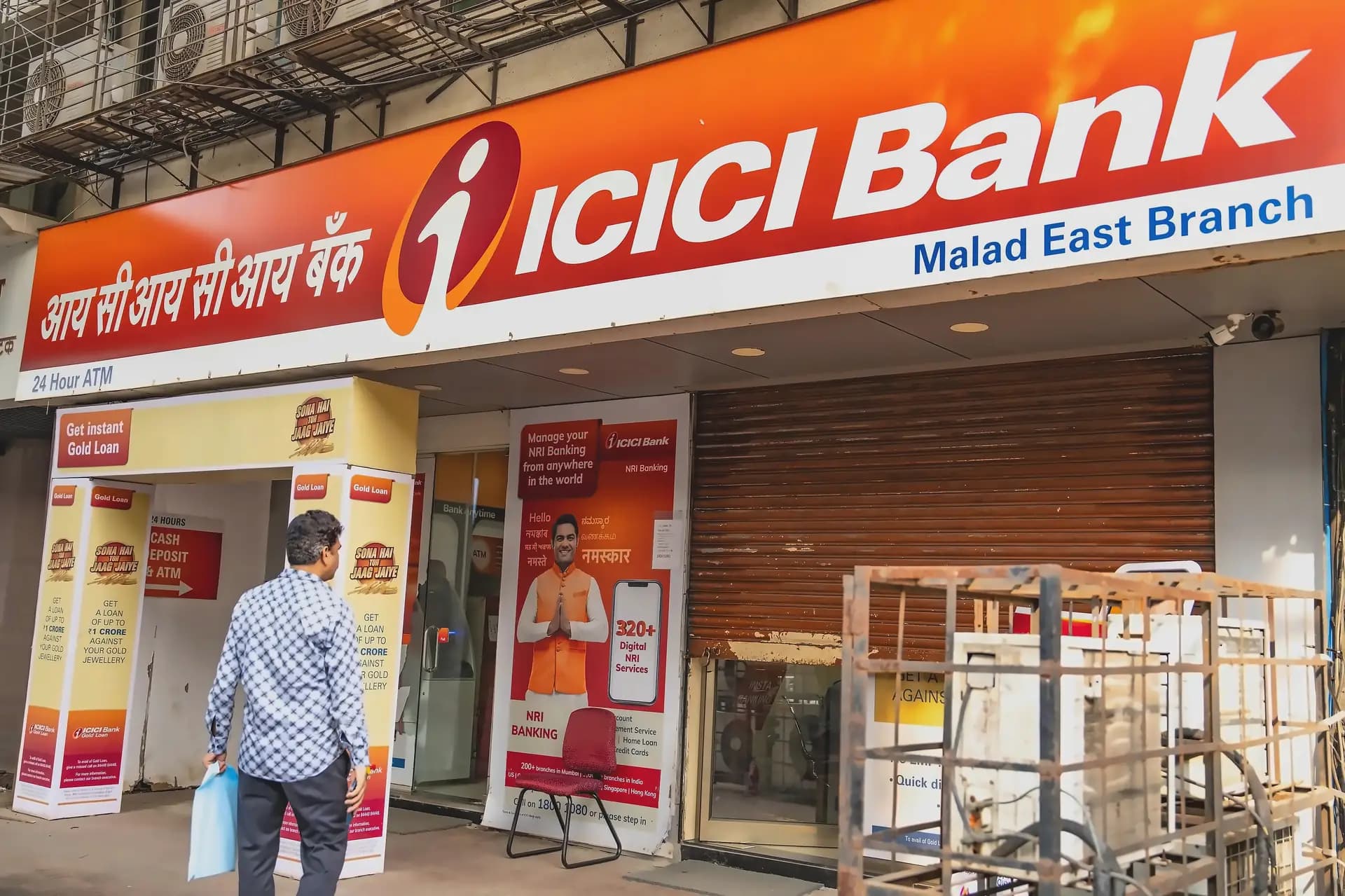
Banking stocks bore the brunt of the selling pressure as Bank Nifty plunged 1,108 points to close at 54,471.65, slipping below the closely watched 55,000 support level. Heavyweights including HDFC Bank, ICICI Bank, State Bank of India and Union Bank were among the key drags on the index. NIFTY Bank declined over 1,000 points to its intraday low of 54,494.40, with the decline indiscriminate across all banking segments. Nifty PSU Bank emerged as the worst performer, tumbling 3.24%, followed by Realty, down 2.12%, and Financial Services, which lost 2.11%. The banking sector decline came after the United Forum of Bank Unions (UFBU) called off its planned three-day nationwide strike, which was scheduled to run from Monday until September 30. In the latest session, Bank Nifty declined 596.15 points, or 1.09%, to trade at 53,880.15, with all constituents of the Bank Nifty index trading in the red. IndusInd Bank, IDFC First Bank, Canara Bank, Union Bank of India, Punjab National Bank, HDFC Bank, Axis Bank, Federal Bank and Bank of Baroda were among the top losers, while Kotak Mahindra Bank, Yes Bank, State Bank of India, AU Small Finance Bank and ICICI Bank also traded in the red.

Banking stocks have come under heavy pressure as RBI rate hike worries intensified, with the Nifty Bank index plunging nearly 1,800 points in just two days and slipping below the crucial 54,000 mark for the first time since early June. According to The Economic Times, the Reserve Bank of India is seen with an 80% chance of announcing a rate hike of 25-50 basis points by December, with less chance of the rate hikes spilling over to February. The international brokerage sees a 20% chance of the Indian central bank hiking rates by more than 75 basis points in one year. Rising bond yields have further weighed on market sentiment, with the Indian 10-year bond yields remaining above 7.15% and the rupee tumbling past 96 per dollar to touch a two-month low as oil prices continued to surge. Higher bond yields could lead to mark-to-market losses on banks' treasury portfolios, potentially putting pressure on capital reserves, while higher deposit and funding costs could also weigh on banks' net interest margins (NIMs).
The correction in India's largest companies has reached alarming levels, with ₹31.35 lakh crore in market capitalisation erosion as 18 of the 50 Nifty stocks are trading more than 20% below their respective 52-week highs. As per Business Standard, the Nifty 50 itself stands at 23,140.5 against its 52-week high of 26,373.2 recorded on January 5, 2026. Among the worst performers, Infosys has seen the steepest decline at 42.1%, followed by Wipro at 39.9%, Tata Consultancy Services at 37.9%, ITC at 36.9%, Tata Motors Passenger Vehicles at 35.1%, and HDFC Life Insurance at 32.7%. Reliance Industries losing ₹4.76 lakh crore from its peak of ₹21.35 lakh crore to current ₹16.59 lakh crore. In the latest session, Besides five Sensex stocks, 14 stocks from the BSE 100 index and 55 stocks from the BSE 500 hit their respective 52-week lows, including Oil and Natural Gas Corporation (ONGC), PB Fintech, Godrej Consumer Products, Jio Financial Services, Max Healthcare Institute and Tata Consumer Products. Also from the cement sector, ACC, Ambuja Cements, Shree Cement and India Cements touched 52-week lows, while Can Fin Homes, Muthoot Finance, Power Finance Corporation (PFC), REC, SBI Cards and Financial Services also traded at multi-year lows.
Foreign portfolio investors (FPIs) continued their selling spree, offloading equities worth ₹5,353 crore during Monday's session, while domestic institutional investors provided some support by purchasing shares worth ₹5,189 crore. According to exchange data, foreign institutional investors (FIIs) sold equities worth ₹3,693.93 crore on a net basis on Friday, while domestic institutional investors (DIIs) purchased ₹2,838.17 crore worth of equities. The sustained foreign selling, combined with rising bond yields in the US and elevated crude prices, has created a challenging environment for Indian equities. Last week, in four out of five sessions, the foreign investors pulled sold equities, adding to the pressure on Indian markets. The latest correction reflects a combination of global and domestic concerns, with the US 10-year Treasury yield climbing to 5.23%, its highest since 2007, and India's 10-year government bond yield also rising to 7.12%. In the past four trading days, the BSE Sensex shed 2.5%, with the benchmark tanking 8.4% in the past two months.