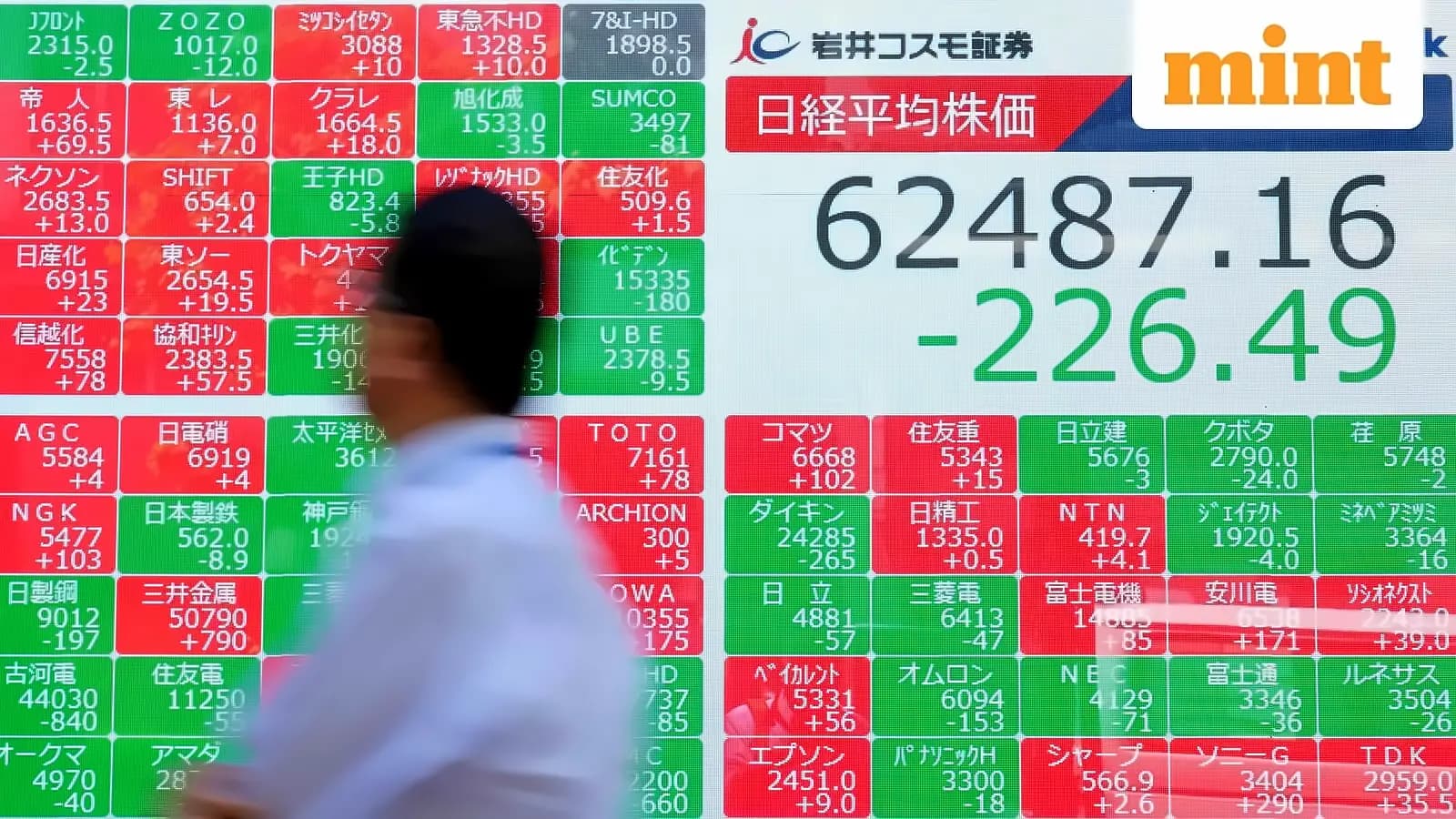
Indian equity markets experienced severe selling pressure as Nifty 50 ended down 360.30 points, or 1.49 per cent, to close at 23,815.85 — its lowest in three weeks. The Sensex shed 1,312.91 points, or 1.70 per cent, to settle at 76,015.28. According to reports from The Hindu BusinessLine, the Nifty Midcap 100 and Smallcap 100 fell 1.05 per cent and 1.13 per cent, respectively, with 382 stocks ending in the red within the Nifty 500 universe. India VIX surged over 10 per cent to 18.5, signalling a sharp jump in market anxiety. The latest trading data shows BSE Sensex trading around 76,405.49, down 922.70 points or 1.19%, while NSE Nifty50 was also in red, falling to 23,906.75, shedding 267.90 points or 1.11% around 9:25 am.
The market sell-off was primarily triggered by crude oil prices surging past $100 a barrel following the collapse of US-Iran peace talks. As reported by The Hindu BusinessLine, US President Donald Trump's rejection of Iran's peace proposal — dismissing demands around the Strait of Hormuz blockade, compensation, and sovereignty recognition as "totally unacceptable" — was the immediate catalyst. With the Strait remaining shut, Brent crude surged roughly 4 per cent to around $105.7 a barrel, deepening concerns over India's import bill. Latest reports show Brent crude climbed 2.69% to $104.01 a barrel for July delivery, while US benchmark West Texas Intermediate (WTI) rose 2.54% to $97.84 a barrel. The rally was driven by renewed geopolitical uncertainty after the US rejected Iran's peace proposal response, leading to fresh threats from Tehran over the key global oil shipping route.
The rupee hit a fresh record low, plunging nearly 1 per cent to 95.32 against the dollar in early trade, erasing recent gains. According to The Hindu BusinessLine, technically, the USDINR pair now faces resistance at 95.45–95.80, with support around 94.70. The combination of crude oil spike and rupee depreciation created a perfect storm for Indian markets, as historically, imported inflation and currency weakness simultaneously squeezes India's current account and corporate margins. Latest reports confirm the rupee ended at record closing low of 95.31 vs US dollar, down 0.88% on the day, as per Reuters.
Consumer Durables fell 3.7 per cent, while Realty declined sharply, as reported by The Hindu BusinessLine. However, Pharma and Healthcare were the only sectors to eke out marginal gains, benefiting from their defensive character and the rupee-depreciation tailwind on export earnings. Prime Minister Narendra Modi's nationally televised appeal urging citizens to avoid gold purchases, reduce fuel consumption, and defer non-essential foreign travel added another layer of concern, with markets reading the message as a signal that the government is worried about mounting pressure on foreign exchange reserves. Jewellery stocks came under sharp selling pressure after PM Modi's appeal, with Senco Gold Limited plunging 8.98% to ₹332.60, Titan Company falling 5.34% to ₹4,268.10, Kalyan Jewellers dropping 7.43% to ₹393.00, and PC Jeweller slipping 3.89% to ₹9.13.
On a relatively brighter note, AMFI data for April showed domestic mutual fund investors remained steady, with net equity inflows of ₹38,440 crore. According to The Hindu BusinessLine, Flexi-cap funds led with ₹10,148 crore, followed by small-cap (₹6,885 crore) and mid-cap (₹6,551 crore) categories. With the Nifty now sitting at the lower band of its recent 23,796–24,482 consolidation range, analysts warn that a decisive break below 23,800 could accelerate a move toward the 23,500–23,150 zone. Markets are expected to remain news-driven and volatile until there is meaningful clarity on the Gulf situation. Foreign investors have continued to trim their exposure to Indian equities, pulling out ₹14,231 crore so far this month amid ongoing global macroeconomic uncertainty. Analysts expect markets to remain highly sensitive to US–Iran developments, inflation data, foreign investor activity, and upcoming corporate earnings, all of which are likely to determine near-term direction and volatility across sectors.