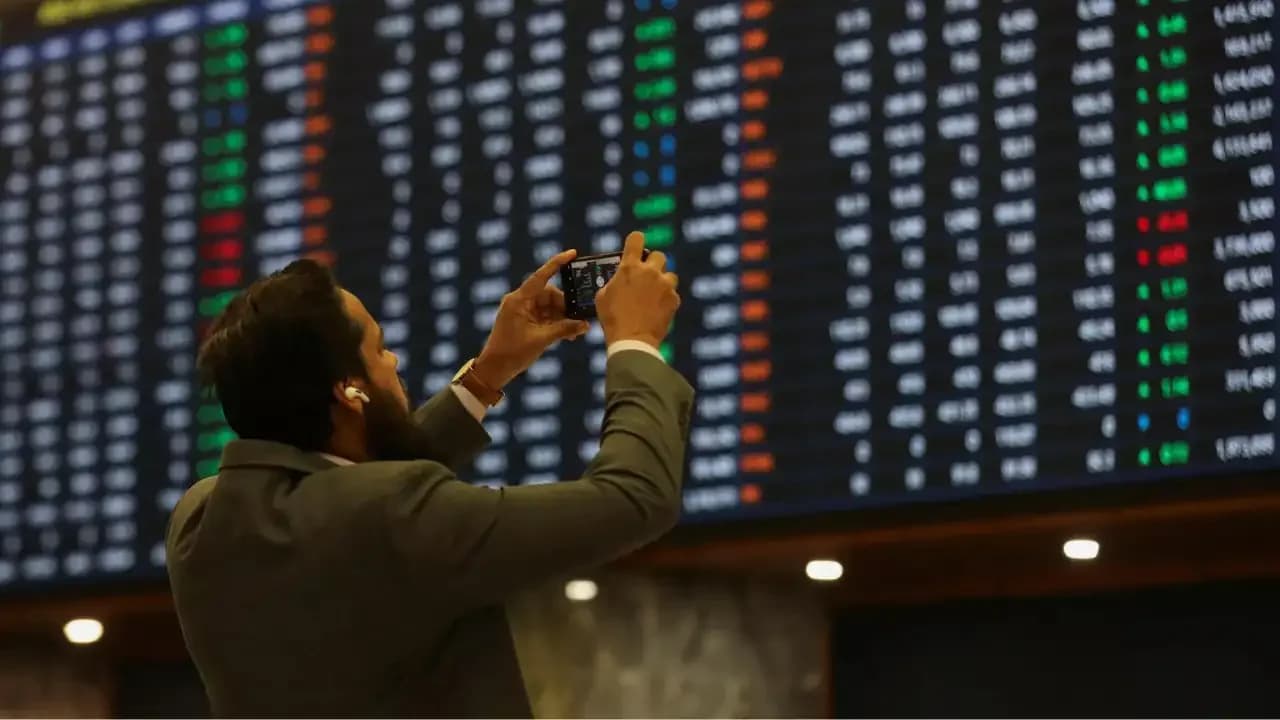
Pakistan's stock market experienced a dramatic reversal on Thursday, with the KSE-100 index plunging over 3,800 points during intraday trading. According to The Times of India, the benchmark index fell to a low of 161,993 points before trimming some losses later in the session. This sharp decline came just one day after the index recorded its biggest intraday gain, surging by over 12,000 points on Wednesday, driven by optimism over reports of a temporary ceasefire between the US and Iran.
The initial optimism surrounding the US-Iran ceasefire agreement quickly dissipated as tensions escalated. As reported by The Times of India, after the brief ceasefire agreement, Israel continued parallel operations against Iran-aligned Hezbollah in Lebanon, with Iran accusing both Israel and the US of violating ceasefire terms. The Strait of Hormuz, which had been slated to reopen for shipping, remained closed to vessels, undermining the spirit of the peace process. Pakistani Prime Minister Shehbaz Sharif acknowledged that violations of the ceasefire have been reported across the conflict zone.
The fragile two-week ceasefire between the US and Iran has exposed deep ambiguities over its scope and enforcement. According to The Economic Times, conflicting claims regarding Lebanon's inclusion in the ceasefire framework have created significant confusion, with Iranian officials describing negotiations as "unreasonable" in light of alleged violations. Iran's parliament speaker Mohammad Bagher Ghalibaf has expressed skepticism about the value of ongoing talks, reflecting internal pressure within Iran's leadership where public opinion appears wary of entering talks without guarantees of compliance.
President Trump reiterated his military stance on Truth Social, stating that 'All US ships, aircraft, and military personnel, with additional ammunition, weaponry, and anything else appropriate' would remain in place around Iran until the ceasefire terms are fully met. According to The Times of India, Trump warned that if conditions are not met, 'the 'Shootin' Starts,' bigger, better, and stronger than anyone has ever seen'. He emphasized that 'NO NUCLEAR WEAPONS, and the Strait of Hormuz WILL BE OPEN & SAFE' as part of any agreement.

The Strait of Hormuz, critical to global energy flows, remains unclear in its operational status as Iran seems to have closed it in response to Israel's violation of the ceasefire with Lebanon attacks. As reported by The Economic Times, Iran has told mediators it intends to limit shipping through the strait to around a dozen vessels per day and impose tolls, indicating an effort to maintain leverage even under a ceasefire. Vessel-tracking data indicated no ships transiting the strait at one point, despite earlier signs of resumption, with energy analysts noting there's no indication that the strait is going to reopen and that people sending oil through the Strait of Hormuz would be very reluctant to do so right now.