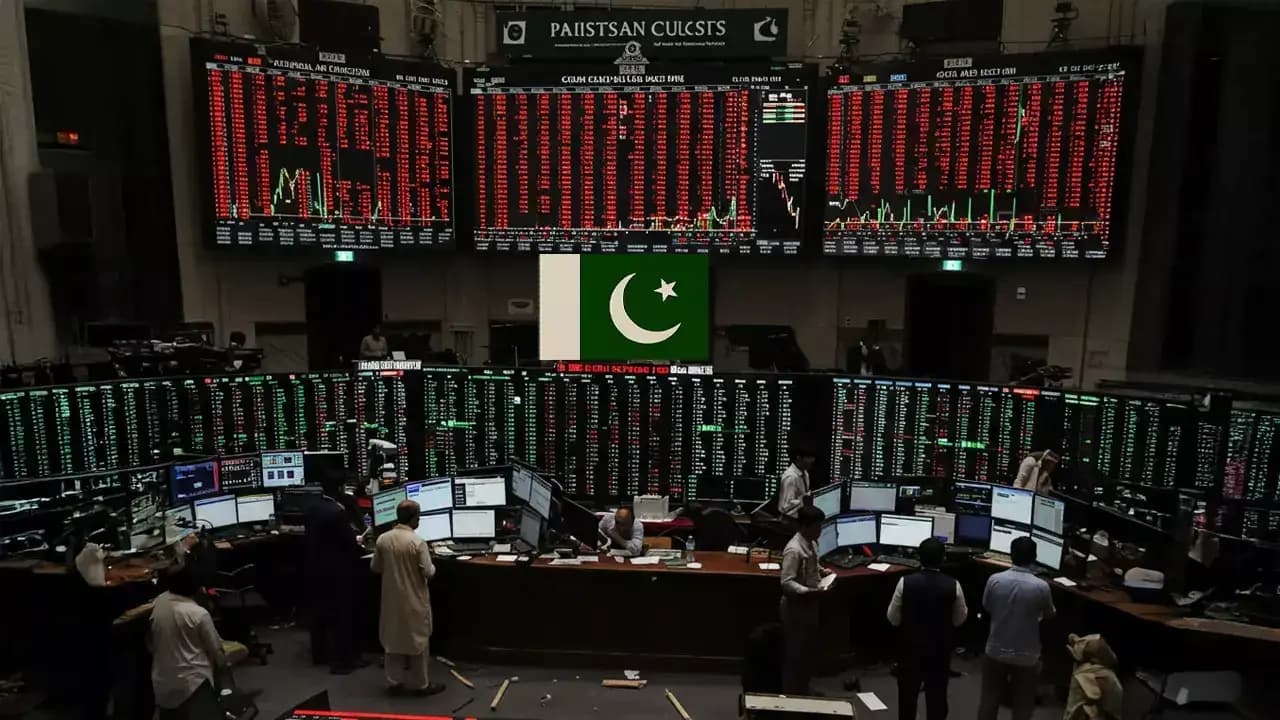
Pakistan's stock markets staged a strong recovery on Tuesday, April 14, with the KSE 100 index surging 4,977 points or 3% to hit an intraday high of 165,150.38. According to reports from LiveMint, the benchmark index rebounded after declining over 4% in the previous session, driven by renewed hopes of diplomatic engagement between the United States and Iran. The broader KSE 30 index also witnessed a strong rebound, rising 1,537 points or 3% to an intraday high of 50,001.38, recovering from more than 4% losses in the previous session. As per Reuters, MSCI's broadest index of Asia-Pacific shares outside Japan was up 1% in early Asia trade, while Japan's Nikkei and South Korea's KOSPI rose more than 2% each.

Despite recent volatility, the KSE 100 index has demonstrated resilience with gains of 7.5% over the past one month, though it remains down 9% over three months. As reported by LiveMint, on a longer-term basis, the index has risen 42% over the past year and delivered multibagger returns of 169% over the past five years. The KSE 30 index has advanced 6% in the past month but declined 11% over three months, with gains of 40% over one year and delivering multibagger returns of 169% over five years. According to Reuters, Nasdaq futures advanced 0.13% while S&P 500 futures held steady, following an overnight rally on Wall Street.
The rally was primarily driven by optimism around renewed diplomatic engagement between the United States and Iran, even after earlier ceasefire talks over the weekend failed to yield an agreement. According to reports from LiveMint, US President Donald Trump indicated that Iran is eager to negotiate, with his administration receiving communication indicating willingness to reach an agreement. Trump reiterated that Iran will not be allowed to develop a nuclear weapon, which remains a key sticking point in discussions. As per Reuters, U.S. President Donald Trump said on Monday that Iran had 'called this morning' and 'they'd like to work a deal', though Reuters could not immediately verify the assertion. A U.S. official said there was forward motion on trying to get to an agreement, while sources told Reuters that both sides have left the door open to dialogue. Reports suggest that negotiating teams from both countries could return to Islamabad later this week, with Pakistan Prime Minister Shehbaz Sharif confirming that efforts toward dialogue are still ongoing.
Cooling oil prices provided additional support to market sentiment, with Brent crude futures declining 2.7% to $96.66 per barrel and U.S. crude futures falling 3% to $96.13 per barrel on Tuesday morning. As reported by LiveMint, the easing in oil prices, combined with hopes of de-escalation, lifted global risk appetite and contributed to the positive market sentiment across Asian markets. According to Reuters, oil prices slid as expectations for a resolution outweighed concerns over supply disruptions, leaving Brent crude futures down 2.7% at $96.66 a barrel. The U.S. military meanwhile began a blockade of Iran's ports in a move aimed at putting pressure on Tehran, with Trump saying Washington would block Iranian vessels and any ships that paid such tolls.
The positive momentum extended across global markets, with Japan's Nikkei 225 rising 2.4% to close at 57,877.39 and South Korea's KOSPI advancing 1.0% to 4,026.63. According to Reuters, EUROSTOXX 50 futures gained 0.63% and DAX futures added 0.77%, while Nasdaq futures advanced 0.13% and S&P 500 futures held steady. In Europe, the FTSE 100 was up 0.3% at 10,615.91, while Indian stock markets remained closed on Tuesday due to Ambedkar Jayanti. The dollar fell to a 1-1/2-month low of 98.328 against a basket of currencies, as buoyant risk sentiment dampened demand for the world's reserve currency. As per Reuters, the euro traded 0.05% higher at $1.1764 while sterling rose to a more than six-week peak of $1.3514. U.S. Treasury yields were little changed, with the two-year yield last at 3.7722% while the benchmark 10-year yield stood at 4.2854%.