Pakistan's stock markets experienced a dramatic collapse on Monday, with the benchmark KSE-100 index plunging over 5,000 points as ceasefire talks between Iran and the US failed to culminate into a peace deal. According to The Hindu BusinessLine, the index fell sharply by 5,353.67 points as heavy selling was witnessed by investors at the outset, with the KSE-100 dropping 4,567.31 points (-2.73%) to 162,624.06 within two hours of trading starting. The latest decline represents a continuation of the market's volatility, with the index having declined more than 1% last week despite the previous week's dramatic recovery. This sharp decline came amid an overall bearish sentiment in Asian markets, with Japan's Nikkei, China's Shanghai Composite, South Korea's Kospi and others also in the deep red. However, as reported by The Hindu BusinessLine, the index showed signs of recovery later in the session, trimming some losses to 4,450.97 points (-2.66%) with the index improving to 162,740.40.
The temporary ceasefire agreement between the US and Iran has faced significant challenges, with both sides failing to maintain the peace terms. As reported by The Economic Times, after Iran and the US agreed to the brief ceasefire, Israel continued its parallel operations against the Iran-aligned Hezbollah in Lebanon. Iran accused both Israel and the US of violating the ceasefire terms, stating that proceeding with peace talks under these conditions would be 'unreasonable.' The Strait of Hormuz, slated to reopen for traffic, remained closed to vessels, with Pakistani Prime Minister Shehbaz Sharif noting that 'violations of the ceasefire have been reported at a few places across the conflict zone, which undermine the spirit of the peace process.'
President Trump has escalated military tensions significantly, ordering US forces to begin blockading the Strait of Hormuz after peace talks brokered by Pakistan failed. According to The Economic Times, Trump ordered US military forces to begin blockading the Strait of Hormuz and clearing suspected sea mines, escalating tensions in the Middle East. In a post on Truth Social, Trump wrote 'So, there you have it, the meeting went well, most points were agreed to, but the only point that really mattered, NUCLEAR, was not. Effective immediately, the United States Navy, the Finest in the World, will begin the process of BLOCKADING any and all Ships trying to enter, or leave, the Strait of Hormuz...We will also begin destroying the mines the Iranians laid in the Straits. Any Iranian who fires at us, or at peaceful vessels, will be BLOWN TO HELL!' After Trump's blockade threats, Iran's Revolutionary Guards responded by warning that military vessels approaching the Strait will be considered a ceasefire breach and dealt with harshly and decisively.
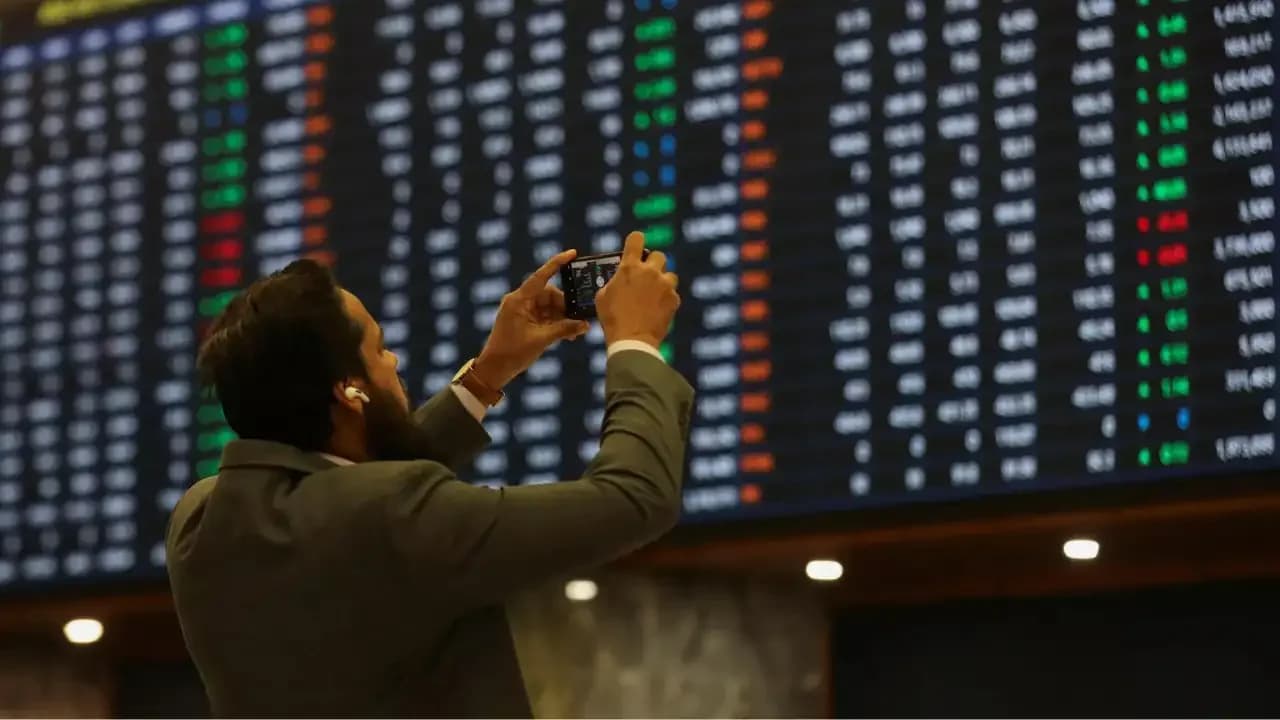
The Pakistani market decline reflects broader regional geopolitical tensions that have been affecting investor sentiment, with the tug of war over the Strait of Hormuz retriggering skyrocketing rally in oil prices, pushing them above $100 per barrel. As reported by The Hindu BusinessLine, a sharp surge was seen in global oil prices with crude benchmarks jumping over 7 per cent to exceed USD 100 per barrel as the peace talks remained inconclusive. The escalating tensions have created a cascading effect across global markets, with Sensex and Nifty declining more than 2% in the morning back home. The Strait of Hormuz serves as a critical waterway for the transport of oil and other shipments, making its control a key factor in global energy markets. The interconnected nature of regional market movements is evident as global market weakness spilled over to Dalal Street, highlighting how geopolitical developments in the Middle East continue to influence investor confidence across emerging markets.
Market analysts attribute the volatility to ongoing geopolitical uncertainties affecting investor confidence. According to The Hindu BusinessLine, Kaukab Farshori of Capital Investments said the volatile environment was expected on the opening day of the week because of the uncertain global geopolitical situation. The analyst noted that the lack of immediate clarity and continuation of negotiations between Iran and the US weighed on investor confidence. This assessment reflects the market's sensitivity to ongoing tensions and the absence of clear resolution to the geopolitical standoff between the US and Iran.