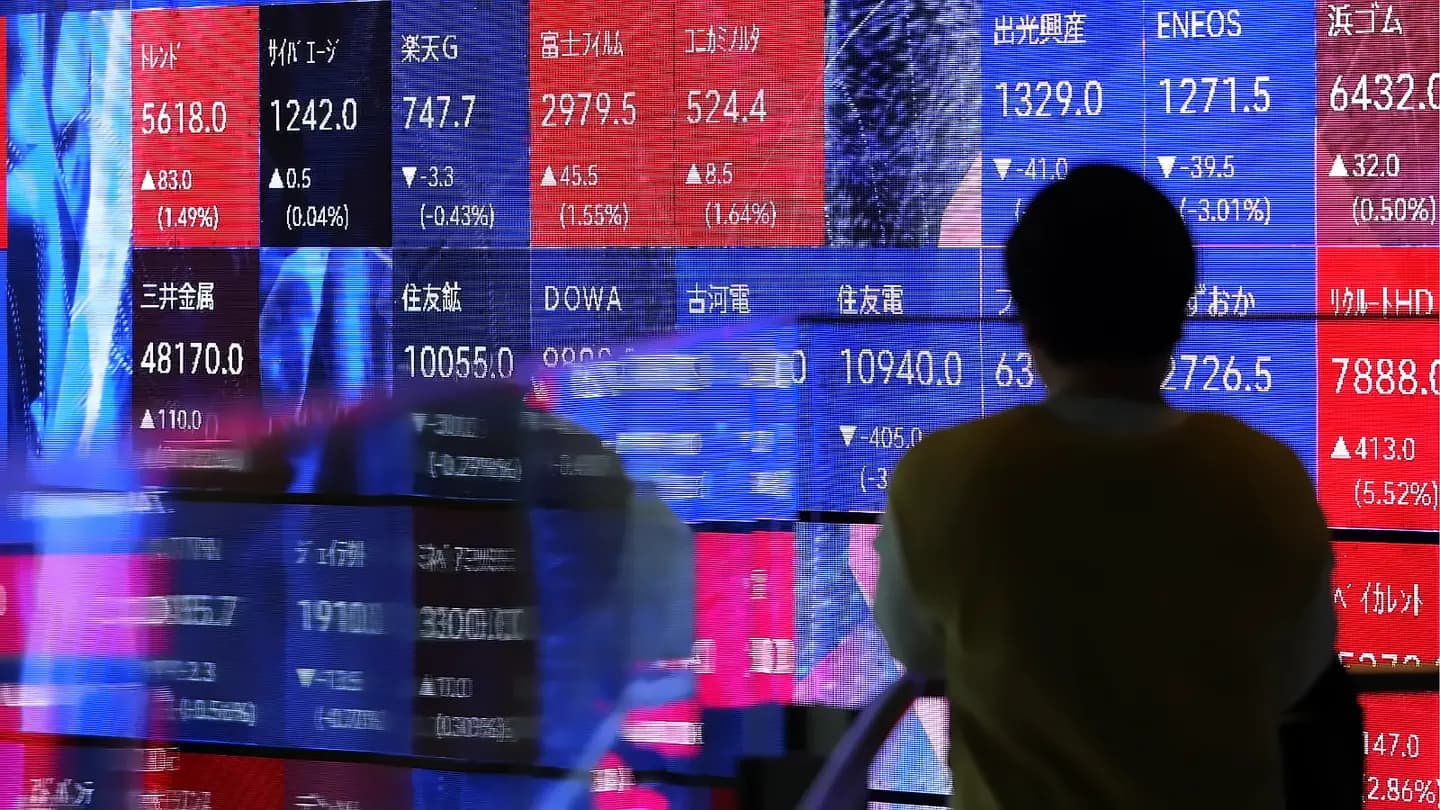
South Korea's Kospi index jumped nearly 5% on Friday, extending recent gains after a massive crash earlier this week that pushed the world's best performing market of 2026 into bear territory. The benchmark index officially entered bear market territory on Wednesday, falling more than 20% from its record close of 9,114.55 hit on June 22, as heavyweight semiconductor stocks including Samsung Electronics and SK Hynix crashed, spooking investors that the previous AI driven rally was overblown. According to The Economic Times, the index peaked at 9,385.59 during trading on January 19th before retreating to the 7,300 level within less than a month. The sharp rally has led to losses falling below the 20% threshold needed to be technically categorised as a bear market, with Kospi jumping to 7,643 points on Friday and gaining around 5.5% over two consecutive days. Despite the recovery, Korea's blistering stock rally has left investors facing an unlikely backdrop: equities trading at record-low valuations, with the Kospi climbing around 80% this year to record highs yet analyst earnings upgrades have been even faster.
The recovery was broad-based with Samsung Electronics shares jumping more than 5%, while peer SK Hynix gained 2%, as reported by Business Insider. Battery maker LG Energy Solution climbed 5%, Hyundai Motor and sister automaker Kia Corp saw their share prices rise up to 5%, while steelmaker POSCO Holdings jumped more than 7%. Despite the renewed optimism, foreign investors remained net sellers of South Korean equities worth 529.1 billion won ($350 million). However, Kospi continues to remain the world's best performing stock market of 2026 so far, being up around 76% this year despite the recent crash. As per Reuters, analyst Han Ji-young from Kiwoom Securities noted that "it seems appropriate to take the scenario of the stock market re-entering a recovery path as the base case, as AI investment hopes are recovering and the rise in bond yields is being limited."
The market's performance has created an unusual paradox where South Korea's benchmark Kospi index has surged about 80% this year to record highs, yet its valuation has fallen to a historic low as corporate earnings have outpaced the rally. Surging profits at memory-chip giants Samsung Electronics Co. and SK Hynix Inc. have driven the benchmark to just 6.4 times forward earnings, below even the levels seen during the 2008 global financial crisis. According to The Economic Times, consensus estimates for Kospi companies have risen for 17 straight months — the longest streak of upgrades in more than nine years — fueled by soaring memory-chip prices as global technology firms race to build AI infrastructure. Forward earnings per share estimates for Kospi are up around 170% this year, the largest annual increase in data back to 2006, with the Korean market "never before experienced such an unprecedented, explosive surge in earnings momentum." However, the Kospi's price-to-earnings ratio is one-third the current multiple for Taiwan's Taiex, indicating the market remains at a deep discount to other chip-heavy gauges. The sharp selloff in recent days, sparked by fresh doubts over the artificial-intelligence trade, has compressed valuations further, with investors questioning whether record cheapness signals an opportunity or reflects a market pricing in the eventual end of the memory boom.
Market experts caution against viewing Korean equities as an automatic value play due to concentration and leverage risks. Monarch CEO Gaurav Bhandari notes that while the market may appear cheaper after the crash, it's not a sign of value but rather concentration, leverage, and fragility. As reported by The Economic Times, he emphasizes that a market that falls 18% after rallying 200% is not cheap, it is less expensive than its peak. The index's vulnerability stems directly from extreme concentration and historic levels of retail leverage, making the current correction a reflection of these structural issues rather than fundamental value creation. Francis Tan, Asia chief strategist at Indosuez Wealth in Singapore, notes that "Good buy or not really depends on individuals' portfolios: If one is not exposed much to these names, it is a great time to get into provide the growth component for the portfolio tied into the AI theme." He emphasizes that "Earnings are robust and still forecast to be strong," suggesting the current valuation may reflect temporary market concerns rather than fundamental deterioration.
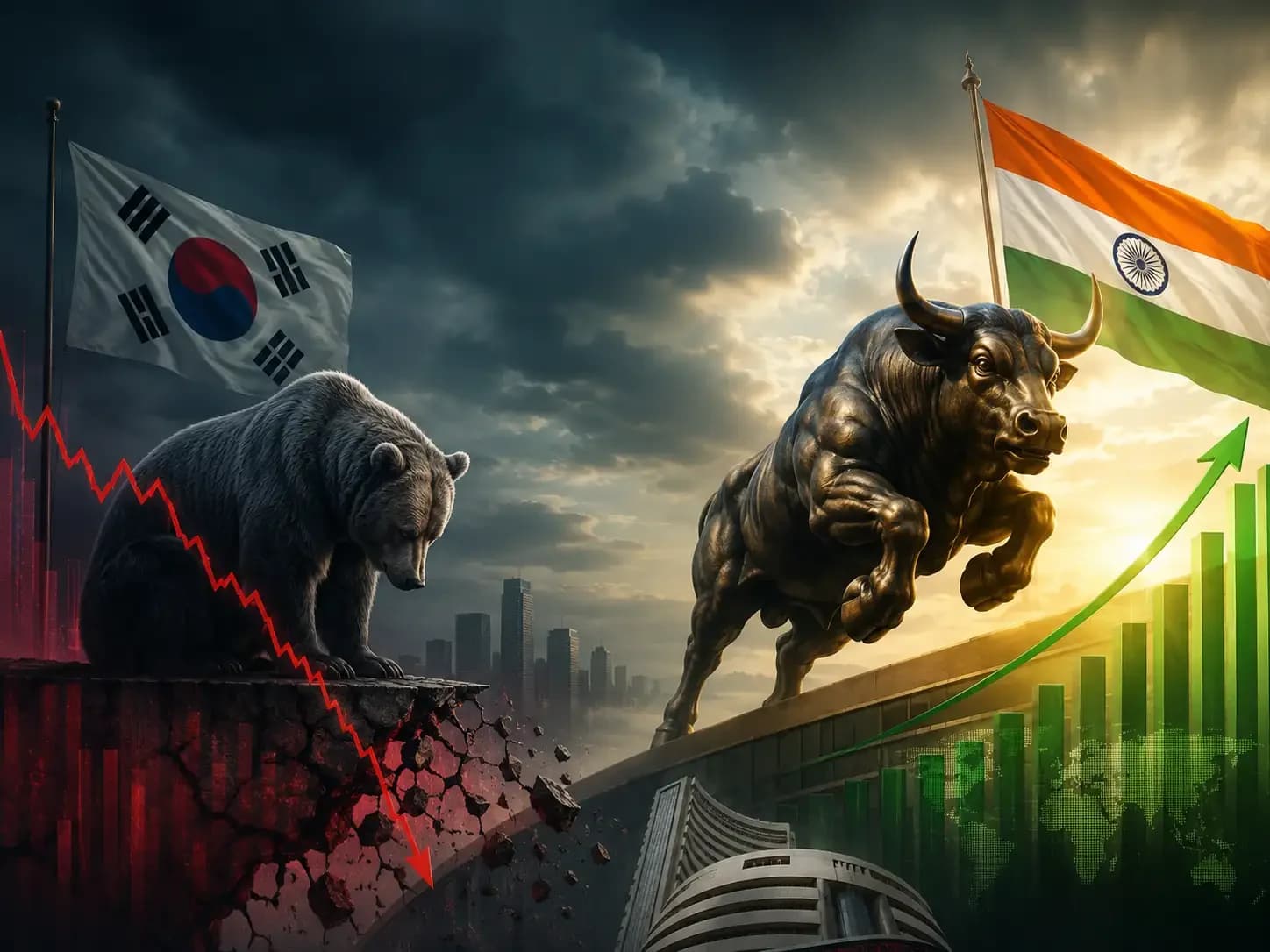
India's broader earnings base offers a more sustainable growth story compared to Korea's concentrated semiconductor exposure. According to The Economic Times, the Nifty 500 delivered 15.6% earnings growth in FY26 spread across banking, consumption, infrastructure, IT, and pharma sectors, with no single sector dominating like semiconductors in Korea. India's returns may not be as dramatic in any single year but are far more sustainable, providing a more balanced investment opportunity. The Nifty 50 is down roughly 10% year-to-date, making India one of the biggest underweights in global emerging-market portfolios at a benchmark weight of just 15.25% in the MSCI Emerging Markets Index.
Experts identify specific triggers for potential capital rotation back to India while acknowledging Korea's current value proposition. According to The Economic Times, two specific triggers to watch include a peak in the global semiconductor cycle when SK Hynix and Samsung start guiding more cautiously, and a valuation reset in Indian equities. India offers strong domestic demand, low correlation to global tech cycles, and a credible multi-year growth story that few emerging-market peers can match. The combination of total FPI outflows from India at approximately ₹1.92 lakh crore in 2026 and India's light foreign positioning historically creates a setup for sharp re-entry when the macro backdrop turns favorable. Goldman Sachs remains positive on South Korea's market outlook, citing improving earnings momentum across sectors beyond semiconductors, with analysts noting that "incremental foreign inflows have already begun rotating toward other AI-related beneficiaries and industrials." According to LiveMint, the immediate impact on India is likely to be driven more by investor sentiment than by fundamentals, with Asian markets typically moving together during periods of heightened global risk aversion, though strong domestic institutional investor flows are expected to provide a cushion against deeper declines.