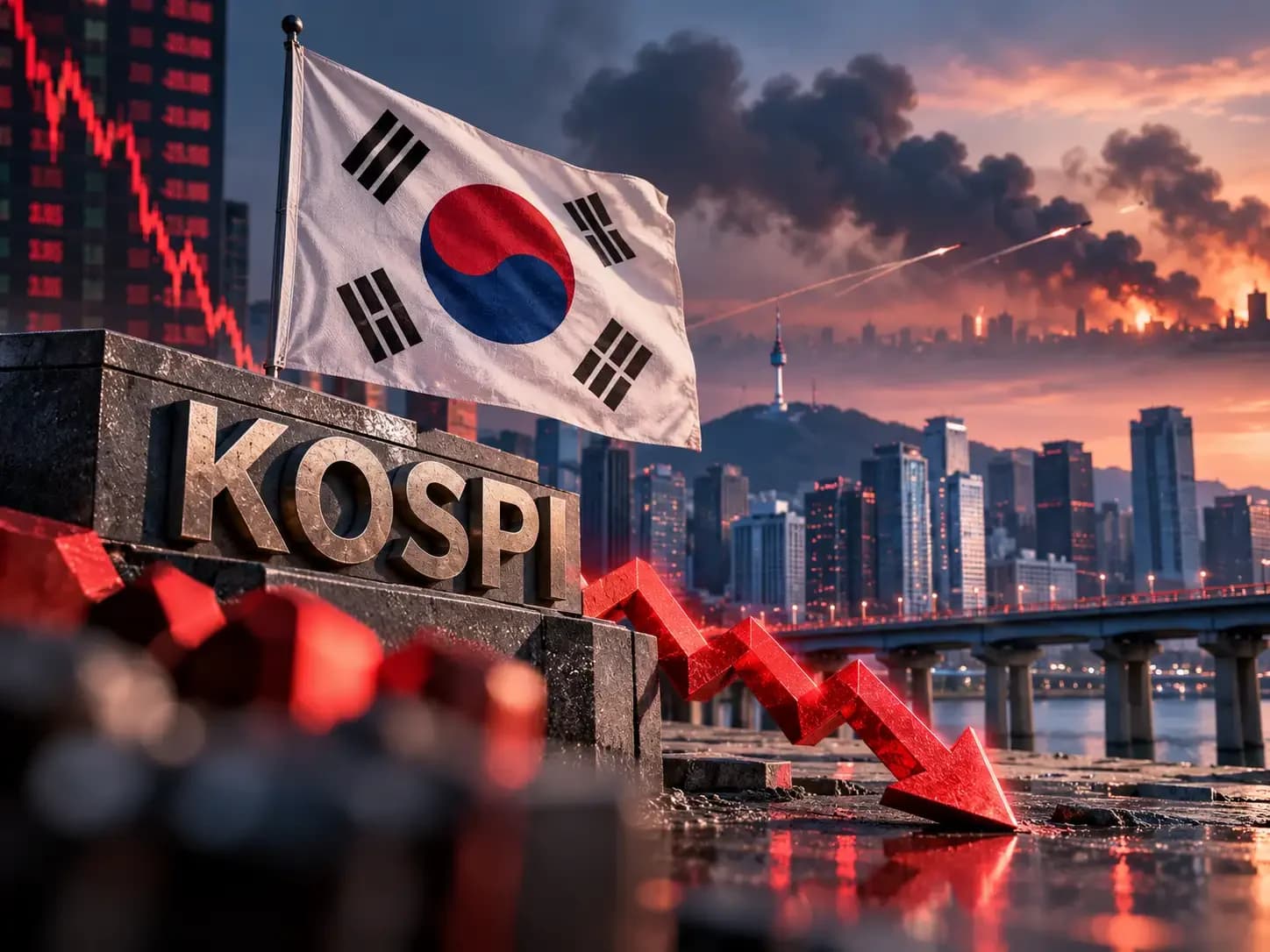
South Korean investors are experiencing a significant shift in investment preferences, with $4.5 billion in net purchases of US stocks recorded in July 2026. According to reports from Mint, this capital flight occurred even as the benchmark index entered a bull market, indicating waning confidence in domestic markets. The movement is primarily concentrated in technology and semiconductor sectors, with $840 million specifically invested in SK Hynix's US-listed depositary receipts, despite the fact that investors can purchase SK Hynix shares directly in South Korea at much lower prices.
The Korean market's spectacular performance during the first half of 2026, with the KOSPI rising roughly 120% while Samsung was up around 170% and SK Hynix more than 300%, has created significant concentration risks. As reported by Mint, Samsung and SK Hynix alone accounted for around 50% of the Korean benchmark's market capitalisation. In contrast, while US concentration is lower, the Magnificent Seven still represent approximately 35% of the S&P 500, with semiconductor exposure alone accounting for around 19 cents of every dollar allocated to the S&P 500.
Recent developments show that foreign selling and surging U.S. Treasury yields are hammering Korean stocks, with the tech-heavy Kospi experiencing significant pressure. According to latest reports, the combination of foreign investor outflows and rising U.S. yields is creating additional headwinds for South Korean equities, particularly affecting technology and semiconductor sectors that have been the primary beneficiaries of the capital rotation from domestic to international markets.
US markets are showing concerning similarities to Korea's situation, particularly in leverage and AI exposure concentration. According to Mint reports, assets in leveraged US ETFs have risen to approximately $218 billion, with technology and semiconductor products accounting for around 67% of that amount. The Magnificent Seven companies (Apple, Microsoft, Amazon, Alphabet, Meta, Nvidia, and Tesla) lost $2.2 trillion in June and nearly $800 billion in a single day in July amid AI spending doubts. However, unlike South Korea's retail-heavy margin debt situation, US AI exposure is mostly held by institutions and index funds.