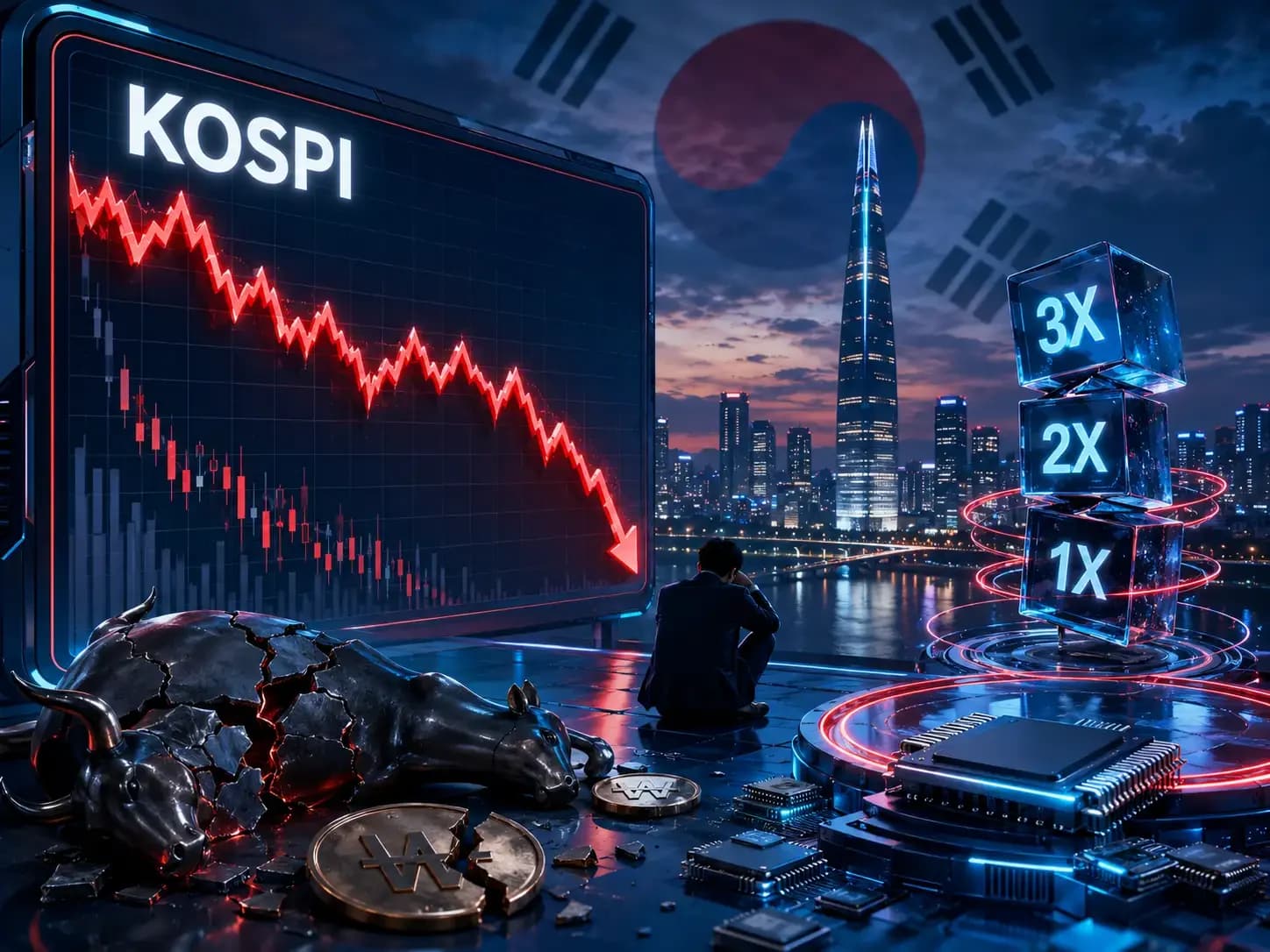
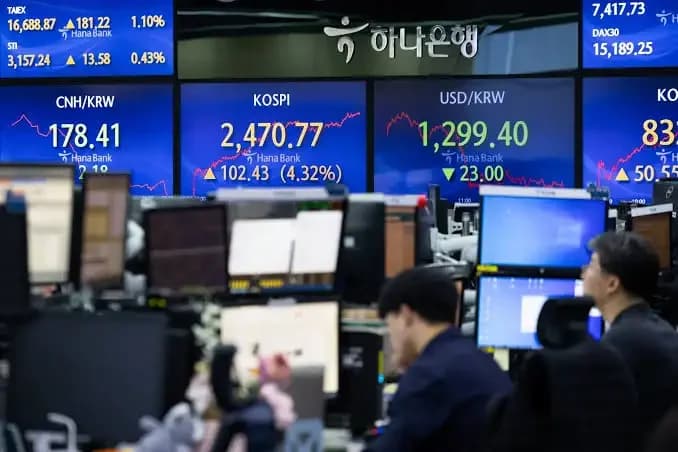
Emerging market stocks pulled back sharply from record highs on Tuesday, with MSCI's index of emerging market equities falling 3.8%, retreating from an all-time high hit in the previous session. According to Reuters, the selloff was led by heavyweight markets South Korea and Taiwan, with South Korea's KOSPI slumping 10% in its biggest one-day drop in more than three months. The decline came as foreign investors sold chipmakers after regulatory signals that the sector's blistering rally may have run too far, while growing expectations that the Federal Reserve could raise interest rates again this year lifted the dollar and pressured developing-world currencies. As per Reuters, Fed funds futures are now pricing in a 75% chance of a rate hike by September, with BofA Global Research and Deutsche Bank now expecting U.S. rates to rise within the year.
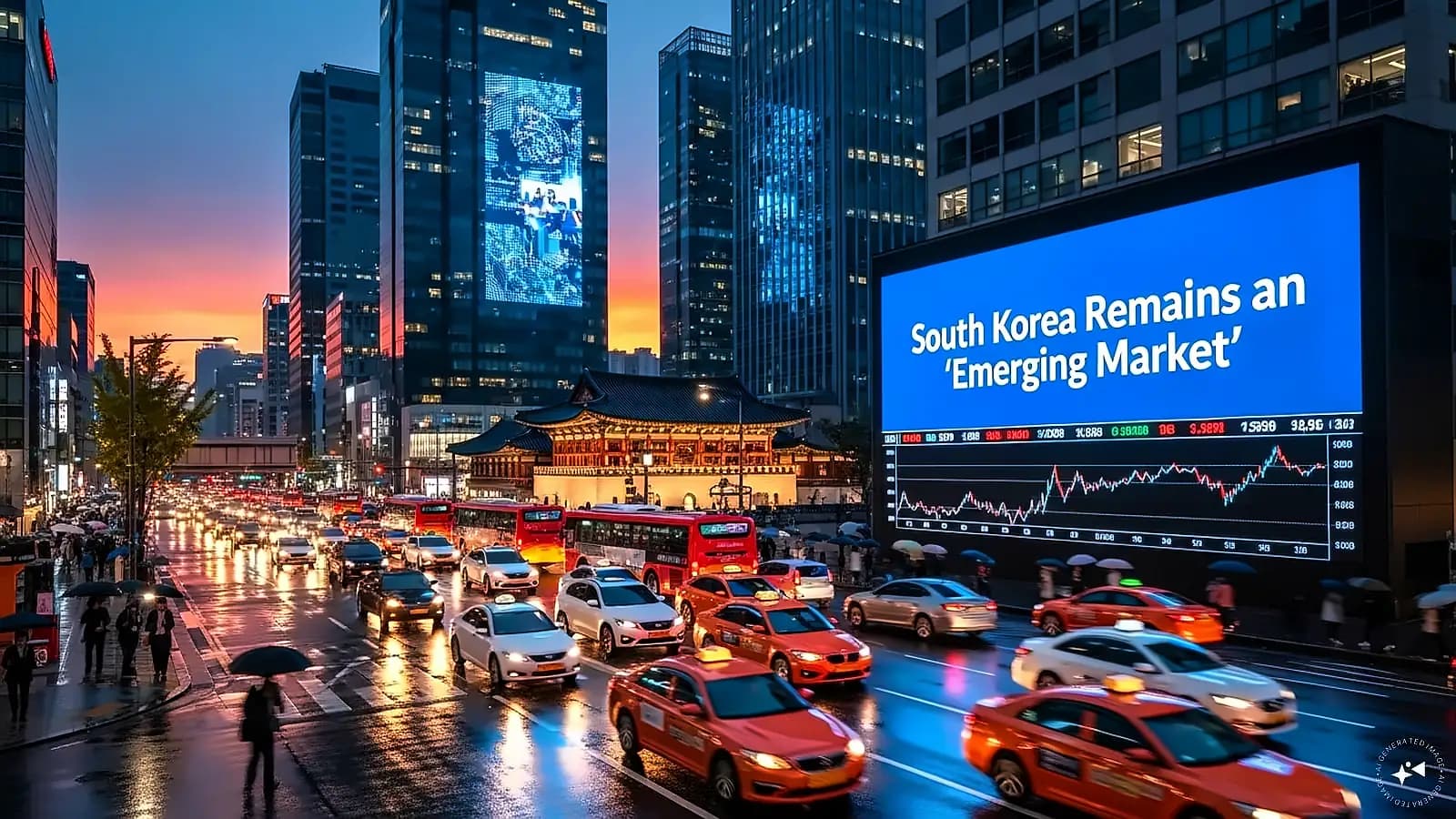
MSCI Inc. has retained South Korea in its Emerging Market index and refrained from starting a formal review process to upgrade the country's stock market to developed market status. According to reports from CNBC TV18, the New York-based index provider made this announcement in its annual market-classification review on Tuesday, June 23. In its 2026 annual market classification results released Monday, MSCI did not include Korea on the Watch List for potential developed market inclusion. The decision comes despite South Korea's efforts to address structural market accessibility issues over the past year and dashed hopes that Seoul could be included in MSCI's Developed Markets watchlist, a crucial step before a market can be upgraded to developed-market status. As per NDTV, the widely expected decision came after MSCI highlighted lingering market-accessibility issues last week, dampening hopes that the world's best-performing stock market this year could begin the process of joining the ranks of developed markets.
MSCI CEO Henry Fernandez identified the Korean won's trading hours as the primary obstacle preventing South Korea's upgrade to developed market status. As reported by CNBC, Fernandez stated that while South Korea is "one of the most developed markets on the planet" in economic and technological terms, the Korean won's trading only during business hours in Seoul creates a specific barrier for international investors. A third of all globally managed index assets sit in index funds, and managers running these funds cannot rebalance Korean positions outside Seoul trading hours. The CEO raised doubts about whether Seoul-based night shift trading will generate enough liquidity with tight enough bid-ask spreads to satisfy institutional demand. This constraint matters significantly as it affects the 24-hour trading capability that is standard across all other MSCI-classified developed markets.
South Korea plans to launch 24-hour dollar-won spot trading on July 6, 2026, which MSCI CEO Henry Fernandez acknowledged as real progress. However, he questioned whether this Seoul-based night shift will produce deep, liquid markets around the clock that can satisfy institutional demand. The July trading launch will serve as the key test for MSCI's next annual review, potentially determining whether South Korea's classification could change. MSCI also cited rigid investor identification requirements, restrictions on in-kind transfers, and limits on exchange data use as additional reasons for keeping the country in emerging markets, with investors reporting these issues remain unresolved. South Korea already holds developed-market status under FTSE Russell's classification system, but the MSCI designation carries greater weight for passive fund flows globally.
In response to the decision, South Korea's Finance Ministry and Financial Services Commission issued a joint statement expressing confidence in future classification. As reported by CNBC TV18, the government stated that MSCI developed market inclusion will occur naturally if the country continues pursuing reforms. The ministry said it would continue implementing reforms in foreign exchange and capital markets on its own schedule, with officials telling Yonhap that "if we continue to implement reforms in the foreign exchange and capital markets on our own schedule, we believe we can be included among advanced economies." According to Reuters, South Korea's finance ministry and financial regulator said the country's exclusion from the developed-market watchlist this year reflected the fact that some reforms are still being implemented and their impact has yet to be fully evaluated. The administration of President Lee Jae Myung has rolled out a series of market reforms since taking office in June 2025, including plans to introduce round-the-clock foreign exchange trading from the second half of this year. Seoul will activate regular communication channels with major overseas investors to review the practical use of the reform measures and incorporate feedback from market participants.
The financial investment industry has projected that Korea's MSCI developed market inclusion could occur around 2029, based on current reform timelines. According to analysis, if the foreign exchange market opening and capital market system improvement roadmap currently being pursued is completed by early 2027, Korea could be re-listed as a Watch List candidate in June of that year. After about a year and a half of verification of system stability and sustainability, a decision on developed market inclusion could be made in June 2028. The actual index inclusion would likely occur around June 2029, following a one-year grace period. Korea was included in the MSCI Emerging Markets Index in 1992 and first joined the Watch List for developed market inclusion in 2008, but was removed from the Watch List in 2014 due to unresolved issues. As per NDTV, an eventual entry into the league of the deepest pool of capital markets with unrestricted flow and ease of forex transactions would help South Korea to attract more global funds, analysts say. Despite the classification setback, South Korea's benchmark KOSPI index has emerged as the world's best-performing equity benchmark over the past year, doubling in value on the back of strong gains in semiconductor stocks driven by global investment in artificial intelligence infrastructure. According to Reuters, the KOSPI rebounded more than 3% on Wednesday after tumbling nearly 10% in the previous session, marking its steepest one-day decline since March.