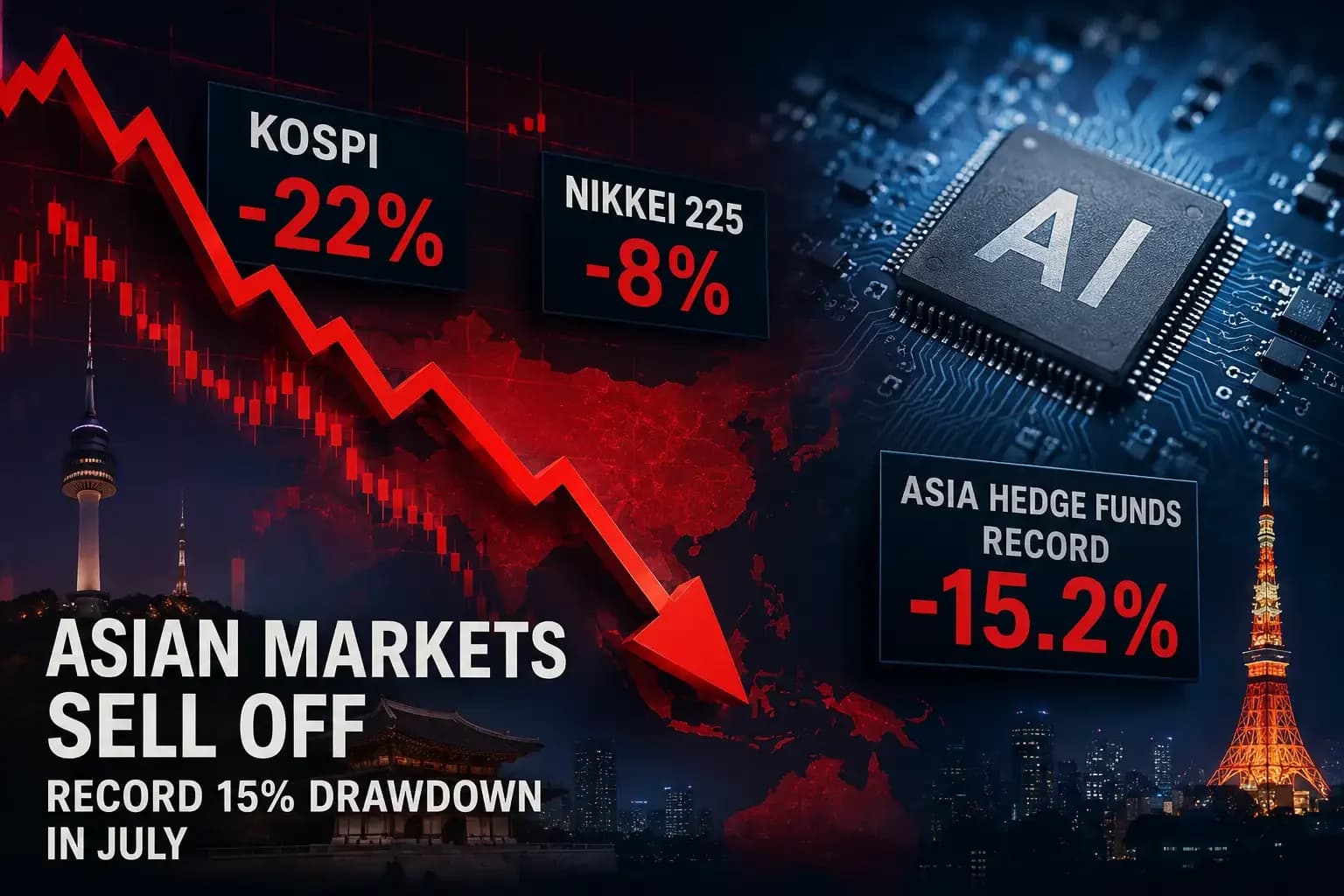
Foreign investors sold Asian equities at the fastest pace in at least 16 years in the first half of 2026, pulling out a net $137.36 billion from shares across South Korea, Taiwan, India, Indonesia, Thailand, Vietnam and the Philippines. According to The Hindu BusinessLine, this represents the fastest six-month outflow in LSEG data going back to 2010. South Korea and Taiwan bore the brunt, shedding $70.8 billion and $29.6 billion respectively, despite both markets rallying strongly. In June alone, foreign investors sold $27.08 billion of regional equities, including $12.63 billion from South Korea, $8 billion from Taiwan and $5.91 billion from India. The latest data shows Japanese investors recorded their biggest weekly selloff in Japanese stocks since March, offloading ¥1.82 trillion ($11.2 billion) worth of shares amid profit-taking in technology stocks and rising concerns over AI valuations.

Global stocks have delivered a remarkable 10% surge in the first half of 2026, adding $7 trillion in market capitalization despite the Iran war causing a $9 trillion drop in March when oil shot to $120 a barrel. According to Reuters, the MSCI All-Country World index has jumped almost 10% in the first half of the year, registering the best second quarter since 2020. This performance comes even as the Magnificent Seven tech giants have underperformed the broader market, with the Bank for International Settlements warning that disappointing AI returns could trigger major strife in global markets. The Magnificent Seven tech giants are down as a set and gold has suddenly lost its shine, with gold down more than 12% in June on track for its worst month since October 2008.
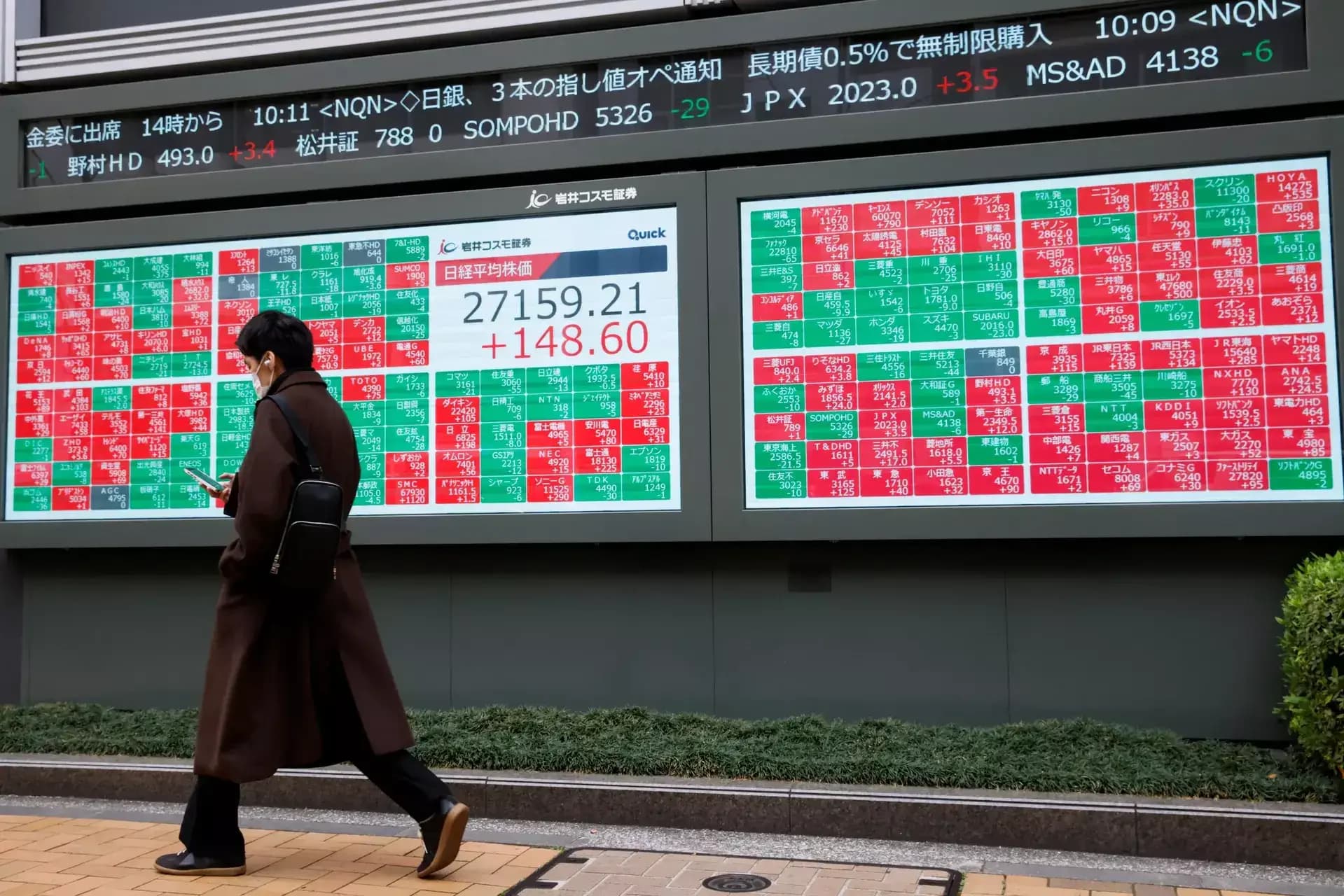
Japanese share markets experienced significant volatility as the tech-heavy Nikkei 225 dropped 2.7% during the week ended June 27, marking the biggest weekly outflow since March 28. According to Reuters, foreign investors dumped a net ¥1.82 trillion ($11.2 billion) of Japanese stocks, with sentiment dampened by concerns over stretched AI valuations and debt-fuelled spending on artificial intelligence. Despite last week's slump, the benchmark Nikkei 225 logged its strongest quarterly gain on record, powered by a global rally in AI-linked technology stocks. However, the exuberance surrounding the sector appears to be beginning to fade as investors question the sustainability of lofty valuations and heavy AI spending, leaving the market vulnerable to bouts of volatility and sharp selloffs.
The exodus reflects investors grappling with the stunning rally in South Korean and Taiwanese markets, as the KOSPI nearly doubled in the first half of the year while Taiwan stocks are up 62%. According to The Hindu BusinessLine, the rally being driven by three major chipmakers, TSMC, Samsung and SK Hynix, has spurred investors to cut their exposure to these winners amid their growing influence in indexes. Bank of New York Mellon analysis showed mutual funds sold $7.50 billion of South Korean equities, pension funds sold $4.35 billion, while hedge funds accounted for a further $1.87 billion. Joshua Crabb, head of Asia-Pacific equities at Robeco, noted that "markets in Asia, there's only two markets and one sector that's outperforming, so at the end of the day, you have to get your balance right."
The second half of the year looks set to be equally volatile, with Britain's markets nervously awaiting a new prime minister, the yen remaining fragile, and new Federal Reserve chief Kevin Warsh sounding hawkish. According to Reuters, South Korea's stock market has surged by 100% and Elon Musk's $2 trillion SpaceX has blasted off, while the S&P 500 is up 14% and the Nasdaq has gained 20%. However, Chief economic adviser at Equity Bank, Charlie Robertson, noted that despite the geopolitical shocks, global markets have remained resilient. The Magnificent Seven tech giants are down as a set and gold has suddenly lost its shine, with gold down more than 12% in June on track for its worst month since October 2008.
Bond markets were under pressure after U.S. Treasury yields spiked overnight as futures narrowed the odds on rate hikes from the Federal Reserve ahead of crucial jobs figures on Thursday. According to Reuters, futures imply a 33% probability the Fed could hike rates at its next meeting later this month, while a September move is priced around 70%. All eyes will be on Fed Chair Kevin Warsh when he appears at a European Central Bank conference later in the session, for any guidance on the need for a tightening. Unfortunately for traders, Warsh has long been against the Fed providing forward guidance and may keep his policy cards close to his chest. The rise in yields helped lift the dollar to a fresh four-decade peak on the yen, with the climb drawing usual threats of intervention from Tokyo, though authorities seem reluctant to act having spent almost 12 trillion yen through April and May to little lasting effect.